While there was nobody around us in the open space we chose to sleep overnight, we once again were near railroad tracks, and could hear trains honking overnight. We've slept near tracks many times already during this trip, but we're still baffled as to why trains blast their horns so loudly and frequently as they chug past!
Even before we stepped outside, we knew it was an icy morning based on how chilly it felt in the RV. Checking the temperature, our hunches were validated, as it felt like -4 degrees Celsius (39.2 degrees Fahrenheit), although we weren't exactly thrilled to be correct--brrr!!
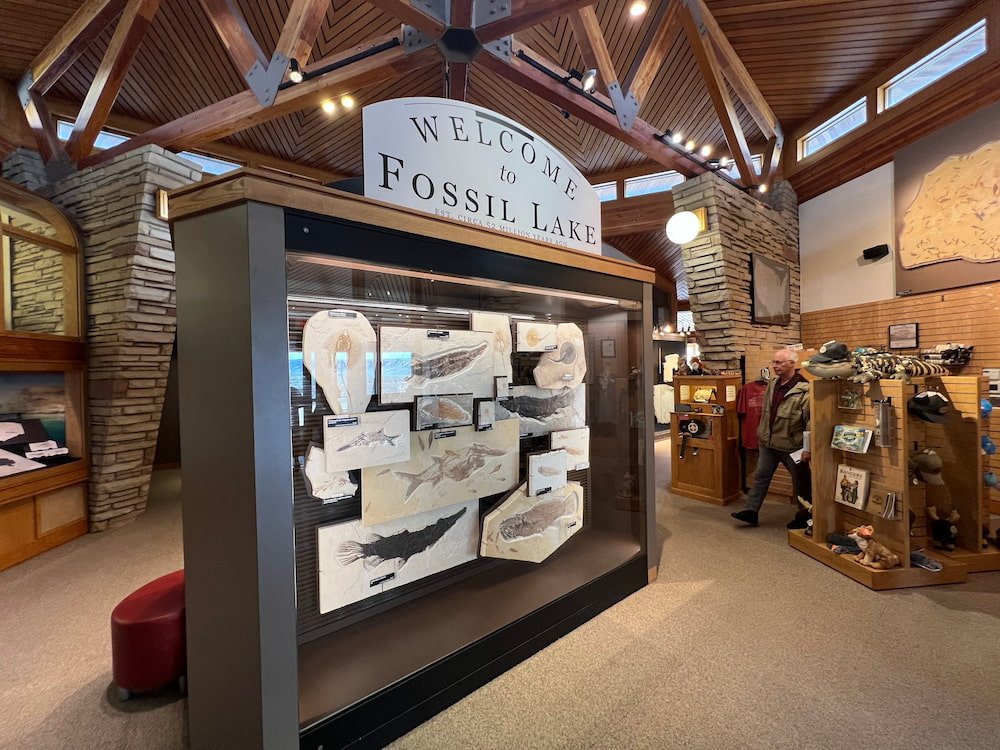

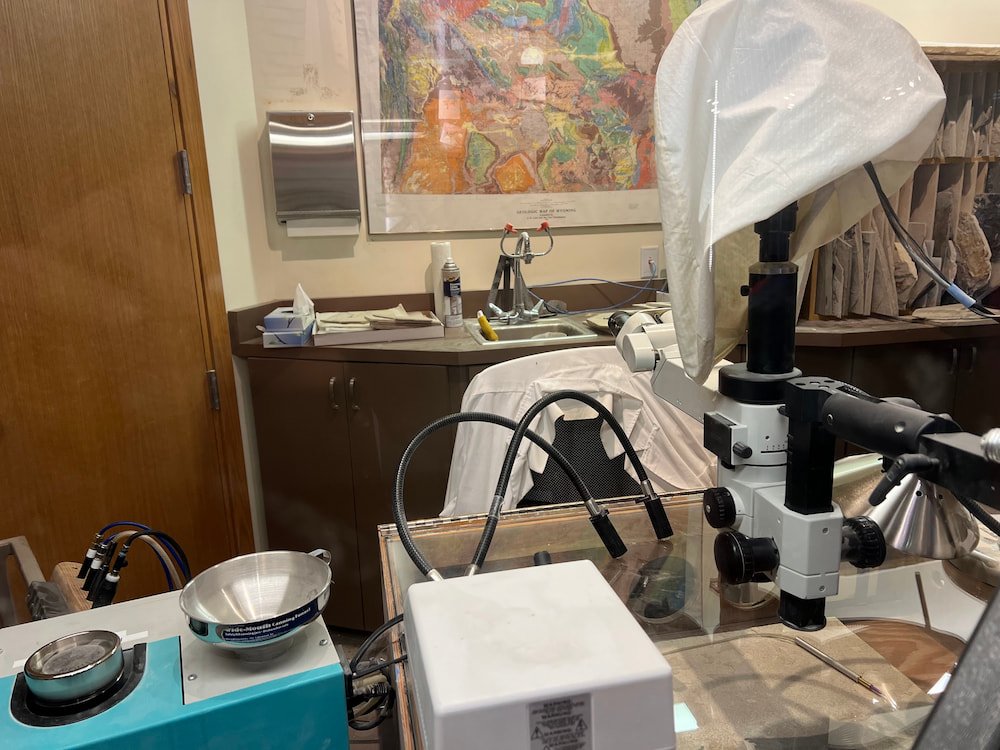
Fossil Butte National Monument, our main destination for the day, preserves one of the richest fossil deposits in the world. Here, we saw 52 million year-old fishes, insects, birds, mammals, reptiles, and plants nearly perfectly preserved in limestone. The Visitor Center has over 1,000 fossils, including a 13-foot crocodilian, the oldest complete bats, a mass mortality of 356 fish, and the only the complete, articulated freshwater stingray fossils in the world.
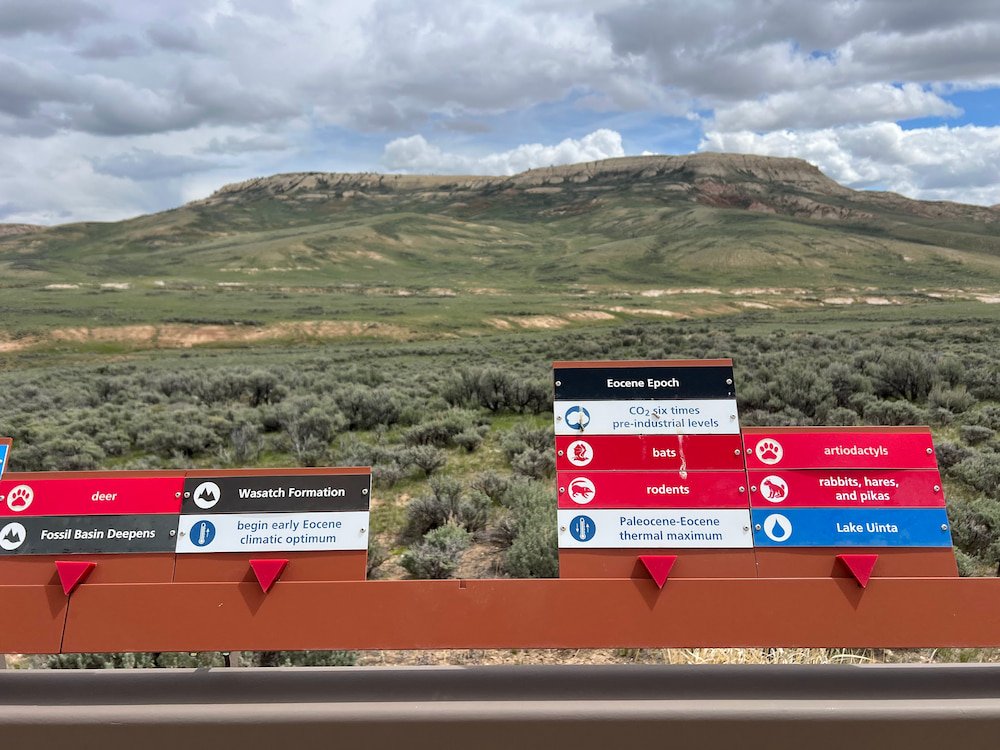
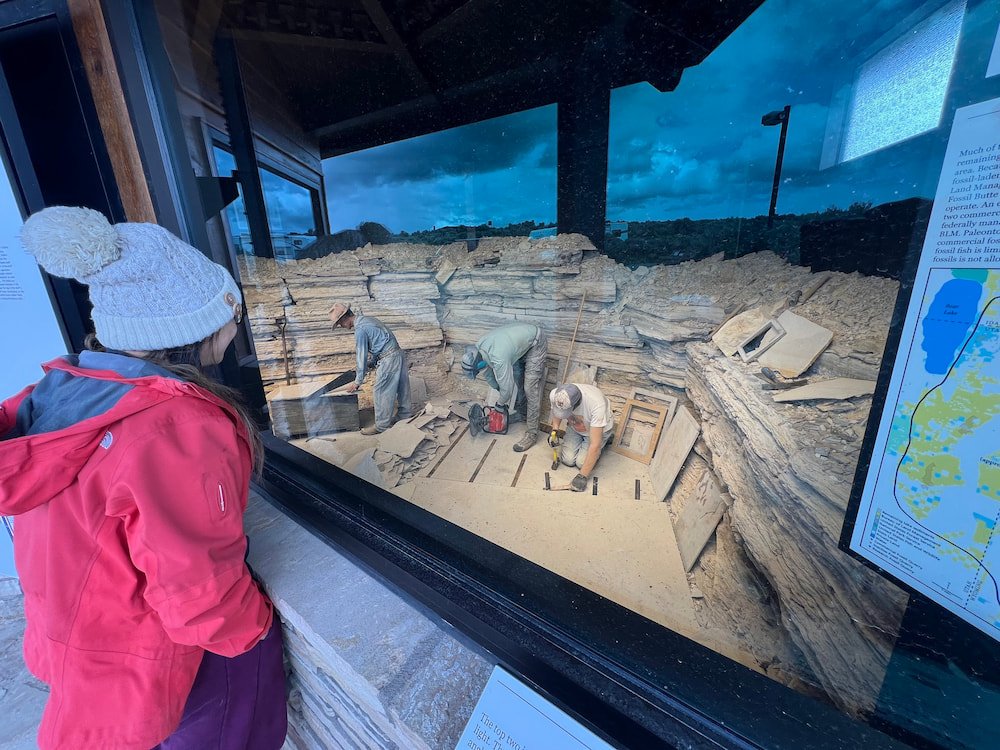
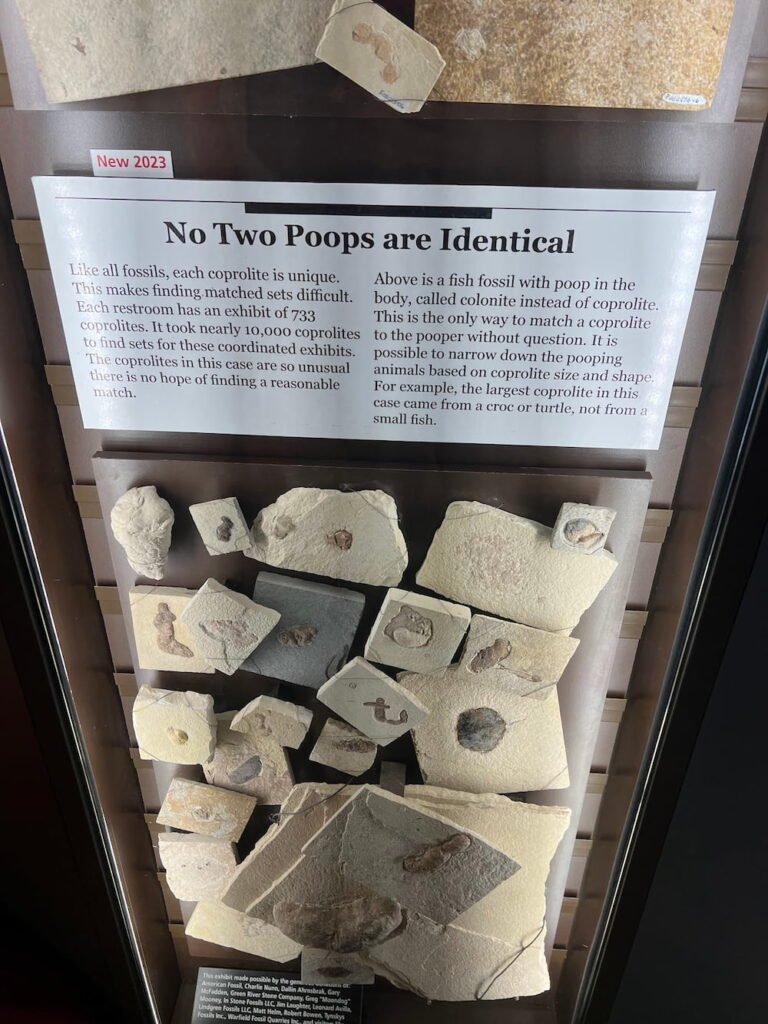
Given the National Monument is far from Yellowstone National Park (the most popular tourist destination in the state), we weren't surprised that there weren't many visitors, but we definitely recommend coming here, as the exhibits are remarkable and extensive--there are even exhibits in the restrooms! We couldn't help commenting how lucky we were to be visiting a place that is likely considered to be off the beaten path for many folks.
The Historic Quarry Trail
There's also a couple of trails near the Visitor Center, and we chose to walk up the Historic Quarry Trail, a 2.5-mile loop. We mistakenly thought it'd be a quick and easy hike, but we'd underestimated the time we'd take, and the elevation on this hike, which ascends 182 meters (600 feet) or so. On this hike, we could see the quarry where so many intact fossils were found, and the old hut where one of the pioneering fossil excavators lived. The quarry is quite a hike up, but after ascending all the steps to get to the top we were rewarded with a grand view of the terrain below! Even though the old hut isn't far away, we think it would have still been quite the commute to hike up to the top to try and find and excavate fossils everyday!
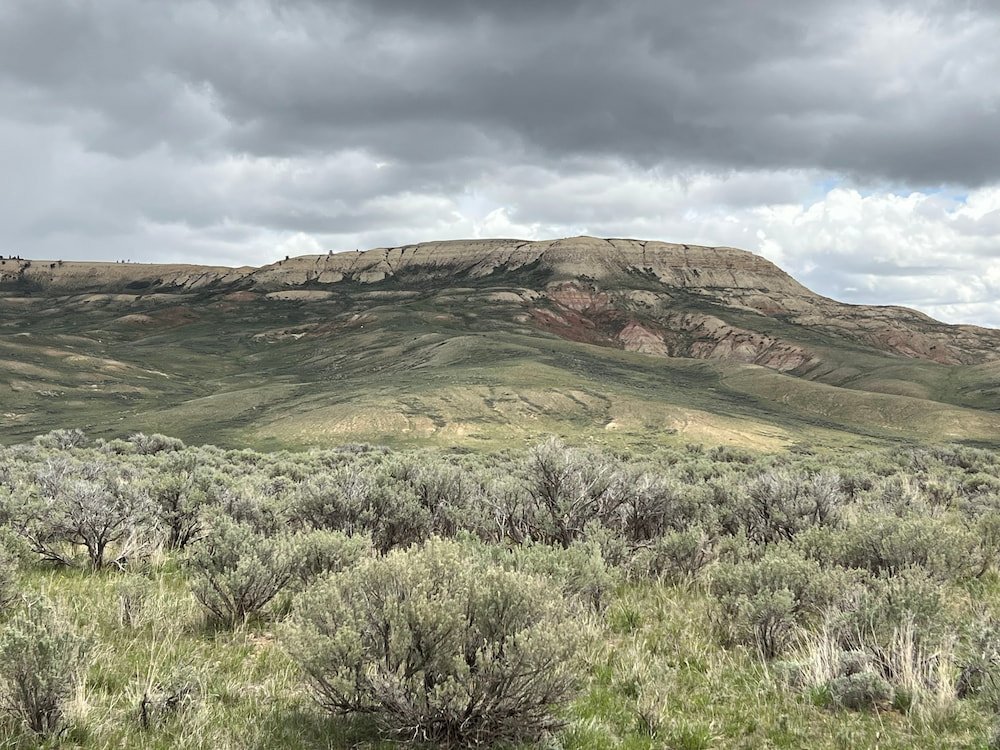
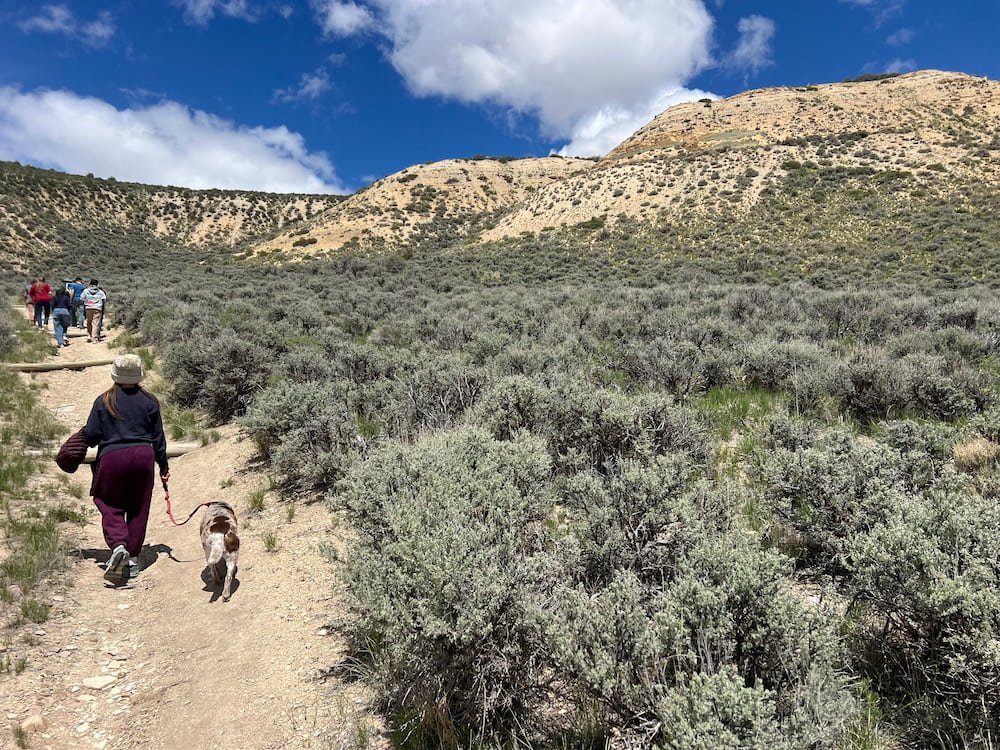
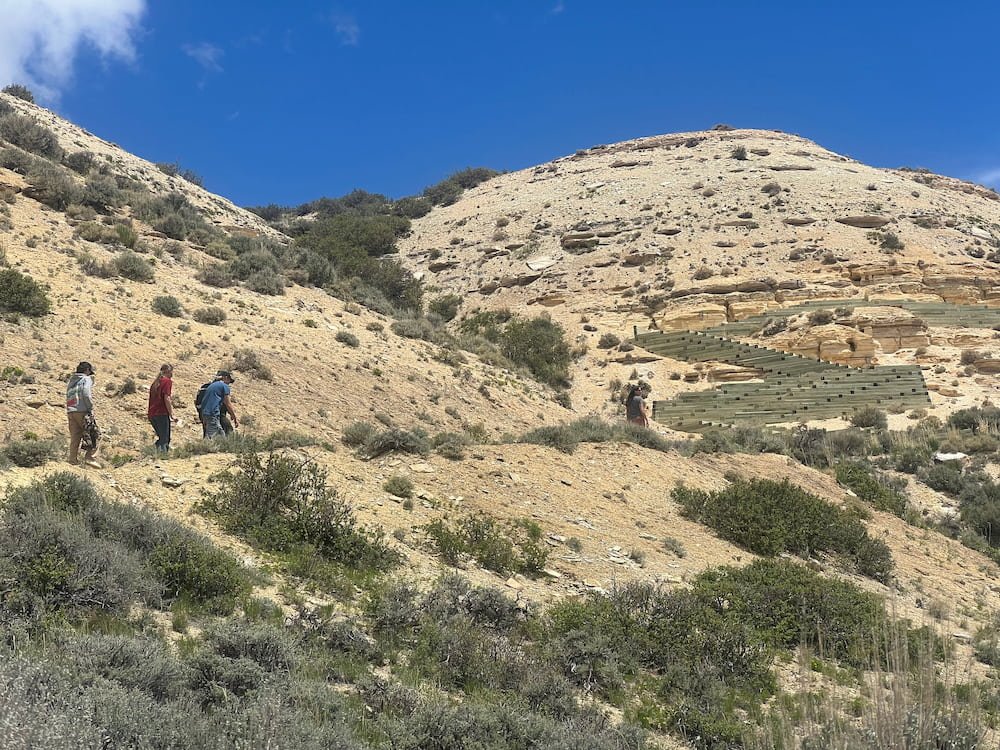
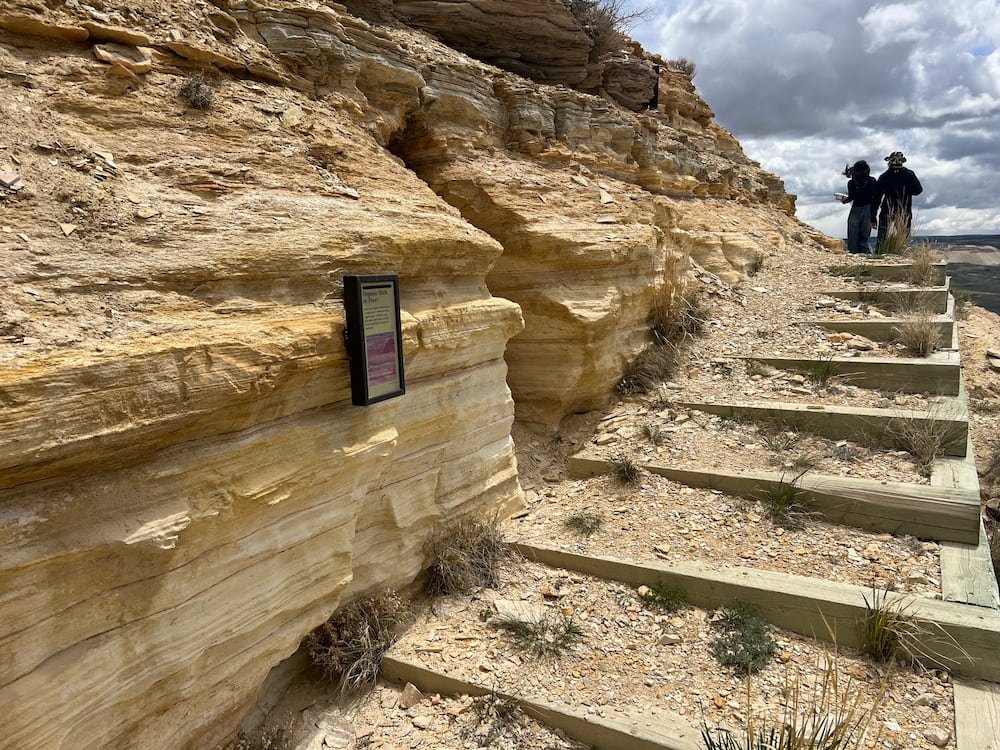
There was a group of high school-aged students when we got to the top of quarry, learning about the site from a ranger. We heard one of the teachers ask a student if he'd found something within the rocks, and we couldn't help wondering if there are still many more fossils yet to be found in the area, given the sheer number that have already been discovered. It was fun to walk around and inspect the limestone to see if we could detect even a hint of a fossil embossed on the rocks.
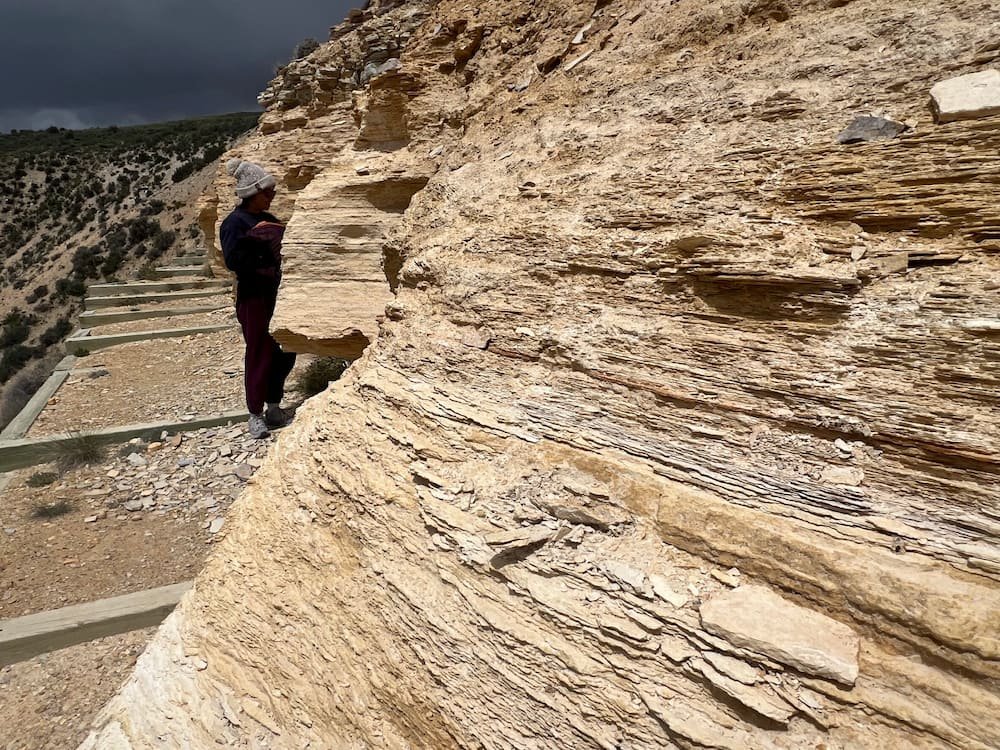

When we began our hike the sun had been shining, but as we descended the quarry, it started to snow! There was a brief pause as we made our way to the hut, but as we made our way back down to the parking lot it started to snow again. The snow, perhaps in true Wyoming style, was a bit sharp and despite its miniscule size, it stung and hurt at times when it landed on our eyes!
Entering Idaho: Hot Springs and Rain
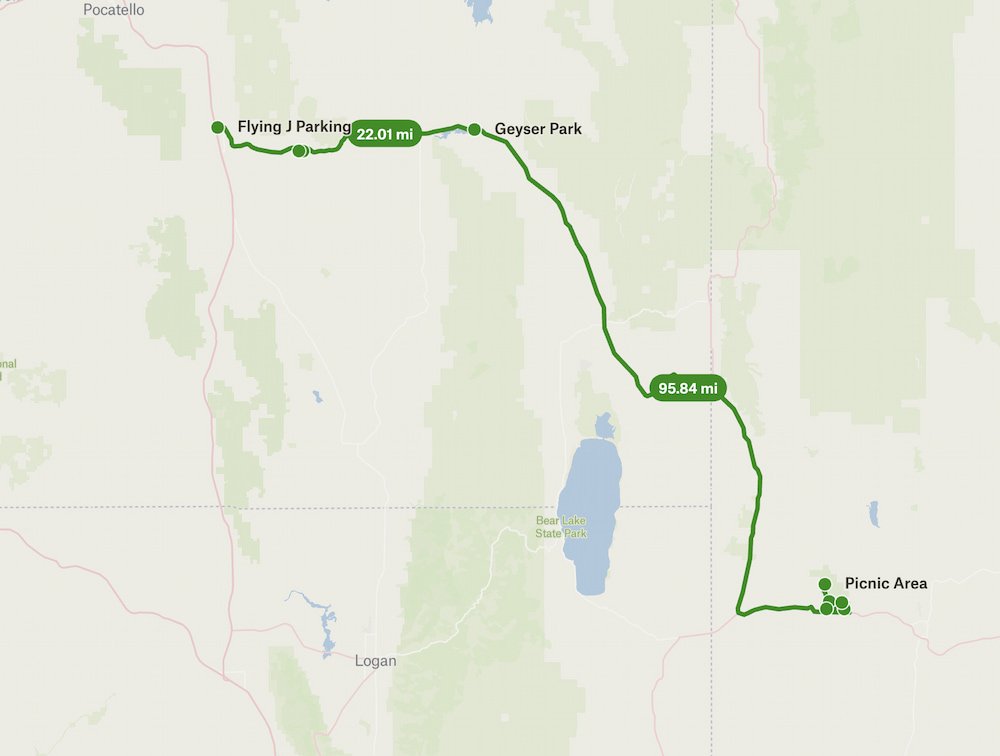
After Fossil Butte National Monument, we drove into Idaho, state #9 on this road trip! In the town of Soda Springs, we stopped to check out Geyser Park. The geyser was created by accident, thanks to a drilling project in 1937 that tried to unearth warm water for a swimming pool. The geyser is now capped and apparently its eruptions now occur on the hour, every hour.

However, when we arrived, the geyser was continuously spouting water, so some people drove up to it, took a quick photo, and sped off. We decided to wait the 40 minutes until the eruption was set to go off, and it did indeed spout more aggressively for a short period of time.
As we drove around Idaho, we noticed how fertile and green the landscape was. There were many, many lush fields, and despite it raining, there were still center pivot irrigation systems continuously spraying water onto the ground. These irrigation systems have a long pipeline atop wheeled towers that rotate around a central pivot point, which create crop circle-like patterns in the fields. We later learned that these were potato fields (unsurprising because Idaho is the main US state that produces potatoes), and 50% of the state's produce comes from the southeast region, which we were in. We later learned that these were potato fields (unsurprising because Idaho is the main US state that produces potatoes), and 50% of the state's produce comes from the southeast region, which we were in.
There are many other hot springs in the area, and we were considering going to one in the evening, but the weather had turned grey, gloomy and it was raining even harder. We decided to save the hot springs experience for the next morning, and slept within a gas station for the night. Certainly not the quietest location (we had bright lights shining near us and were awoken intermittently by trucks honking and hastening past at all hours), but it's all part of the adventure!
Route Map