
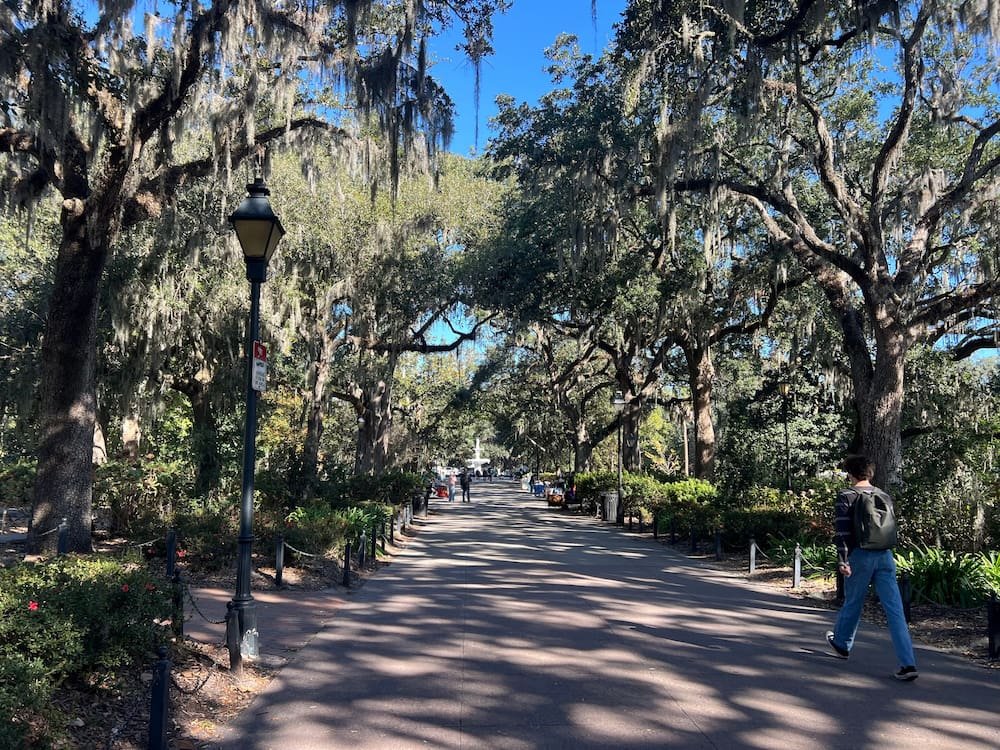
Today we planned to spend it exploring Savannah by the best mode of transport--no, not in an RV, but e-bike! We were near Forsyth Park, a large city park that we'd been told was a lovely one to walk Sheila and simply wander through. It is indeed a really pretty park, adorned with our favorite trees from the South: oak trees with the wispy moss dangling off the branches. There's a nice fountain at Forsyth Park too, with a somewhat Greek design of nymphs blowing trumpets and other figures, although there was no water as it seemed like it was undergoing a bit of restoration.
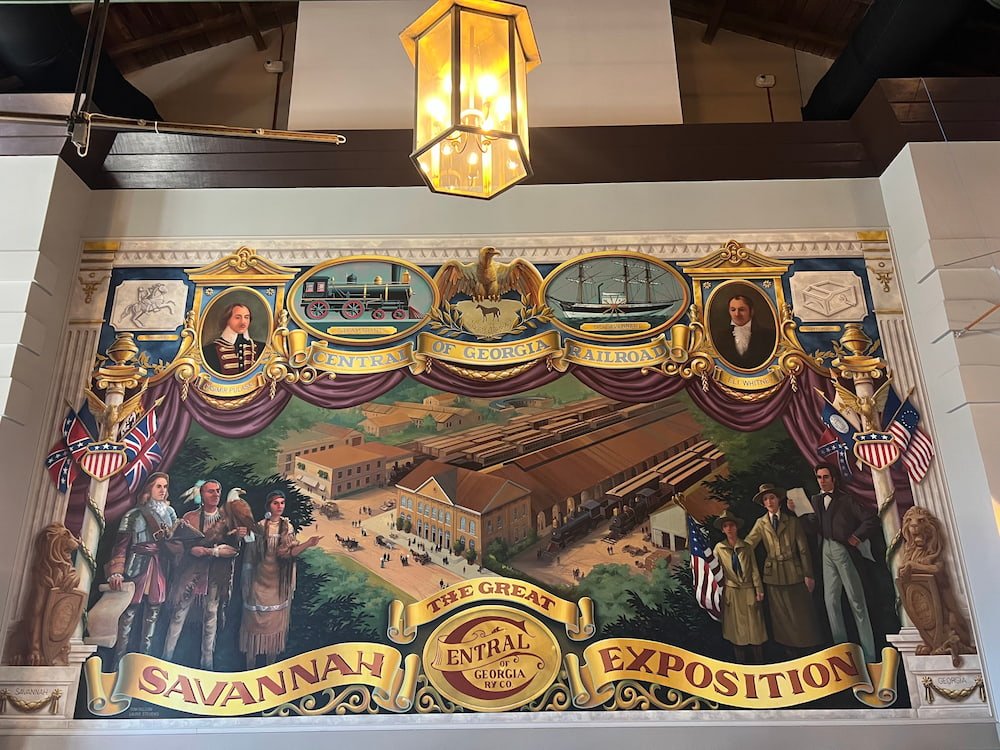
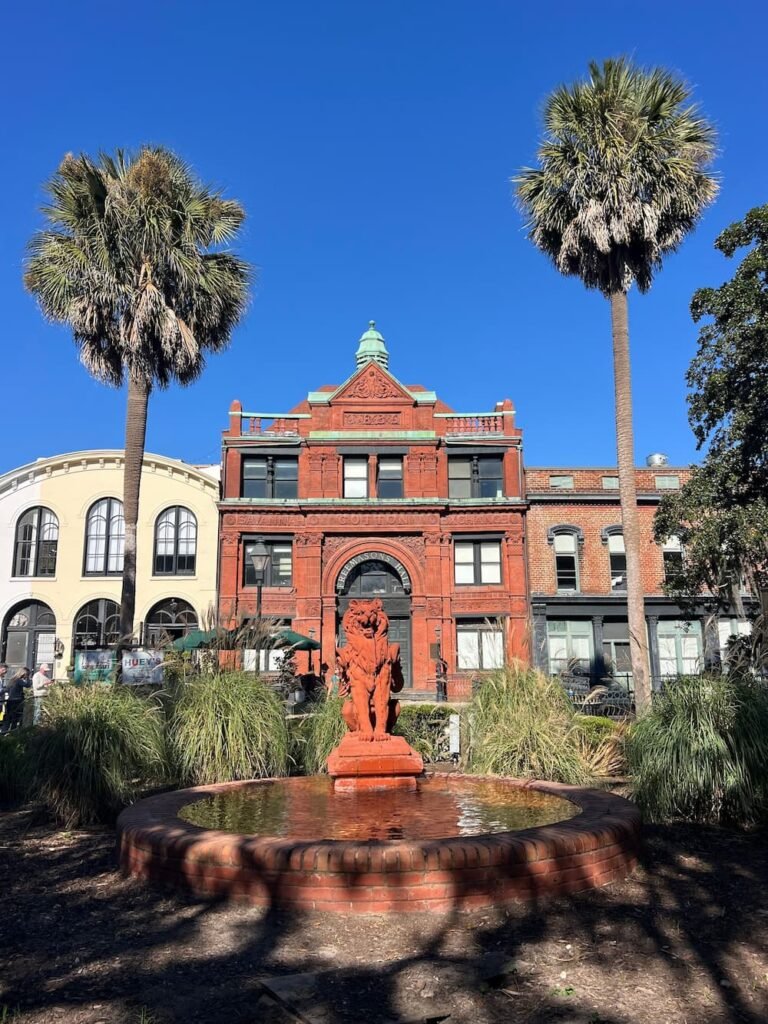
We ducked into the Savannah History Museum, which features local exhibits touching on the city's arts, culture, military and industry, although parts of it were paid so we didn't check it all out. There's a visitor center there to get maps and help figure out itineraries while in Savannah, and a cafe downstairs that has an awesome mural of "The Great Savannah Exposition" that features railroads, historical figures and flags, and is flanked by lions. It looks pretty cool!
War and Glitz
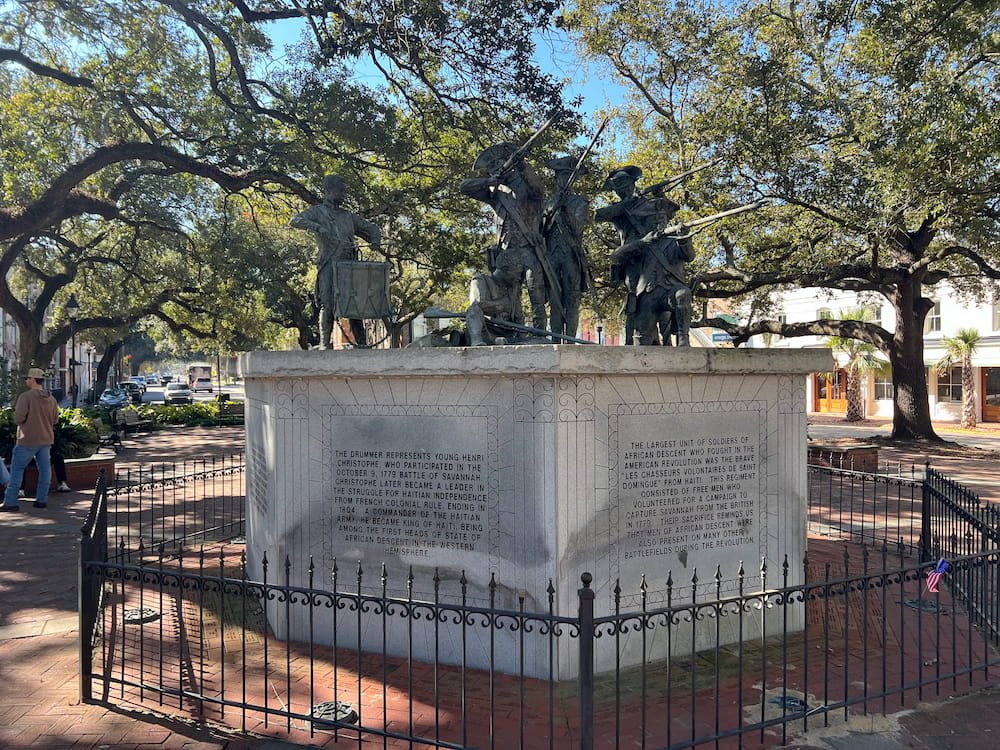
Another public park is Franklin Square, which is smaller than Forsyth Park and designed in 1790 in honor of Benjamin Franklin. One of the highlights here is the monument of the little drummer boy, who is prominently featured in the Haitian Monument that honors the Haitian soldiers who fought in the Siege of Savannah in 1779. The boy represents a real-life person called Henri Christophe, who served as a drummer--and later became the King of Haiti! Fact can be definitely be more fascinating than fiction.
Our friends Chip and Chris (who we would be catching up with soon in Tampa), knew that we were in Savannah and had told us in advance to definitely visit the JW Marriott--yes, the hotel chain. One of the drummers at the West African dance class that Lisette went to yesterday had also recommended stopping by.
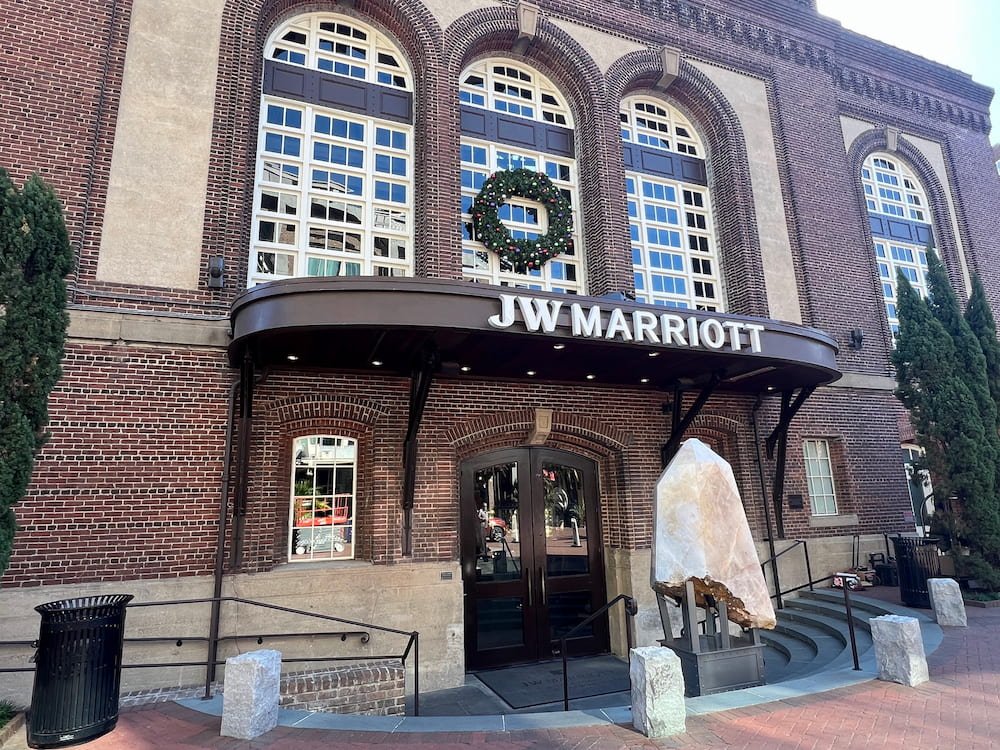
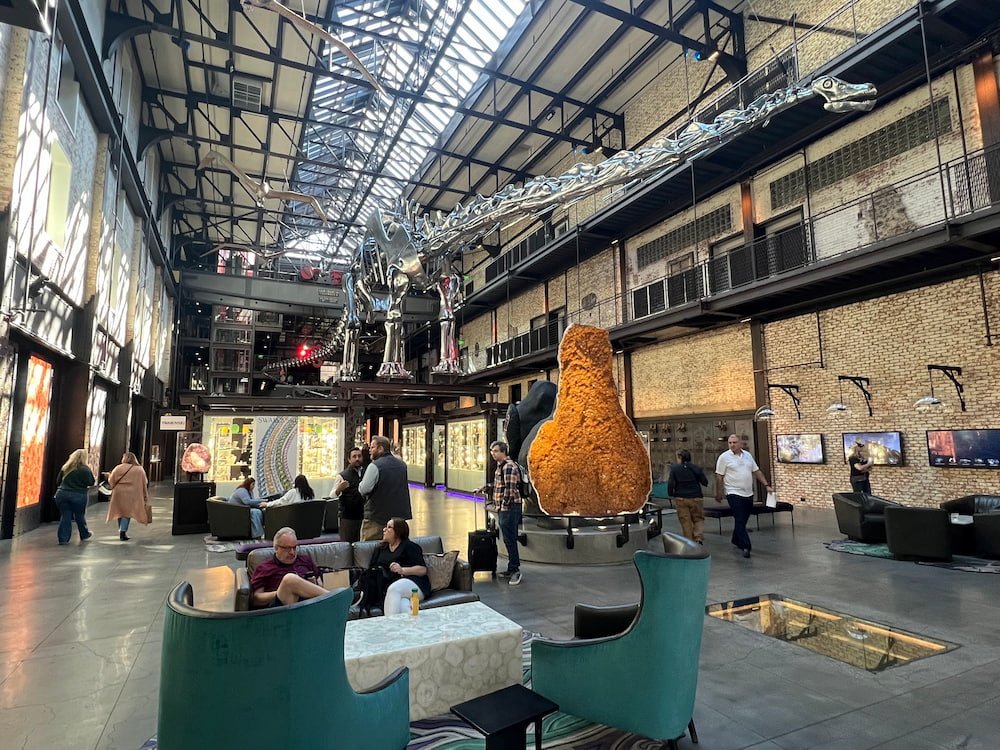
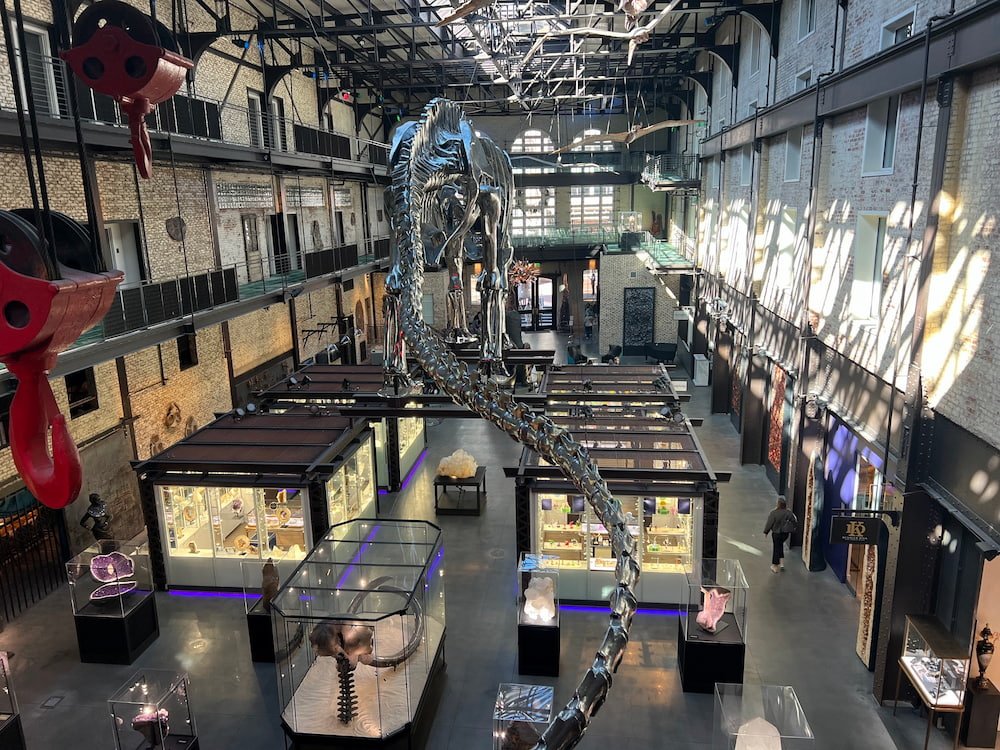
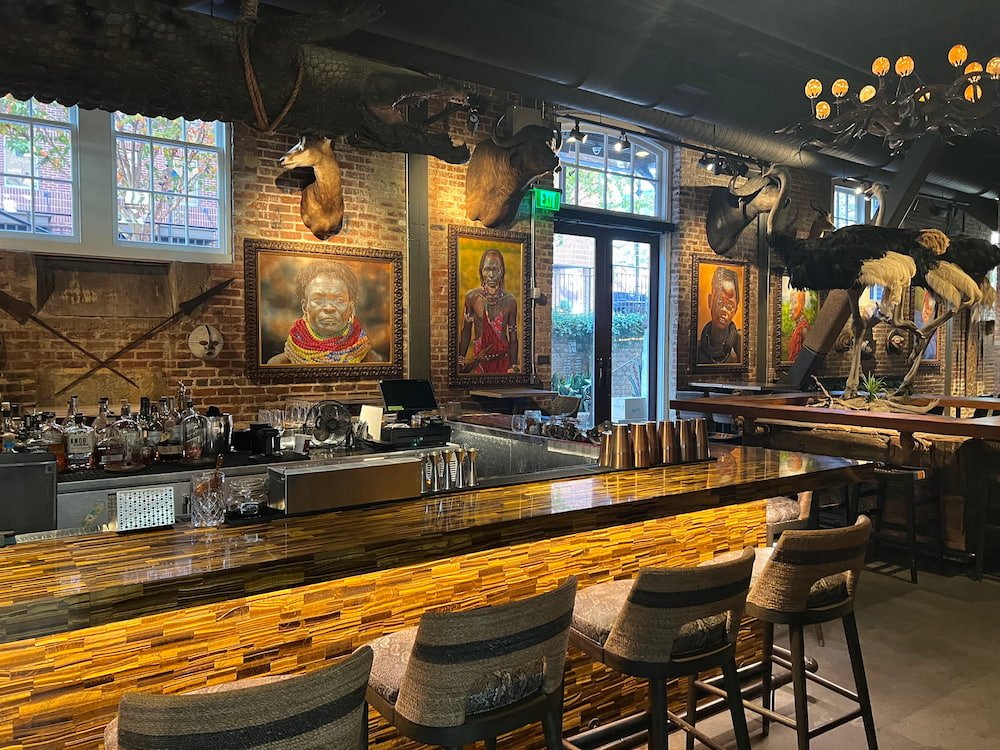
What makes it unique is that it's not just like every other Marriott or major hotel lobby. Rather, it's like a museum on the ground floor, with fossils of creatures like tortoises that are thousands or millions of years old, massive displays of glittering crystals, and life-sized displays of dinosaur skeletons soaring overhead, set in the high ceilings above, which have skylights providing lots of natural light to everyone below. There's also a couple of stores that sell crystals and jewelry (we didn't look at the prices, it's undoubtedly expensive), plus a fancy-looking cafe. Lisette almost missed it so had to go back in, but there's also a funky bar on the ground level, with a dark and moody color scheme showcasing various African masks, paintings, and other artifacts. We can see why multiple folks have recommended that we check it out!
Booze and Lunch
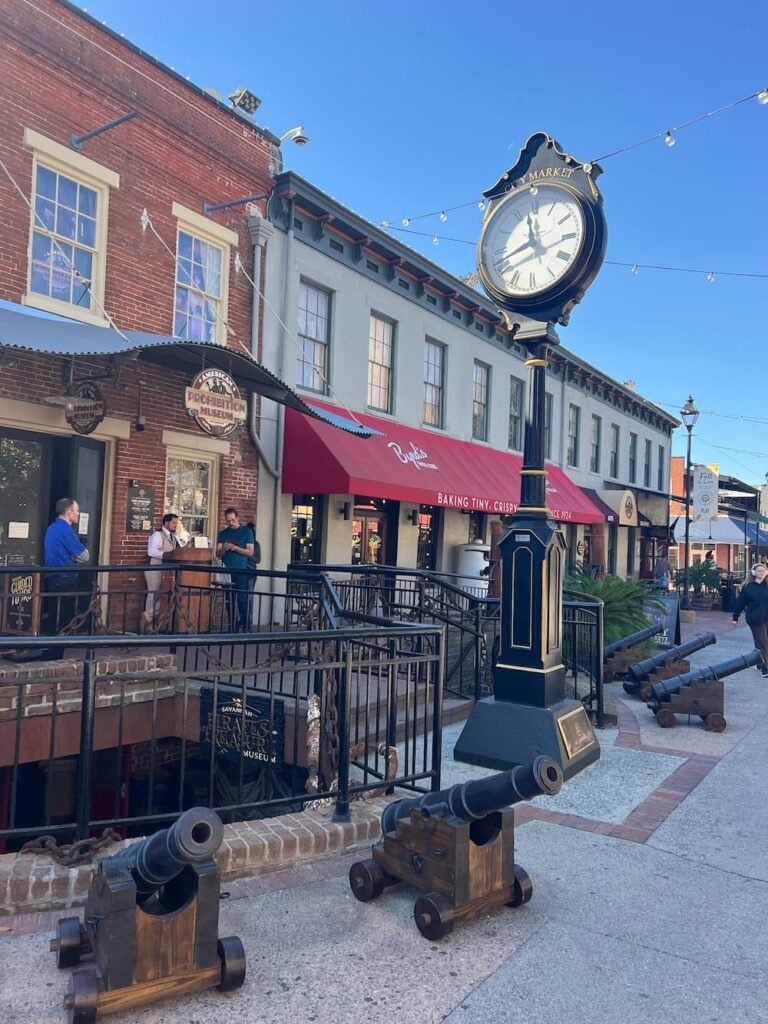
We next cycled to Ellis Square, a lively plaza where we saw tourists on horse and carriage going past, and where folks had also congregated to dine at the various restaurants in the area, as well as line up to visit the American Prohibition Museum, which delves into the nation's ban on alcohol from 1920-33, and apparently also features a retro speakeasy serving drinks.
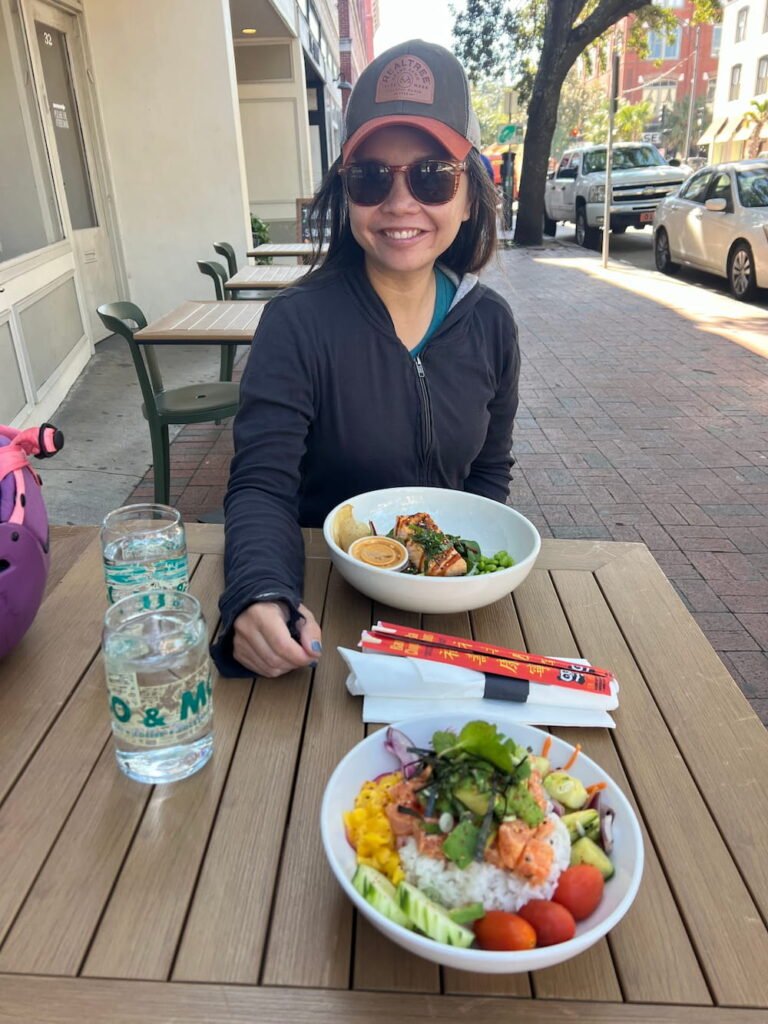
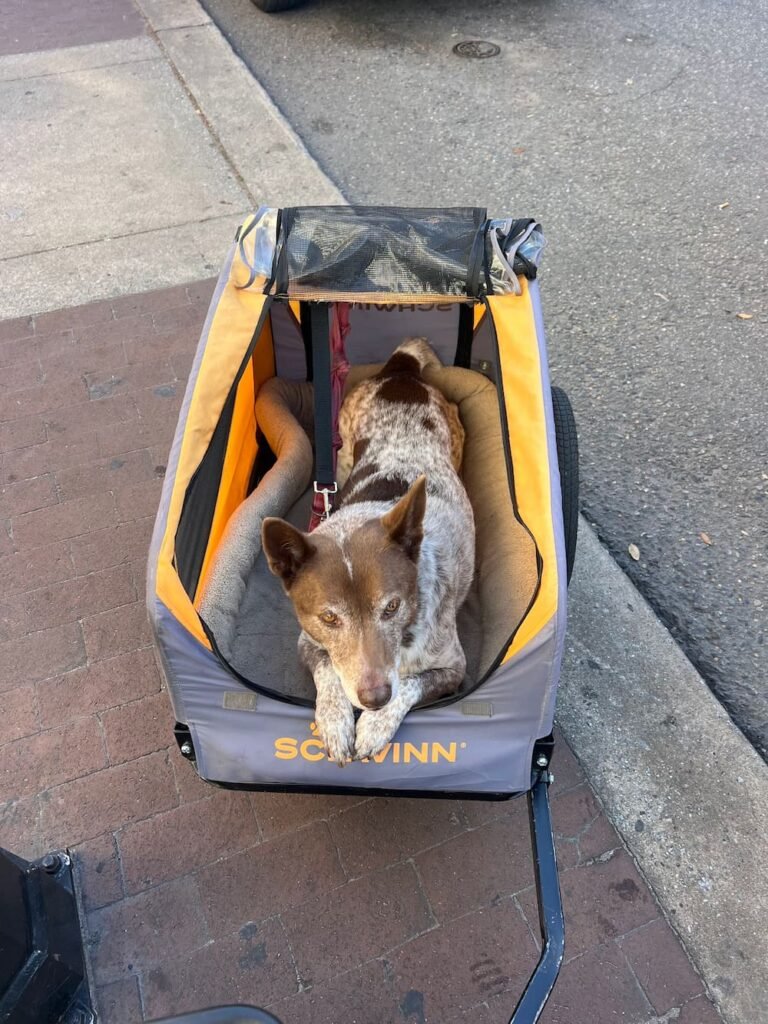
But we skipped the booze and opted for lunch a stone's throw away from the Square, at a restaurant called Coco & Moss, which focuses on sushi, poke bowls and other Asian-inspired dishes. The name is cute: "Coco" is taken from the coconut trees of Savannah's past, and "Moss" is derived from the Spanish moss from the oak trees that are prevalent in the city today. We ordered a couple of grain bowls, which were delicious! We sat outside with Sheila hanging out in her trailer next to us, watching the folks go by, including more tourists sitting in carriages, attached to the horses that were galloping past (we could hear the distinct clip-clop of the horse's hooves well before they arrived, and for many meters afterwards!).
It's Savannah to Be Square
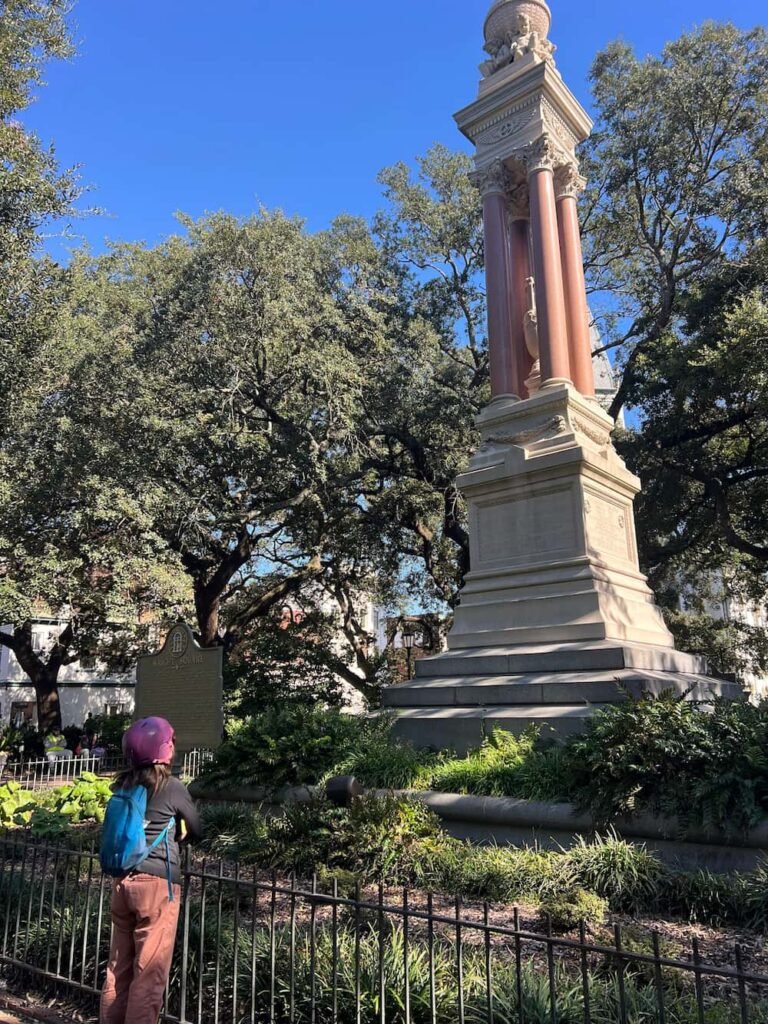
While there are quite a few squares in Savannah, arguably one of the most famous is Chippewa Square, in part because it was used in the movie "Forrest Gump" where Forrest is sitting on a park bench waiting for a bus, talking to strangers about life being "like a box of chocolates...you never know what you're going to get." The bench is no longer there though. A short stroll from here is Wright Square, which was laid out in 1733, which has a monument and plaque detailing the history of the square, mentioning facts like how Tomo-chi-chi, the Chief of the Yamacraw Indians who befriended the early Georgia colonists, was buried with ceremony in the middle of the square.

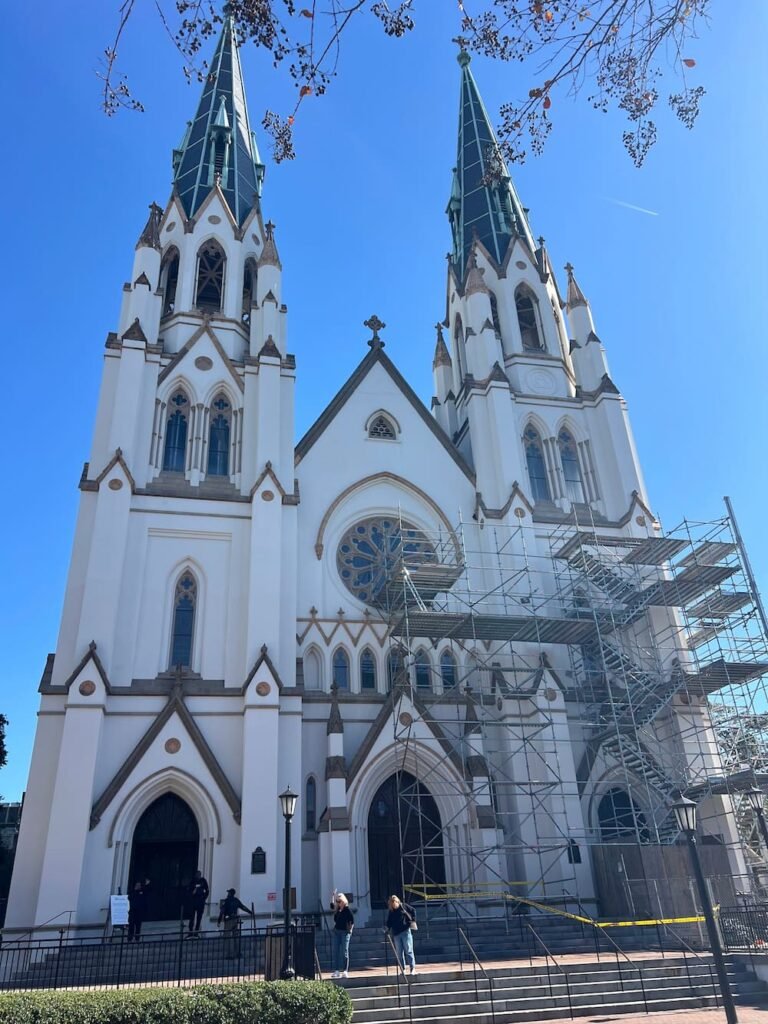
We hadn't listed this on our places to visit, but we passed a couple of churches that captivated our attention. The Independent Presbyterian Church of Savannah, an all-white, formidable edifice up a flight of stairs, which has a tall steeple that looks like it's much taller than the rest of the building. A short stroll away is the Cathedral Basilica of St. John the Baptist, which has two tall steeples with green roofs, with the white building accented in gold.
Haunted History and Historic Homes
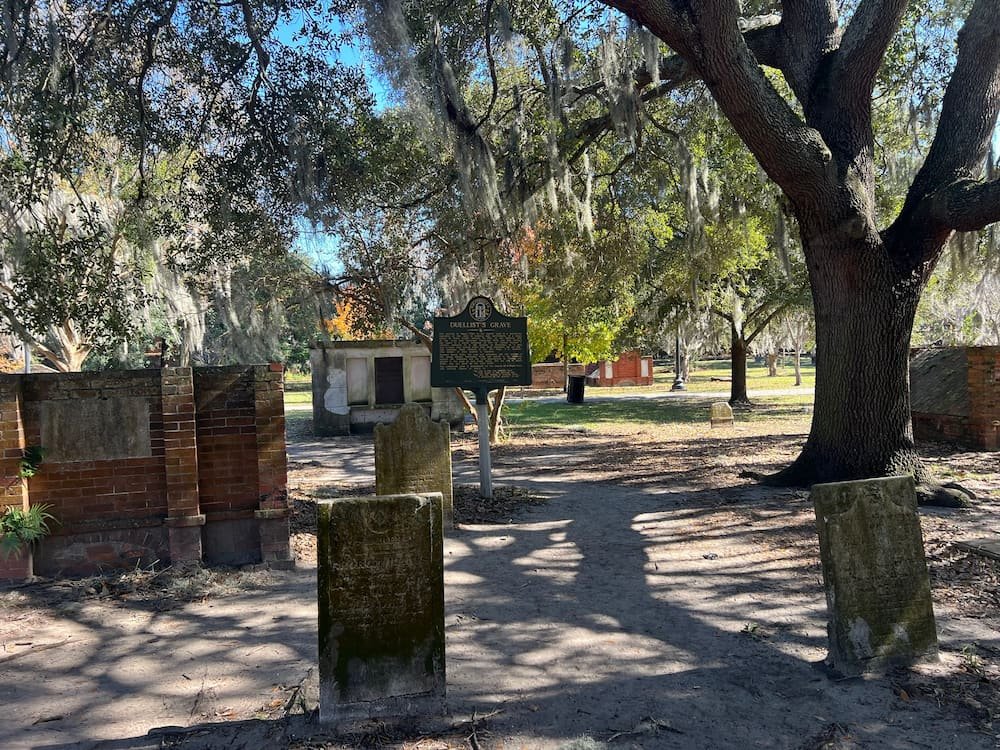
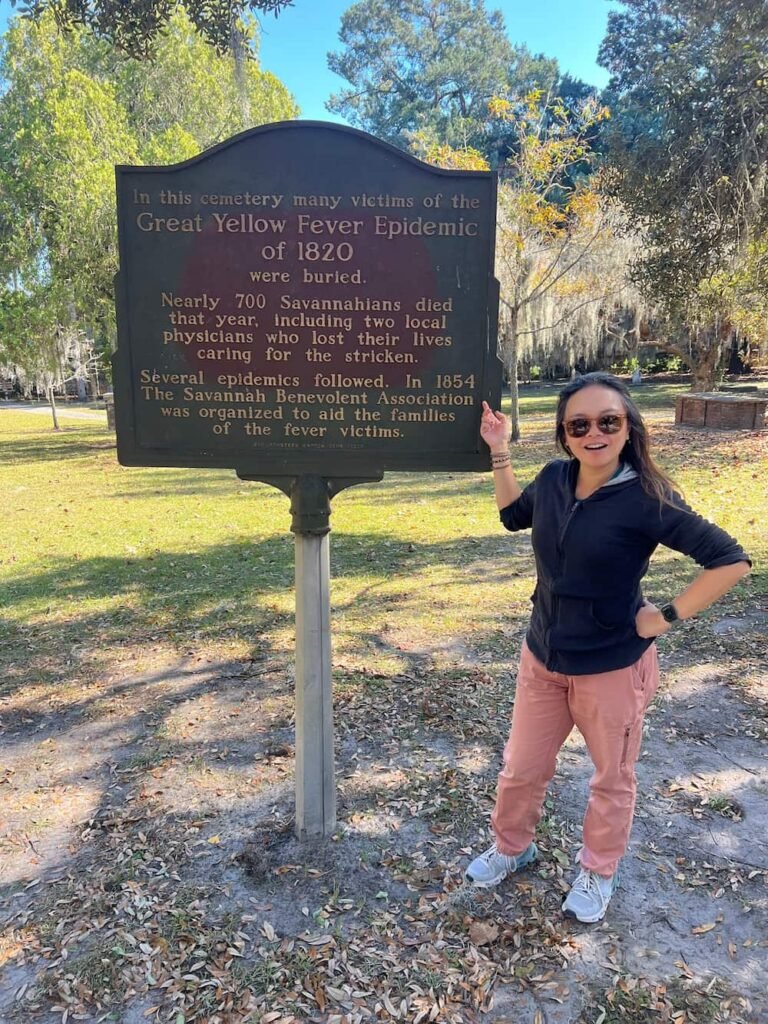
Savannah is known for being one of the most haunted cities in the US, thanks to the various wars (Revolutionary, Civil), epidemics (like Yellow Fever), and violent history (pirate kidnappings, slavery, etc). Adding to this, there are a lot of old cemeteries around the city, including Colonial Park Cemetery, which was used in the 18th and 19th centuries before it became a city park in 1896, 43 years after burials in the cemetery ceased. It's rather different to be walking through what is now a public park with tombstones all around us! Some of the tombstones were clearly of notable people, given there prominence--these include Button Gwinnett, one of the signers of the Declaration of Independence, and there are quite a few notable Revolutionary war soldiers and generals buried here as well.
Owens-Thomas House & Slave Quarters is a historic home built in 1819, that focuses on the art, architecture and history of the home through the lens of slavery, and the complicated relationship with the wealthy families who lived here for over a century. We didn't go in for a tour, but the classical neoclassical style home looks pretty from the outside.
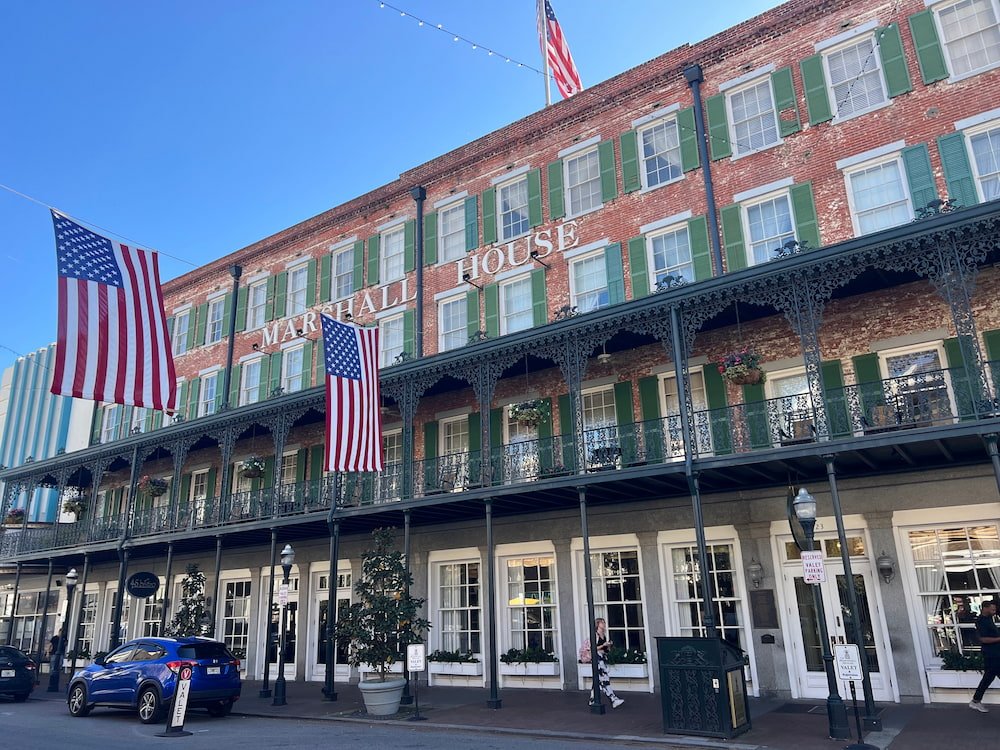
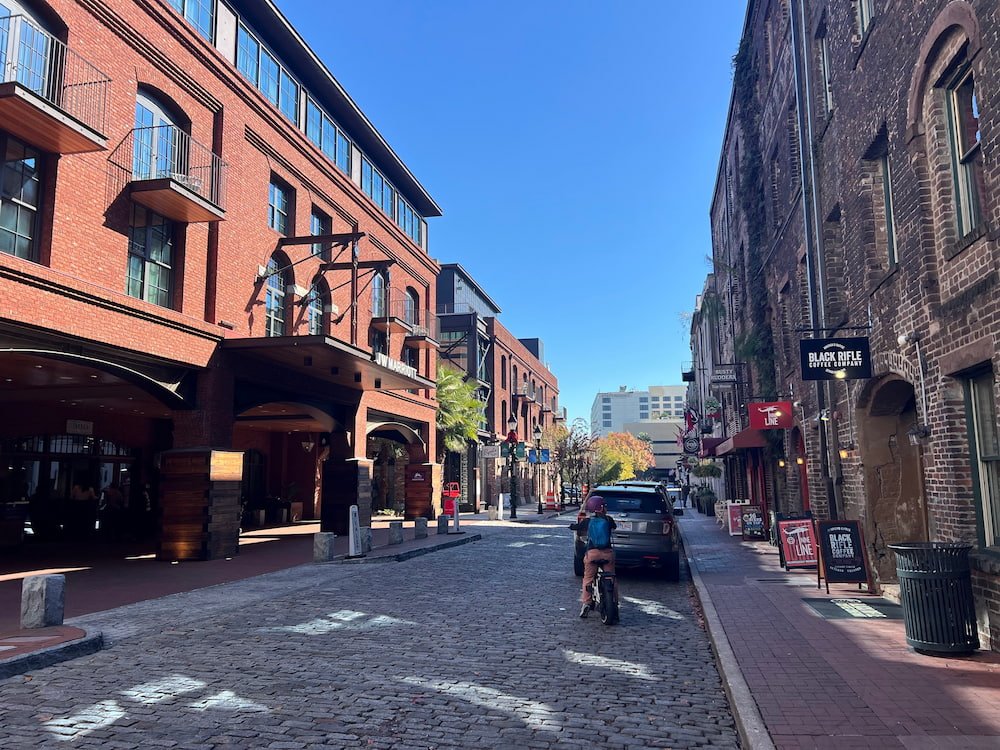
Another impressive building is The Marshall House, which takes up a long stretch of the street (you definitely can't miss it). It's a four-story house that was built in 1851, and once served as a hospital for Civil War soldiers, and during two yellow fever epidemics (thus having a haunted reputation). It was then closed for a few years and operated on-and-off as a hotel until 1957, when it was closed and eventually renovated and reopened in 1999 as one of the city's iconic hotels.
Sweet Arts
A block from The Marshall House on the other side of the road, we had another food stop at Leopold's Ice Cream, a popular institution in Savannah, which has been around for over a century (since 1919). The ice cream parlor was founded by 3 brothers from Greece, and today it's still a family business: Stratton Leopold, the grandson of one of the brothers, still owns the business. He left Savannah to pursue a career in Hollywood, producing movies like Mission Impossible 3, and The Sum of All Fears, so the parlor is filled with posters, photos with celebrities, and other movie memorabilia.
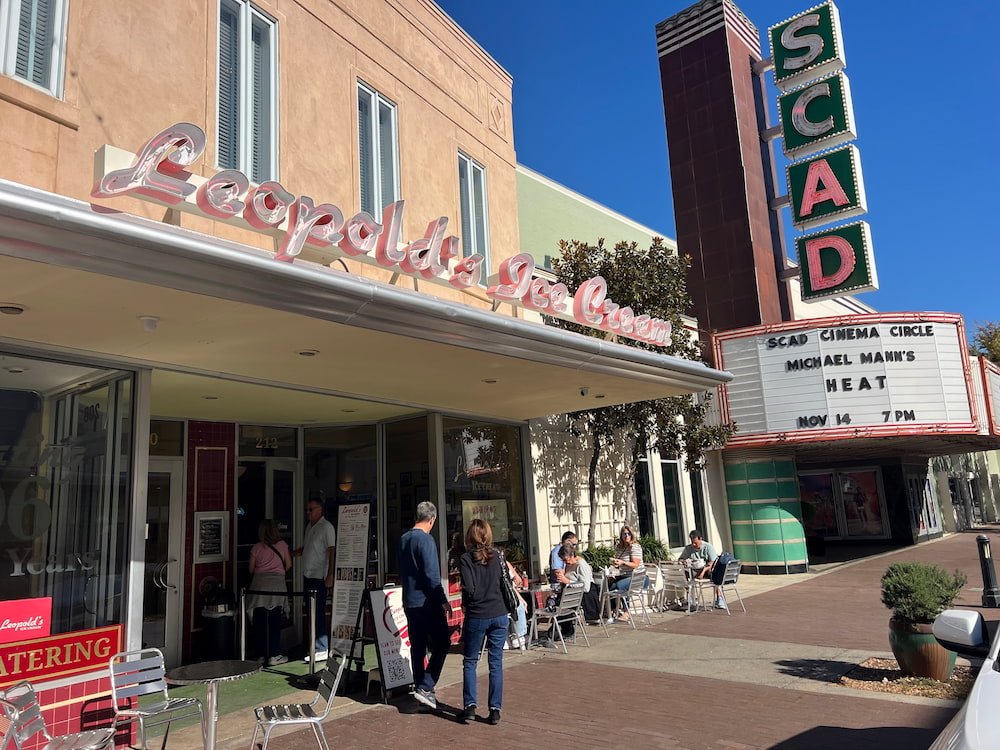
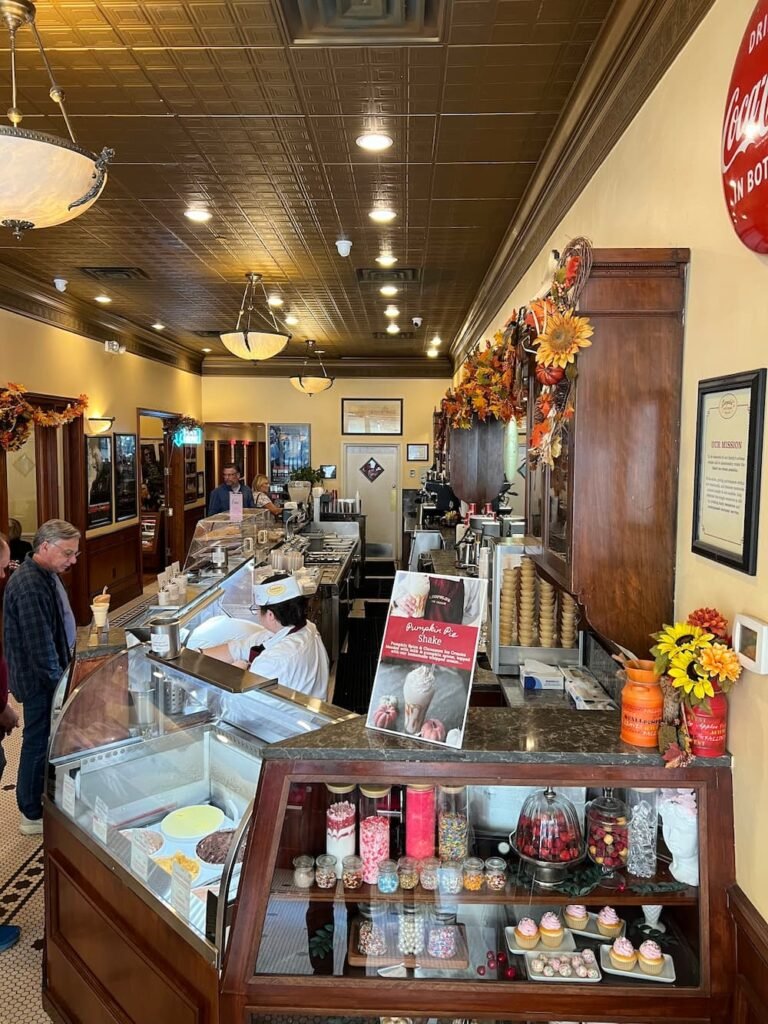
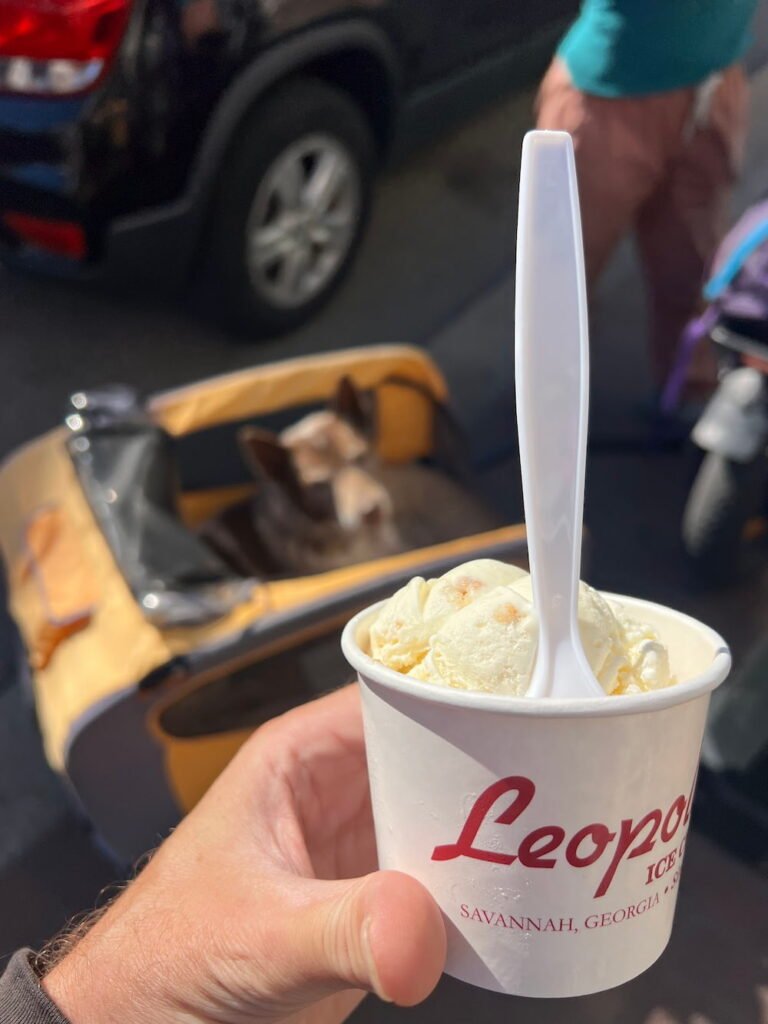
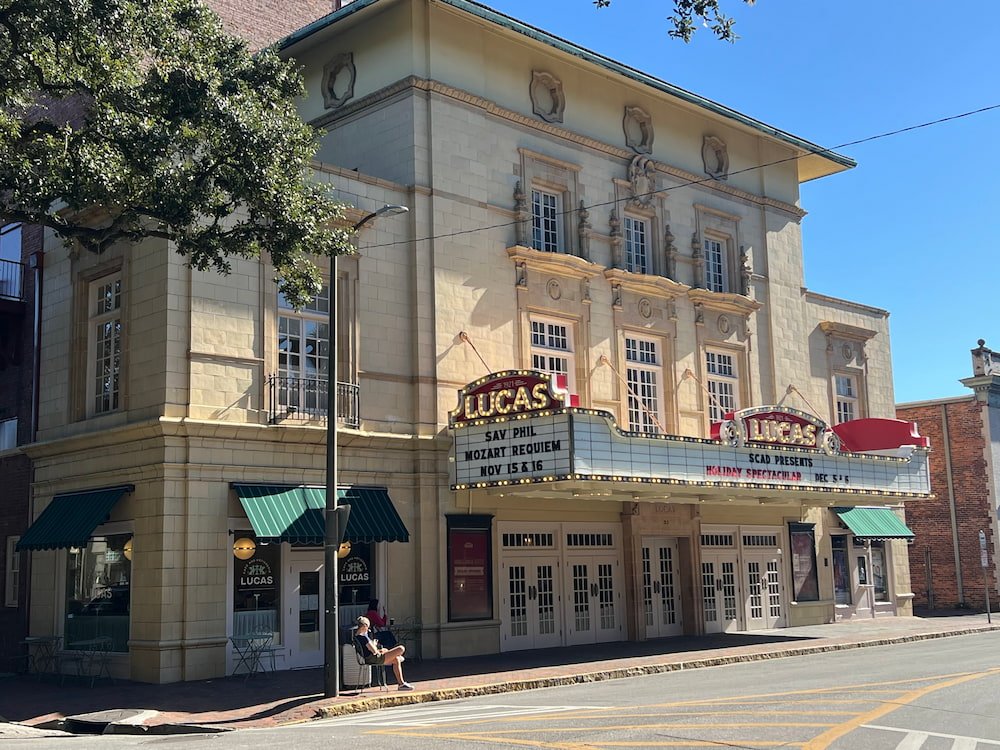
Since it's got such a famous and long-running reputation, we ordered a single scoop of Rum Bisque ice cream, one of the original flavors from 1919 (rum ice cream with chunks of in-house baked almond macaroons). There are a ton of other ice cream flavors--plus they make sundaes, splits, milkshakes, ice cream sodas, etc. While Rum Bisque is a unique flavor, we admit that it was just "okay"--the macaroons were barely recognizable in the ice cream, and it didn't wow us as much as other ice cream parlors that we've been to on this trip (unlike ones we went to in Denver and around Montana). Speaking of Hollywood, we saw the exterior of the gorgeous Lucas Theatre for the Arts, which was built in 1921. The theater closed in 1976 and was slated to be demolished, but it was rescued, preserved, and has now reopened and continues to function as a theater today, thank goodness!
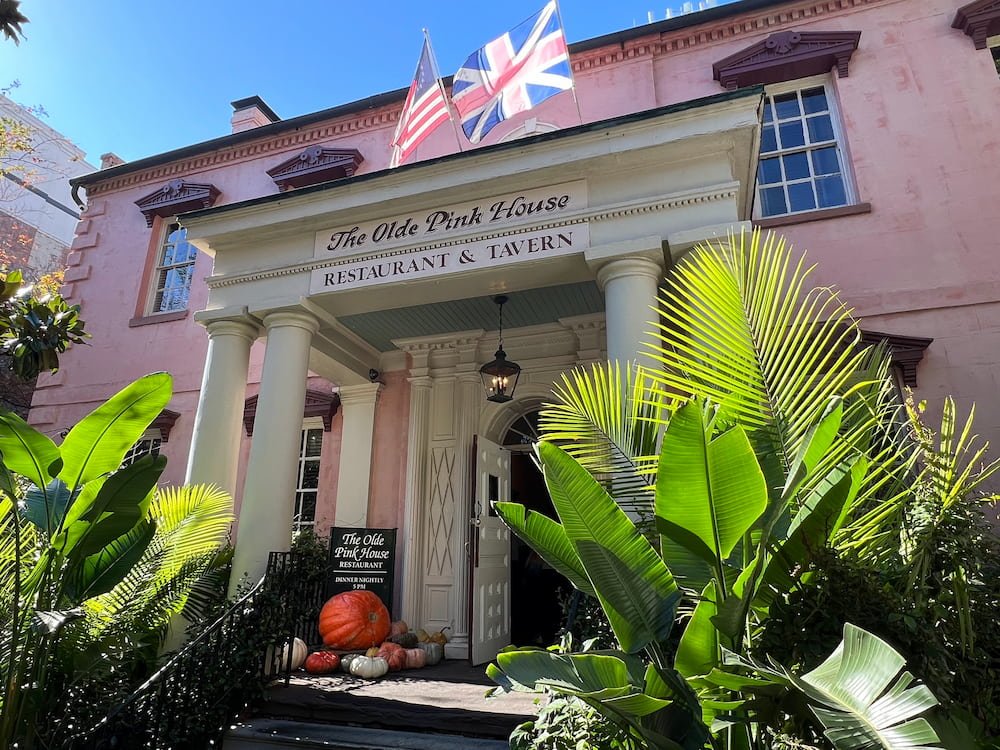
If you love architecture, Savannah is wonderful for "building watching" (as opposed to "people watching"!), because there are so many unique buildings in different styles, shapes, and colors. We stood outside The Olde Pink House, an elegant mansion that has been around since 1771, which is now a restaurant serving Southern cuisine. We definitely weren't dressed the part to enter compared to the people looking preppy in their polos, polished shoes, and tailored dresses coming in and out of the establishment! We're sure it would have looked equally as enchanting inside.
Along the Waterfront
Cycling towards the Savannah River, we passed the African-American Monument, a monument of a family (father, mother, daughter, son), which commemorates African Americans in the city and highlights the "invisible story of the Trans Atlantic slave trade", before getting to the riverfront and seeing the Savannah Convention Center on the other side of the Savannah River.
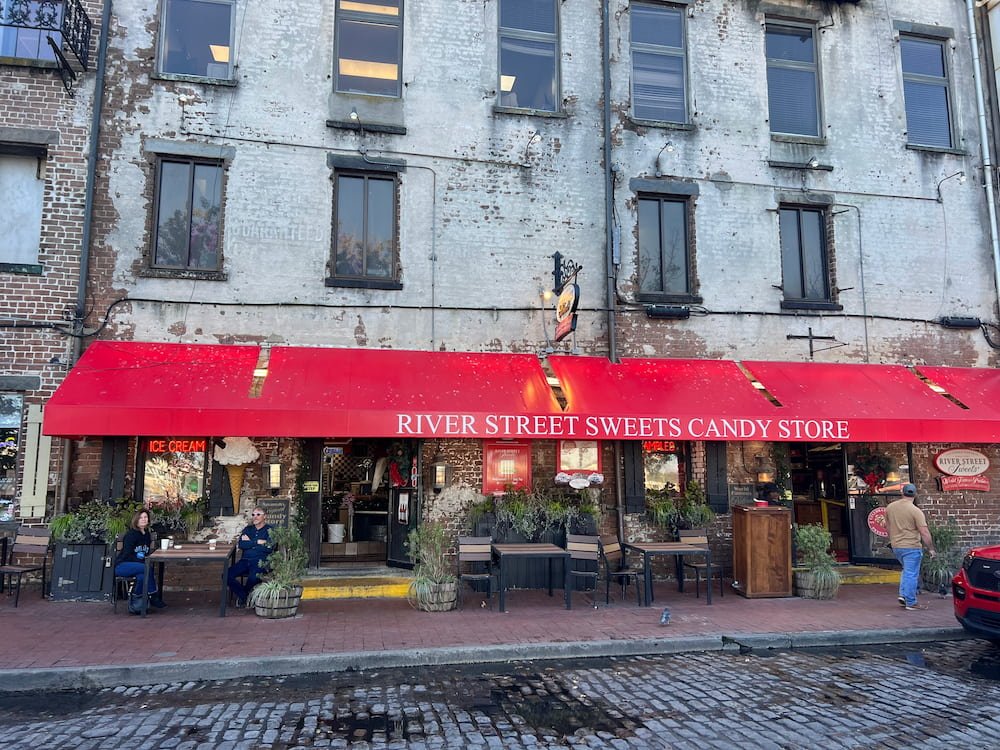

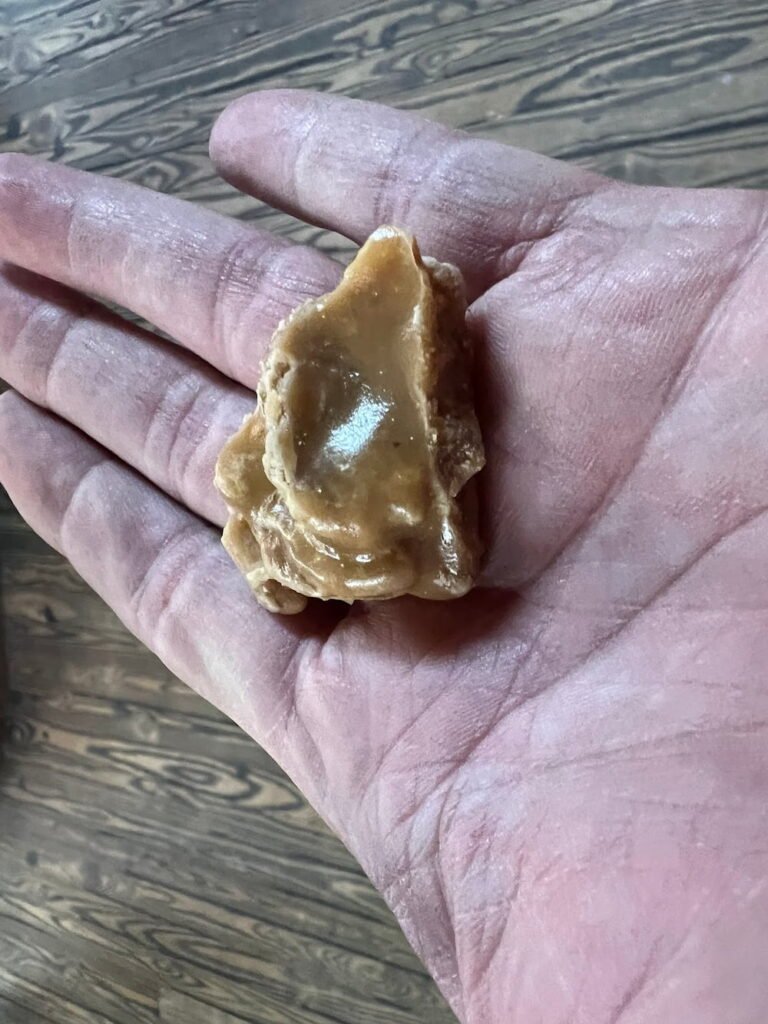
On the other side of the road are various stores focused on tourists--we stepped into River Street Sweets where we got a sugar high just from smelling it in the air! One of the most well-known sweets in the South are pralines: unlike the European version that's a chocolate with nut creme filling, the US southern versions are flat candy made from pecans, sugar (both brown and white!), butter, and cream, shaped in a disc. We've tried them before and they are overly sweet for our tastes! The sweet store had free samples, but after having an ice cream we decided to lay off the sugar and skip it.
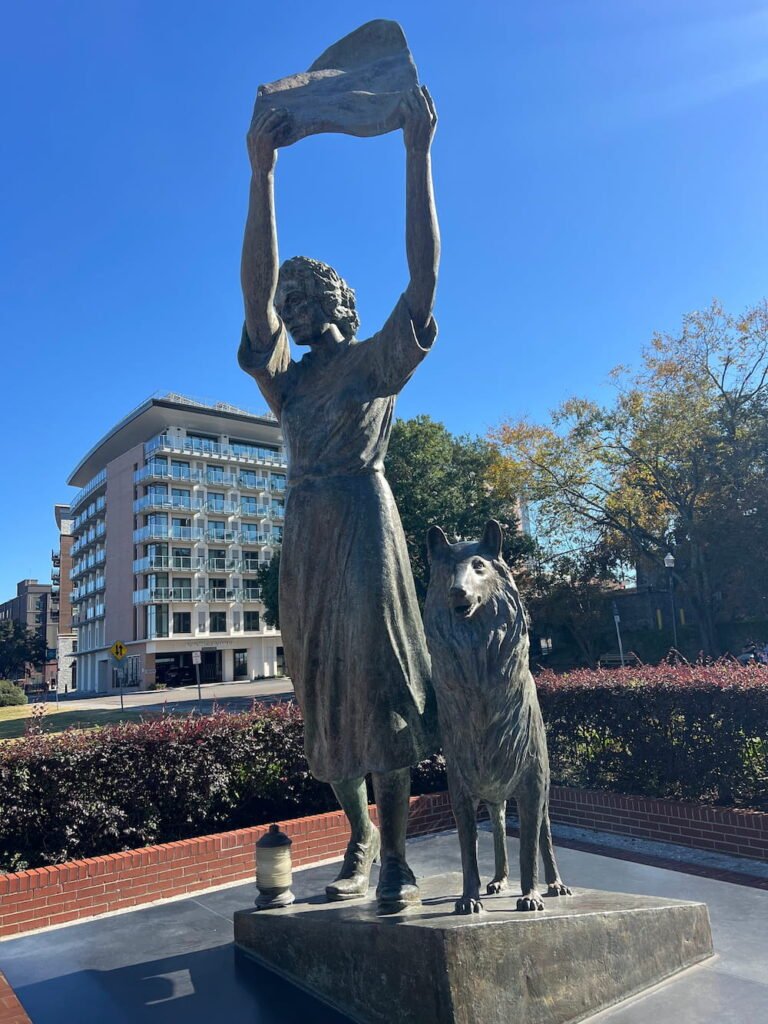
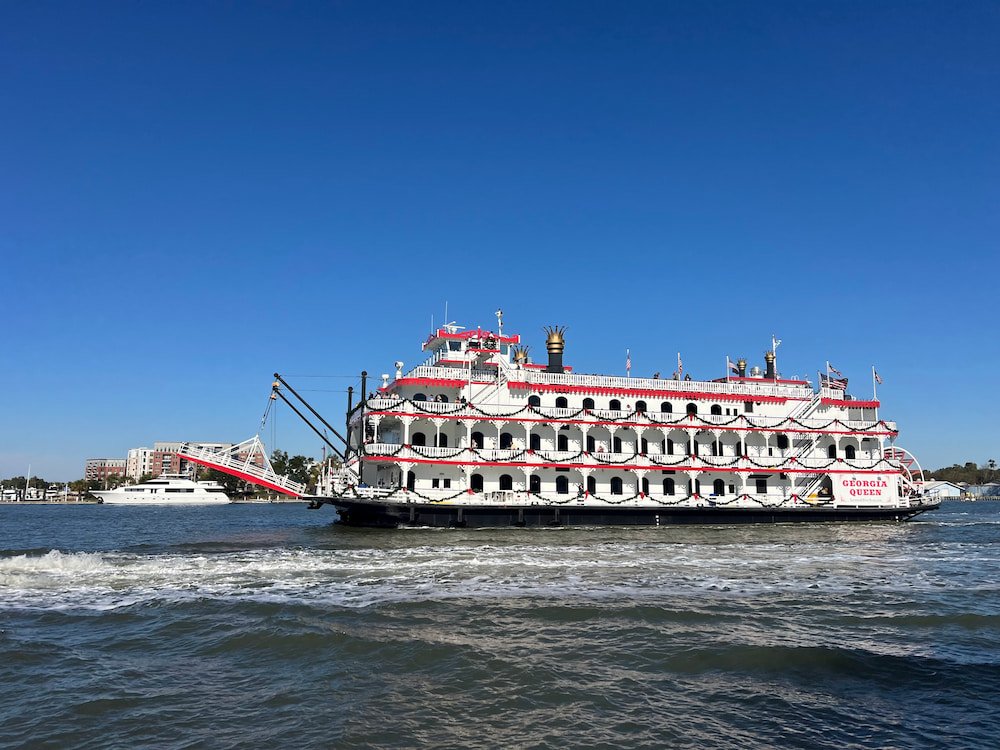
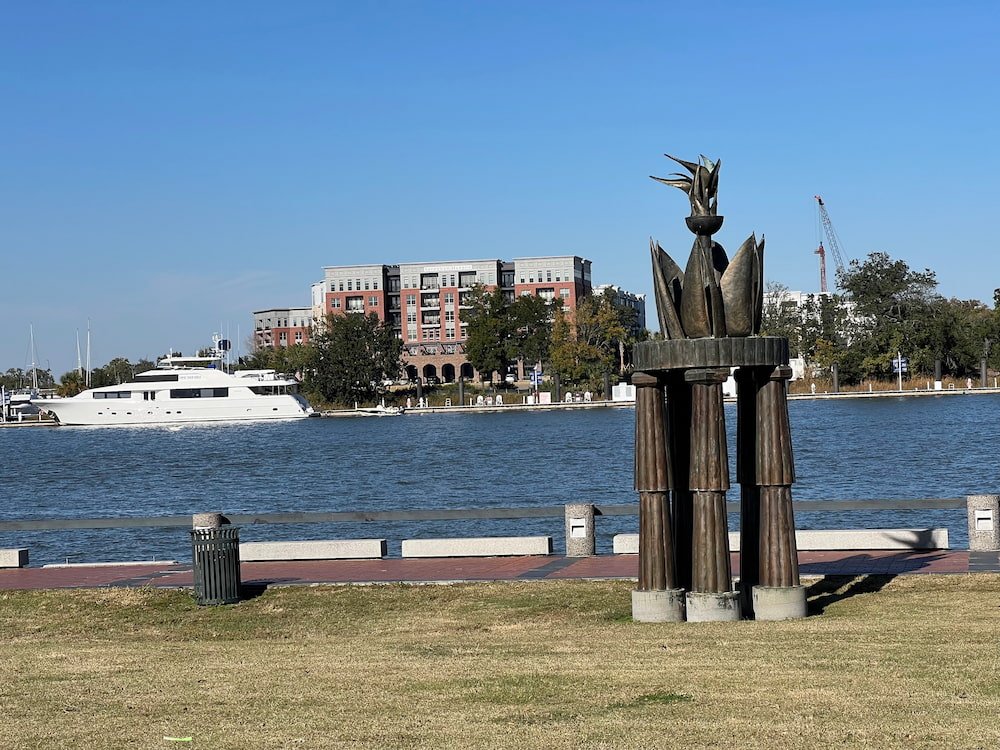
Further along the riverfront, there's The Waving Girl Statue, a tribute to a girl called Florence Martus, who greeted ships as they docked into Savannah, apparently in search of her long-lost lover. Near here is another monument, the 1996 Olympic Yachting Cauldron, which was lit by the original Olympic flame from Mt. Olympus at the opening ceremonies on July 20, 1996. We knew that the 1996 Olympic Games were held in Atlanta, but didn't realize until now that portions of the games were held in Savannah--specifically the yachting events. As we were at the waterfront, we also got to see the "Georgia Queen"--the largest riverboat in operation in the US--sail down the Savannah River! It looks every part the showboat, with four decks, and red trim.
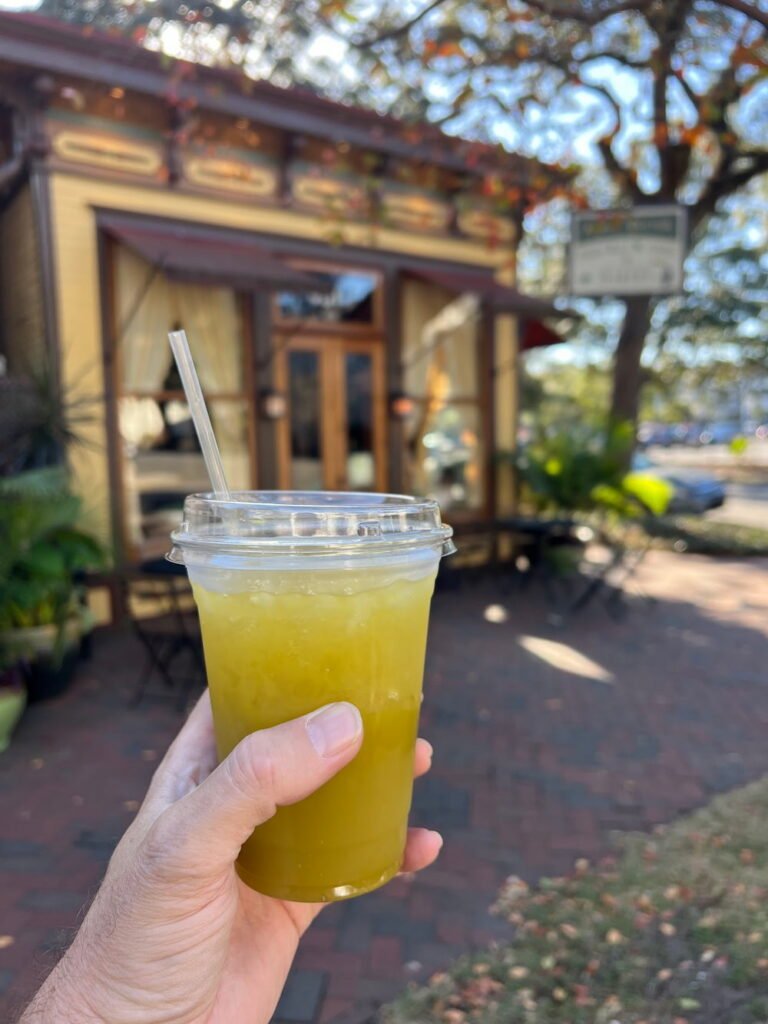
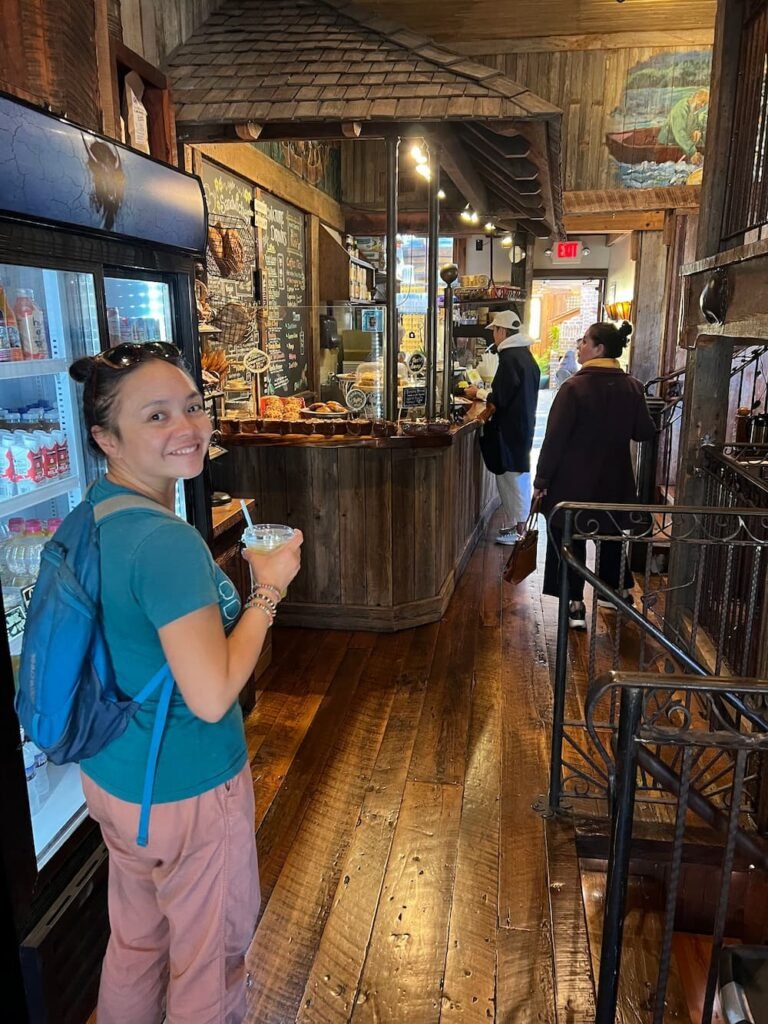
And after that, we looped back to the RV! As we were putting the e-bikes away, a sweet elderly lady popped out of Mate Factor, the cafe that we'd parked next to overnight, with a free drink for Michael, which was very really lovely. So we went in and met her and her husband, who were doing a busy trade with lots of folks in there ordering their homemade baked goods and having coffee. Service was warm and friendly, and they had samples of their cranberry and walnut loaf, which was delicious. We ended up buying one, which we quickly demolished in the ensuing days for breakfast! We did learn later that they're part of a cult/religious movement that operates around the world (they operate as Mate Factor but elsewhere they are called Yellow Deli--we won't go into it in this post, but if you're interested you can look it up).

Retro and Tiny
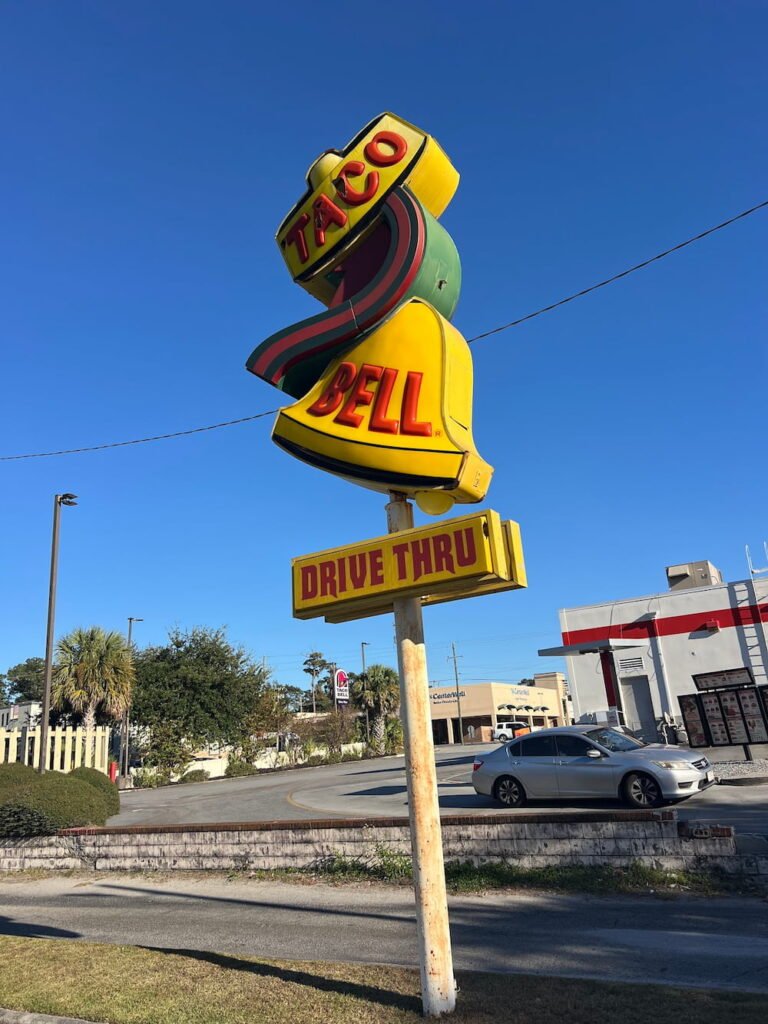
We drove to the outskirts of Savannah, where, in a Wendy's parking lot (surrounded by other fast food chains), we found the last surviving vintage, Taco Bell sign. There isn't a Taco Bell restaurant here, since it's in a Wendy's, but the sign from the mid-1960s looks absolutely nothing like the logo today--there's a sombrero above the bell, and it's in yellow, green and red (today's logo is simply of a bell and is purple!).
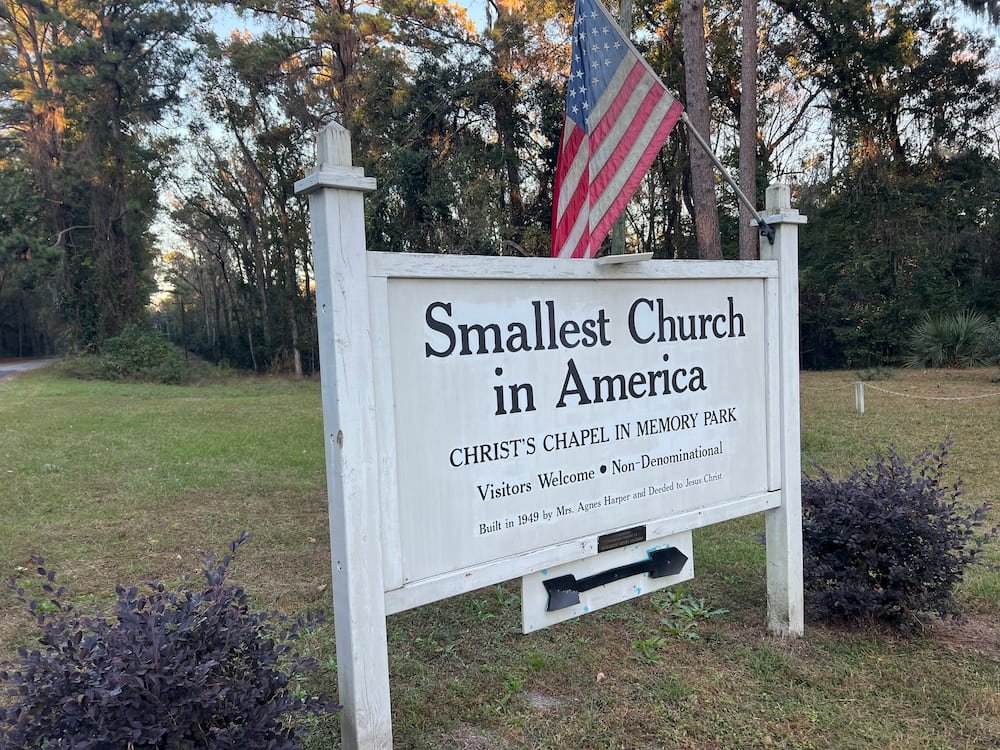
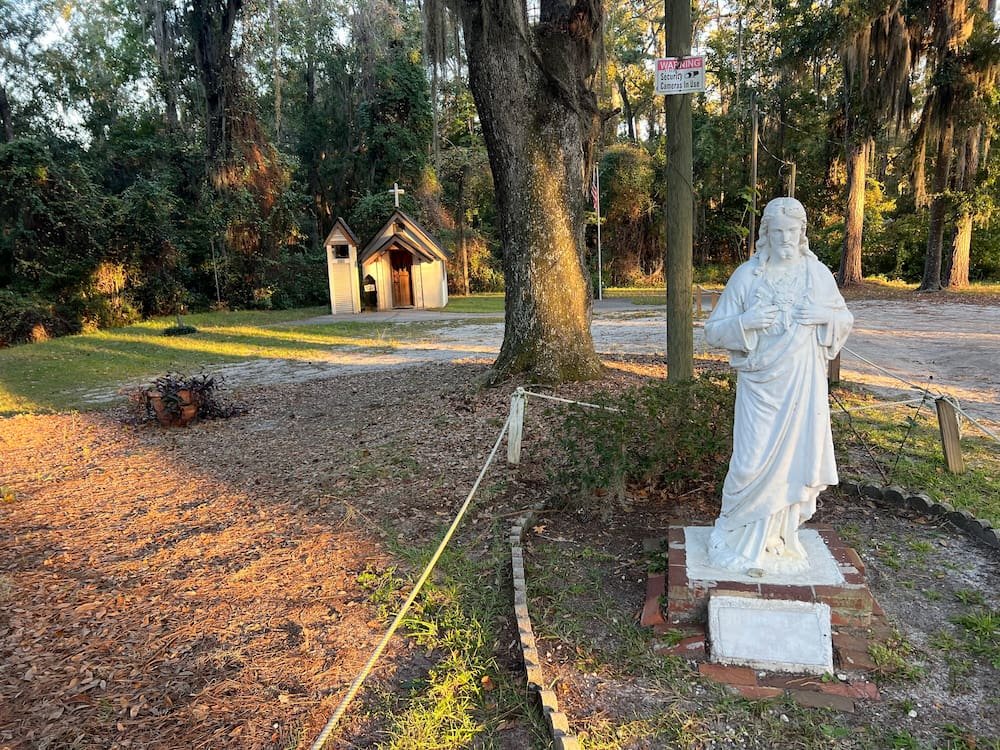
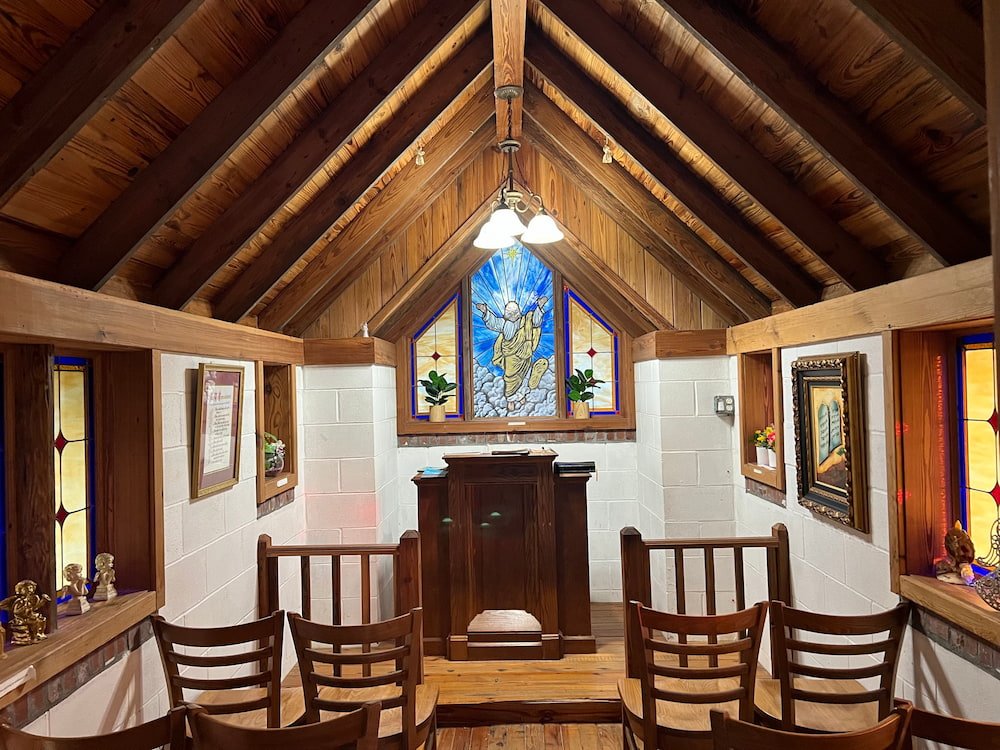
As the sun was setting, our last stop was the Memory Park Christ Chapel, known as the "smallest church in America" (there's a sign proclaiming this out the front), in the town of Townsend. The little church was originally built in 1949, and the 190 square foot (17.6 meter) wooden church has stained glass windows, and can seat about a dozen people. It definitely looks teeny from the inside, and inside the wooden chairs are facing the little pulpit. It's charming and set slightly back from the highway, with a statue of Jesus in front of it as well as those eerie oak trees with Spanish moss.
We settled into a Cracker Barrel (where else?) for the night, as it seems to be customary and the most convenient stop for us around this region of the US. Tomorrow, we'll be wrapping up our tour of South Carolina and heading back into Florida!