
There are some cities that we'd heard great things about from friends ahead of visiting them, and Charleston was one of those places! Friends had consistently told us about the beautiful architecture, lovely streets and rich history here--and we were looking forward to checking it all out for ourselves.
Charleston isn't a particularly big city, so we found a place to park our RV fairly easily (again, likely because we were here during the off season), and we loaded our e-bikes off the racks and took down Sheila's trailer, so we could easily cycle and explore the city. The town is so historic that we even had to cycle along some cobblestone streets, bumping along the stones with Sheila also rattling along in her dog trailer attached to Michael's e-bike.
To Market, To Market
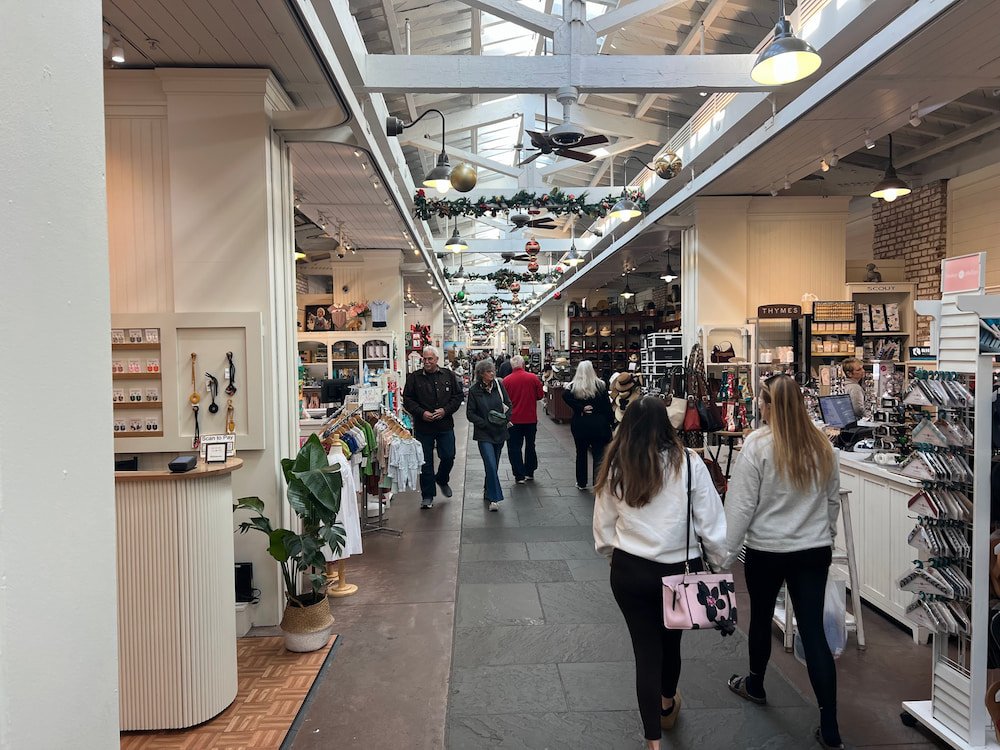
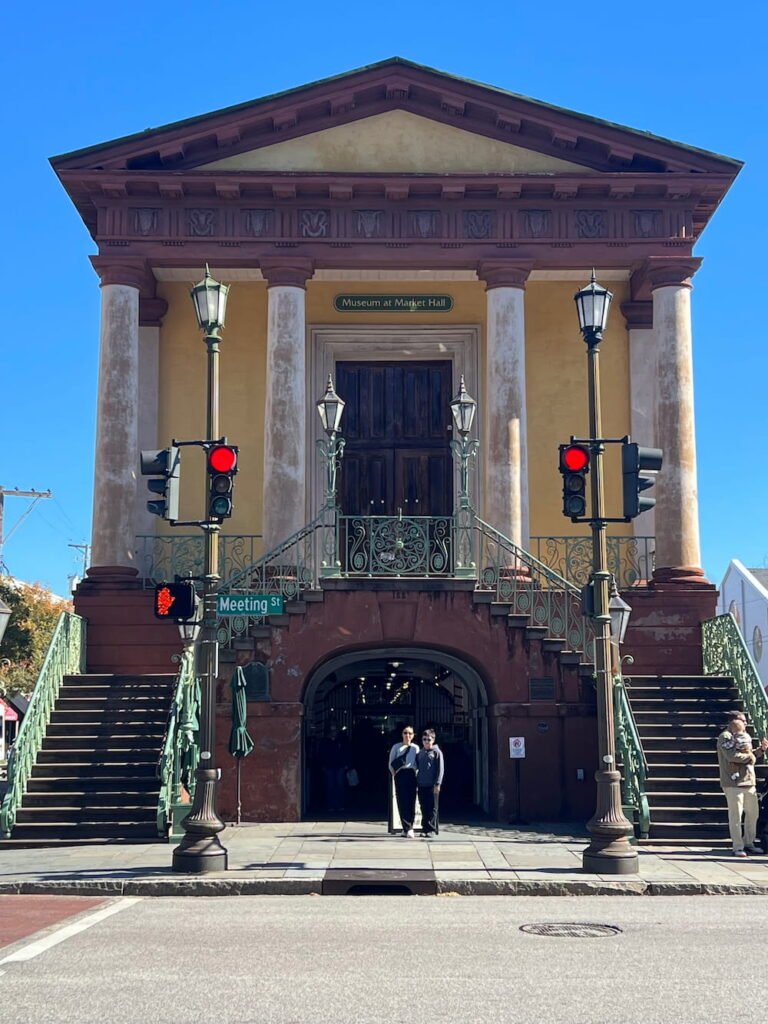
Our first stop was the Charleston City Market. Established in the 1790s(!), it's open every day except for Christmas, and stretched across 4 city blocks. We weren't in the market (pun--get it?) to buy anything, but it was nice to stroll along and see the various souvenirs, gifts, and gourmet food for sale. Lisette is always tempted to buy food at these type of places, but she successfully resisted.
We cycled past some impressive buildings, including the US Customs House that looked like it was inspired by the Parthenon, which was built between 1852-1879 (the Civil War and high costs meant construction was halted for a while).

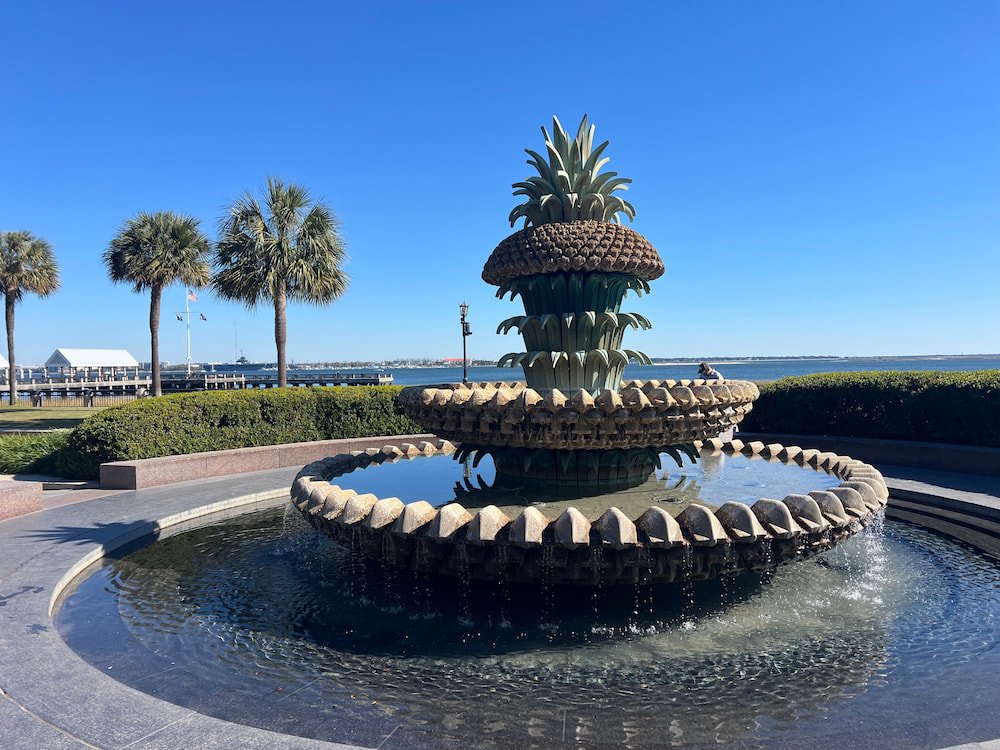
Waterfront Park is gorgeous--it's an 8-acre park that, true to its name, runs in parts alongside the Cooper River. It had a really picturesque avenue of trees lining paths in the park, and is a very tranquil part of the city to just sit, read a book, people watch, or do something relaxing. Probably one of the most popular photo spots in the park is the Pineapple Fountain, a unique fountain that represents restoration and hope, as it was opened in the aftermath of Hurricane Hugo in 1989. Pineapples were historically expensive and difficult to get because they could only be grown in South America, but today they're common in Charleston, so the pineapple also is a symbol of wealth and hospitality.
Steeped in History
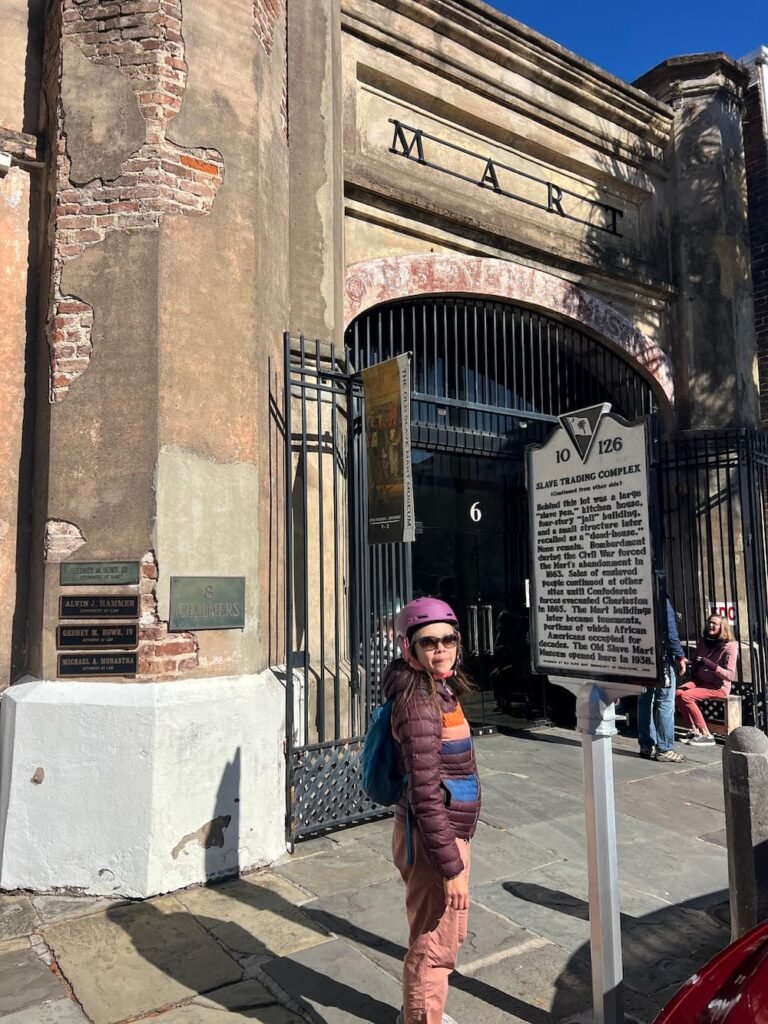
The Old Slave Mart once housed an antebellum-period slave-auction gallery. Built in 1859, the building is believed to be the last surviving slave auction facility in South Carolina. It's now become a museum, the first to focus on the history of slavery in the country. It cost $8 to enter and it would have undoubtedly been interesting, but we decided to skip it as we'd decided that we'd aim to reach Savannah in the evening (Lisette was hoping to make it for a West African dance class).
Did you know that the oldest liquor store in the country is in Charleston? The Tavern at Rainbow Row was established in 1686(!). It's on the corner and looks teeny from the outside--but sells rare and unique bottles of whiskey, bourbon, scotch, beer and wine. It was midmorning so for us, definitely too early for a tipple, but the store offers free tastings of local moonshines, whiskey and other liquors. It also have a floor hatch that leads to tunnels where booze was delivered all across Charleston during Prohibition--pretty cool!
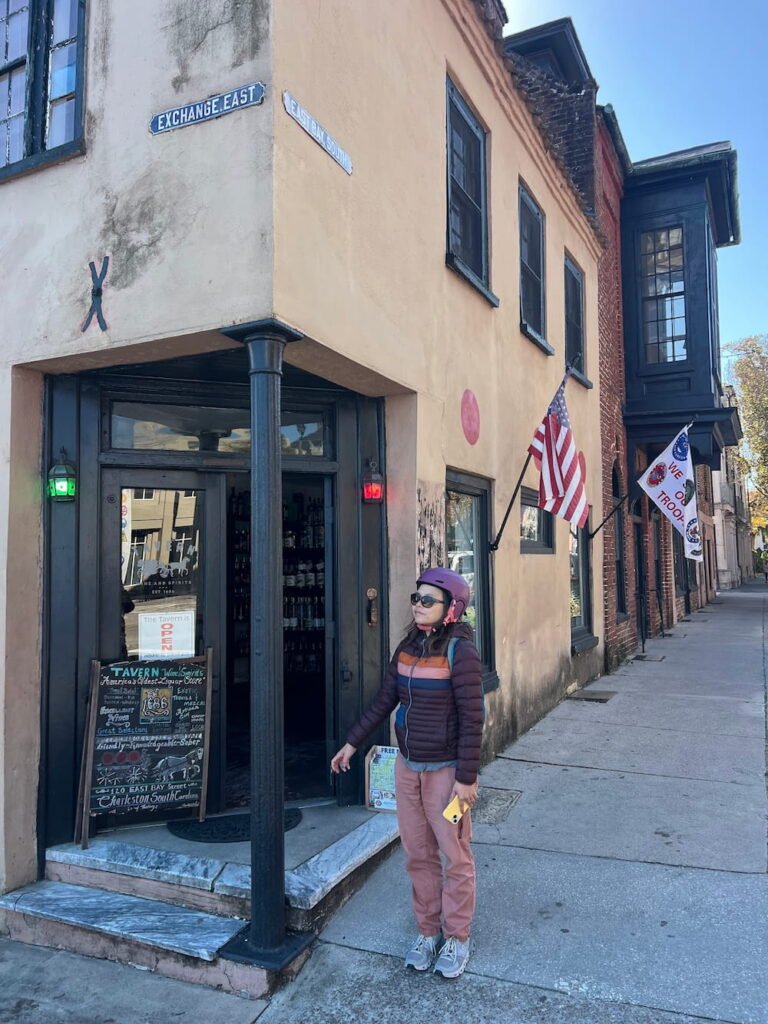

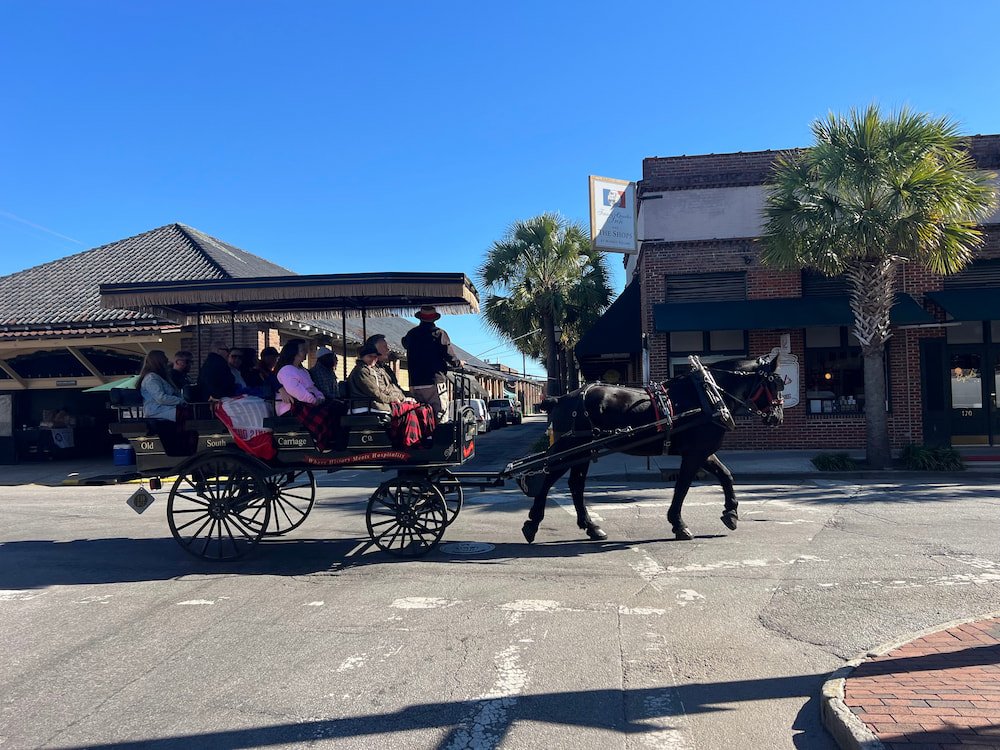
Rainbow Row is the name of a 13 colorful historic houses, lined up consecutively on E Bay Street. We saw a walking tour (there are also tours via horse and carriage), when we were here--clearly it is one of the "must-see" stops for tourists. We took a few photos of these colorful homes, although perhaps our photos don't do them justice in how the colors did indeed pop!
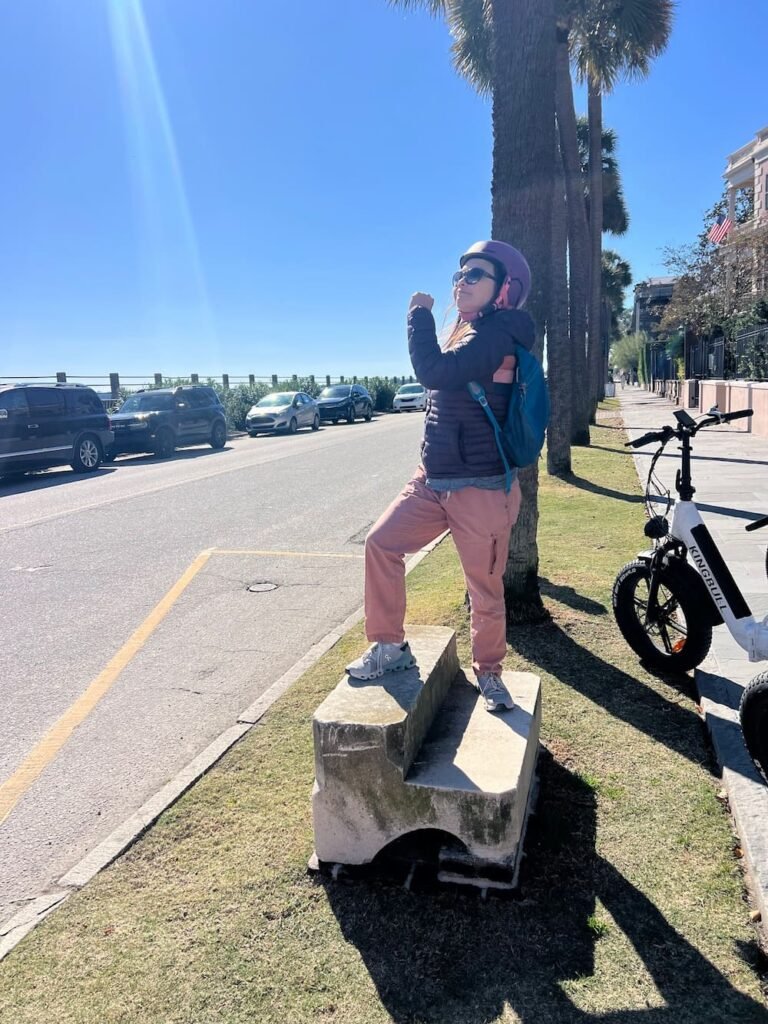
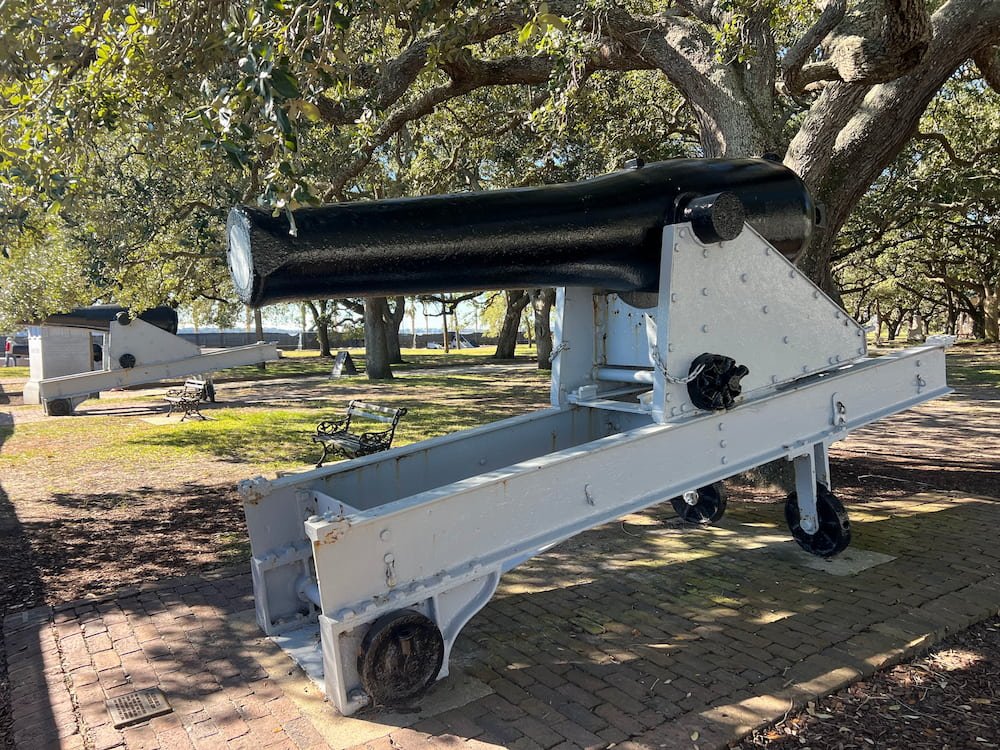
Another green space besides Waterfront Park is White Point Garden, a public park at the tip of the Charleston peninsula, with a battery, defensive seawall and promenade. Here we saw cannons facing the waters, as well beautiful trees with their branches snaking in multiple directions above us to provide a network of shade. The area is surrounded by historic and charming old estates (which surely would be quite expensive--some were 3 stories and took up ample acreage). The park also reminded us further of Charleston's Confederate history, with a monument erected by the Daughters of the Confederacy back in 1889.

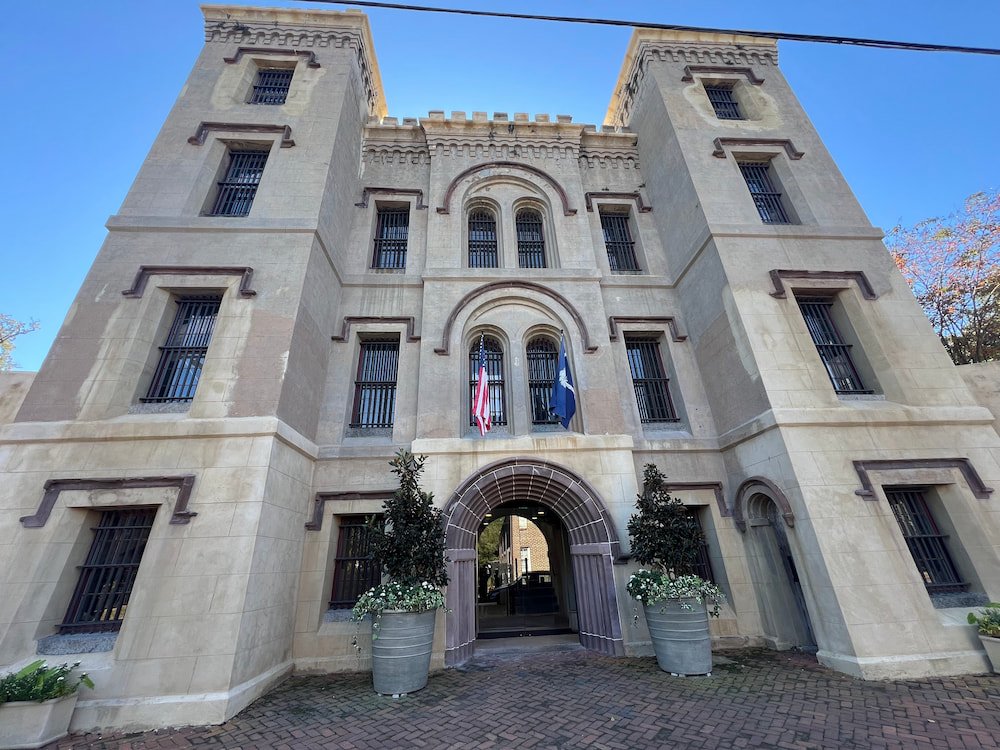
It doesn't look as big as the penitentiaries used today, but it doesn't make the Old Charleston Jail less formidable! It looks like a castle from the outside, and the intimidating structure is believed to be haunted, as thousands of men, women, and children died within the walls of the prison from 1802 to 1939. There are tours of the jail where people have apparently felt the presence of spirits here.
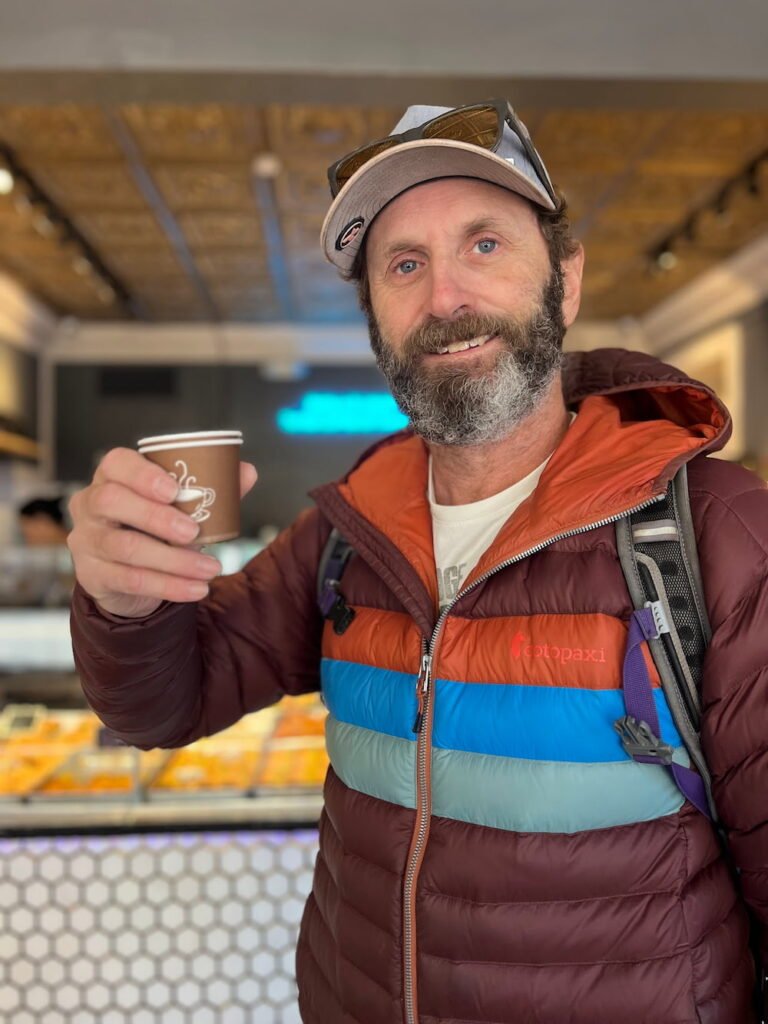
Before we went back to the RV, we ended up passing a Turkish cafe, Ephesus Mediterranean Delights, that sold baklava and lokum (Turkish Delight), which was totally unexpected but a pleasant surprise! The store window looked really appealing from the outside with all the different types of baklava and bright colors and various fillings of lokum, so it wasn't difficult to compel us to stop. The couple who were working there said they'd just opened, and were lovely. The baklava was on the pricey side (they import these from Turkey), but we are big fans of it so we got a piece to enjoy, along with a Turkish coffee.
That's One Big Tree!
South of Charleston on Johns Island, there's a famous Angel Oak Tree that's thought to be the largest living oak tree east of the Mississippi, estimated to be 300-400 years old. It's 65 feet (almost 20 meters) tall, with a circumference of 25.5 feet (7.7 meters). It's majestic and sprawling, with its branches extended in all directions away from the trunk. When we arrived there was a busload of visitors also checking it out, and apparently there are hundreds of thousands of people who flock to Johns Island to marvel at this tree.

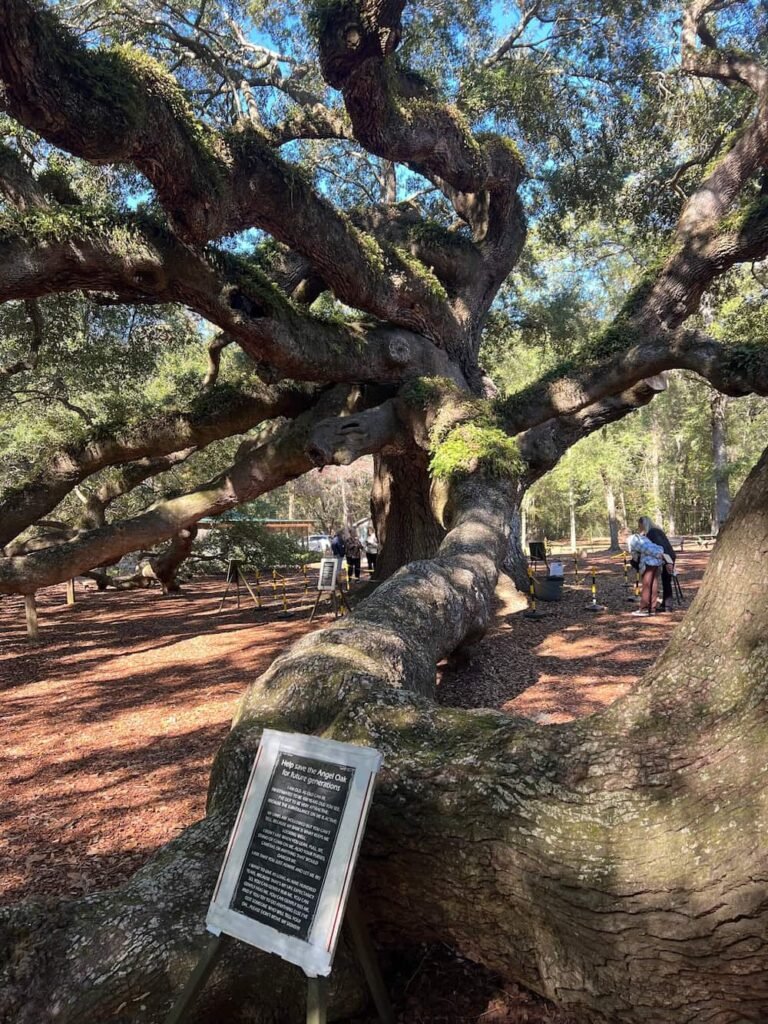
It's free to visit and open everyday (closes at 4.50pm). Since it's such a historic tree that rightfully should be protected for many years and generations to come, there are a lot of signs asking that people be mindful when taking photos of and around the tree--obvious things like no climbing and etching the tree, although maybe it's not so obvious to some folks who come here!
The Only Commercial Tea Garden in the Country
We'd found out that there's only one large-scale, commercial tea plantation and factory in the US, offering the country's only homegrown tea. Lisette loves tea and we've been traveling with a slew of loose leaf teas (green tea, black tea, Earl grey tea, black tea blends, chamomile, etc), so she was really excited to visit the Charleston Tea Garden (formerly called the Charleston tea plantation but renamed given the slavery connotations).

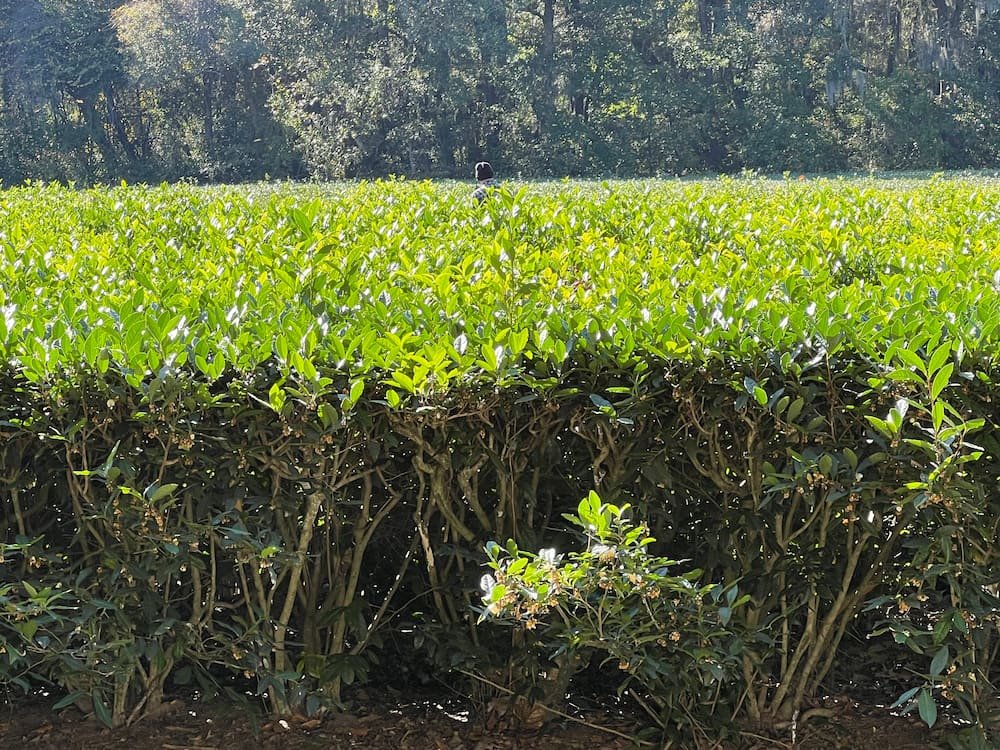
Driving into the entrance, we learned that the Tea Garden is owned by Bigelow Tea, a well-known US tea brand that sells its teas in grocery stores around the country, but the tea grown here is sold under the brand name American Classic Tea and Charleston Tea Garden. Once we drove past the welcome sign, we could see various tea bushes--yay! The gift shop offers unlimited cups of tea--both hot and cold, as well as sweetened and unsweetened (in the South it's popular to drink sweet tea). A lot of the flavors were what we'd expect for tea in this region as well, including peach and berry. Naturally, we tried all of the teas on offer--including black, green and mint.


Of course there's sachets and loose leaf boxes of tea for sale, as well as sweets and souvenirs. Charleston Tea Garden offers different tours--a paid, 35-40 minute tour to go on a trolley around the garden, that drives through the rows of tea bushes, stops at The Greenhouse to see where tea plants are propagated and delves into the process of harvesting and packaging tea. We opted for the free tour that starts every 15 minutes from within the gift shop, where we watched videos with Mr. and Mrs. Bigelow and a narrator explaining each step of the tea-making process, where we could peer into the factory floor to see the different machinery, while also drinking our cups of tea. While there wasn't much production happening when we were there, it was fascinating to see machines like the Withering Bed, and get a better understanding of how tea is harvested and ultimately packaged!
Dancing in Savannah
There was a fair amount of driving today as our goal was to get to Savannah in Georgia, to make it in time for Lisette's West African Dance class with Kwanzaa365 Connection. We got there with time to spare! It was pretty easy to find a place to park, although we weren't sure whether the neighborhood was safe or not, so Michael wisely asked a UPS delivery driver for his opinion. Apparently we were in a good spot, but we were told that after it could get a bit dicey after 30th Street.
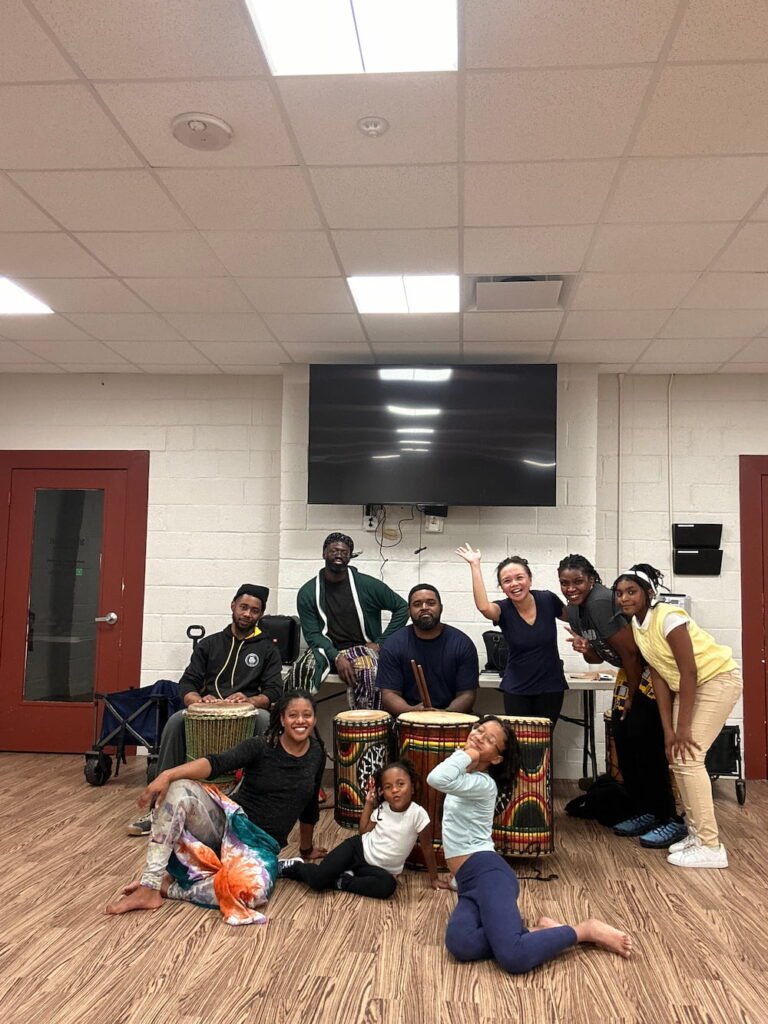
We decided to eat dinner after Lisette's class finished at 7pm, with Michael and Sheila walking Lisette to the class at John Delaware Community Center, before continuing to the Hop Atomica, where we'd decided to order pizza. As coincidence would have it, the Community Center was on 35th Street and the pizza place was on 39th! We didn't notice anything amiss walking over to Lisette's dance class, but apparently Michael did notice that it was a bit sketchy heading to Hop Atomica, though nothing overly scary.
When Lisette got to the Community Center, she was warmly greeted by Imani, the West African dance teacher, who was finishing up a class with a group of girls, teaching them to play the dun dun (drums). Lisette was joined by one of the girls who did the drumming lesson, her mum, and another student, with 2 drummers playing for us during class. It was so much fun! Lisette learned Soli, a dance from the Malinke people in Guinea, traditionally performed by young boys. Everyone in the class was warm and friendly, and it was definitely worth rushing over to Savannah to take the class, as it would end up being the last one Lisette would take in the US on this RV trip.

Lisette met Michael and Sheila afterwards (Sheila was a bit troublesome, barking at everyone who would exit the Community Center), but we made it back to our RV without a hitch. There were no more cars parked around us, so we felt that it would be better to move the RV, although it took us a while to find a big enough space to park, and one that didn't have street cleaning overnight. Eventually, we found a spot on the corner outside a charming-looking cafe called Mate Factor. We took the bikes inside, and while there was some train noise (where is there not), and some buses driving past a couple of times, it was overall a quiet spot for the night.