
How lovely is it to wake up in the morning and see a bright, sunny day awaiting you? It was perfect for exploring Philadelphia for a second day on e-bike, so we got ready and looked around the outside of the Eastern State Penitentiary, a former prison that was opened in 1829 to hold 250 people as part of a controversial movement to change the behavior of people convicted of crimes through "confinement in solitude with labor." There had already been experiments with day and night solitary confinement before the prison opened, and many leaders believed that crime was the result of environment, so solitude will make the person convicted of a crime regretful and penitent (hence the word, penitentiary). However, solitary confinement was officially abandoned in 1913, and the prison closes in 1970, and is abandoned throughout the 1970s and 80s, and it eventually becomes a museum open for tours.
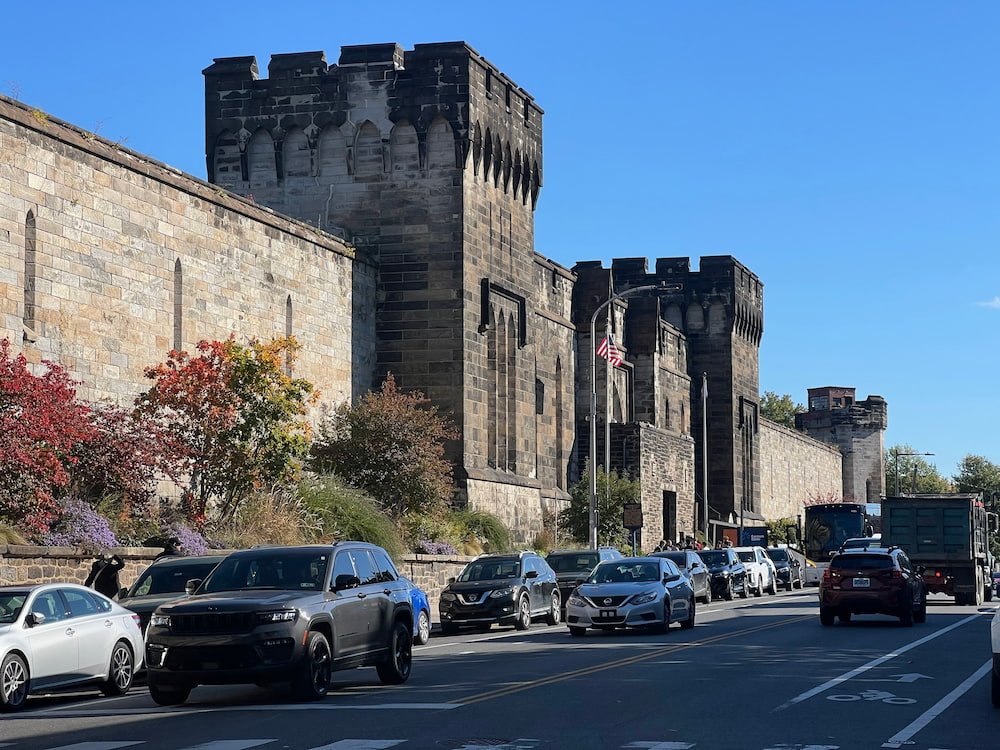
We didn't go on a tour of the penitentiary, but the building is incredible to see from the outside, with its thick, stone walls that are reminiscent of a medieval fort or structure. It also reminded us of the Old Joliet Prison Historic Site that we visited in Illinois, which was built about 30 years later in 1858, and also conducts tours today.
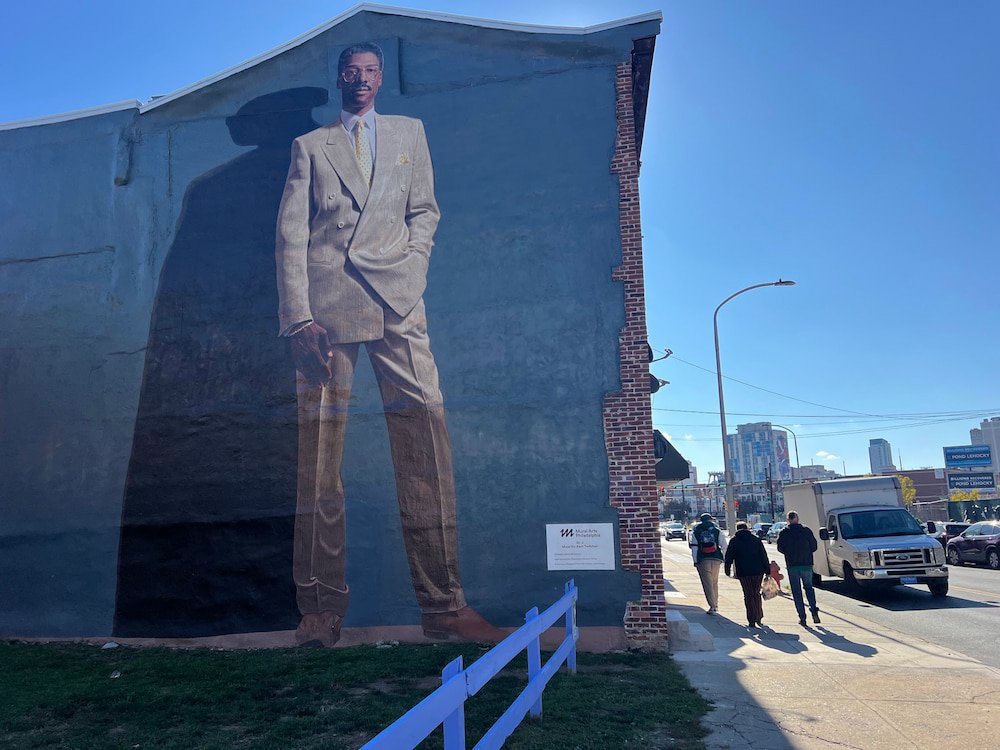
Historic Houses
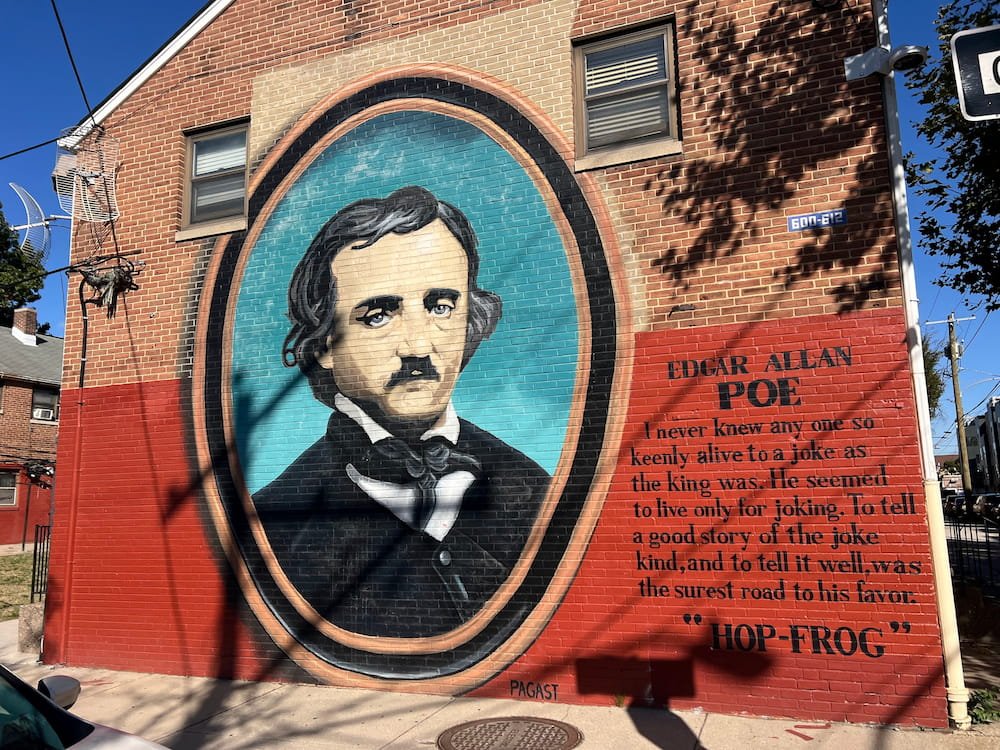
The famed poet and writer, Edgar Allan Poe, lived in Philadelphia for 6 years, so he's left quite a legacy in the city. The Edgar Allan Poe National Historic Site is where he lived, and where visitors can see a lot of photos and artifacts. Unfortunately, the site was closed when we were there, as it's undergoing renovations, but even if it wasn't, it probably wouldn't have been open as it turns out it's part of the National Parks, and the government is still shut down. So we got to read a little about him, his wife and his mother-in-law on the plaques outside, see the building, and check out a cool mural of him painting on the wall of a building.
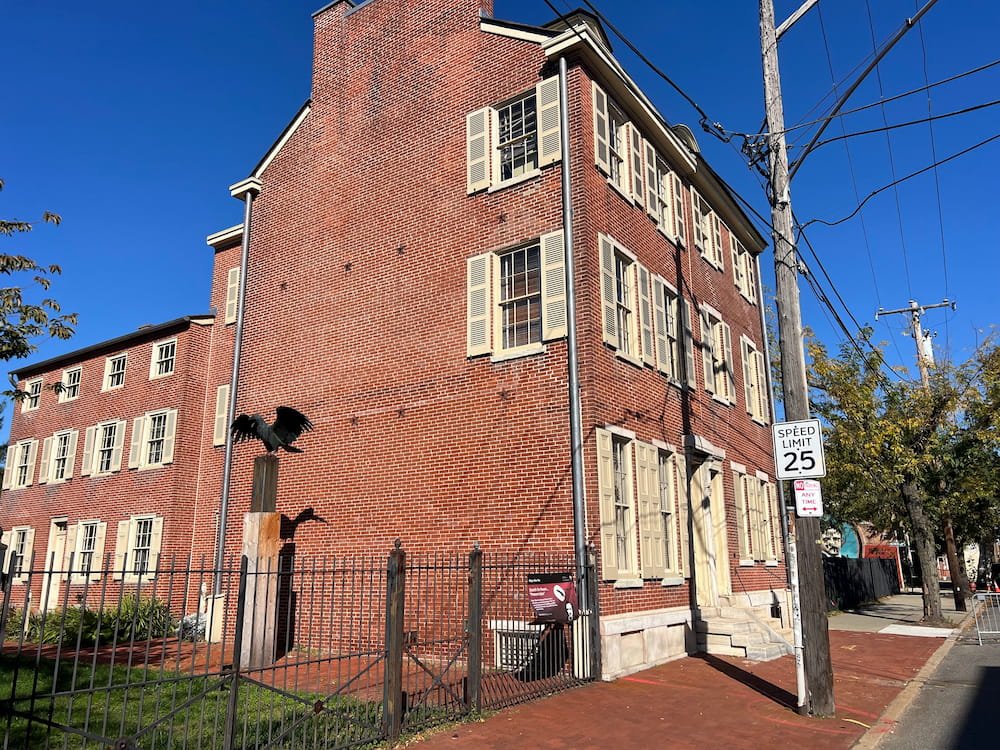
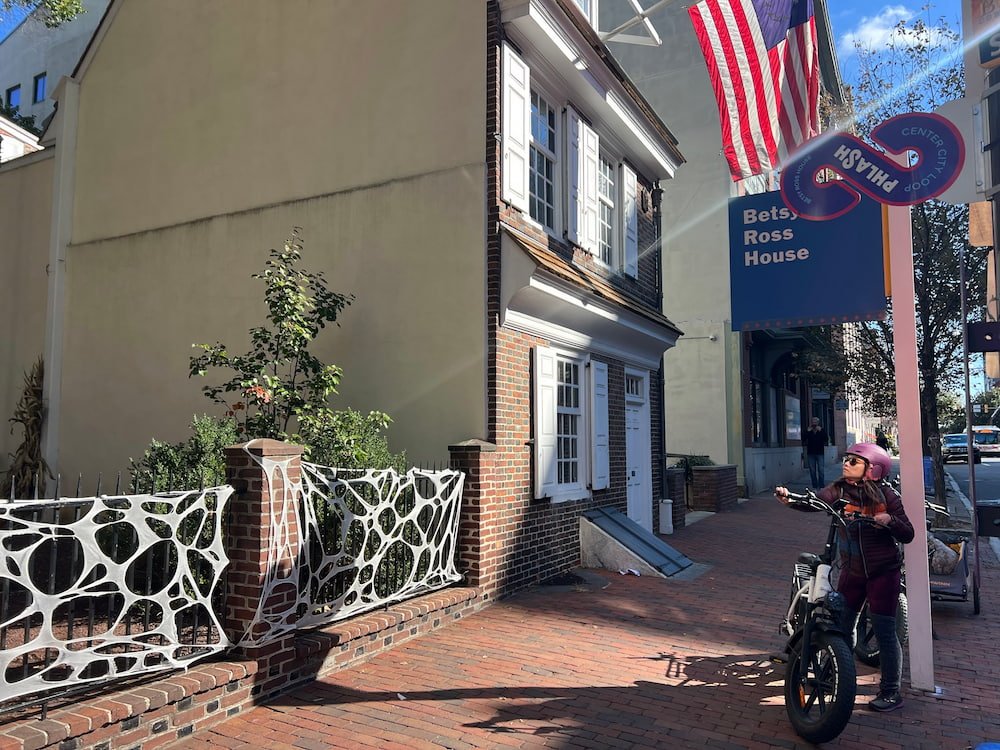
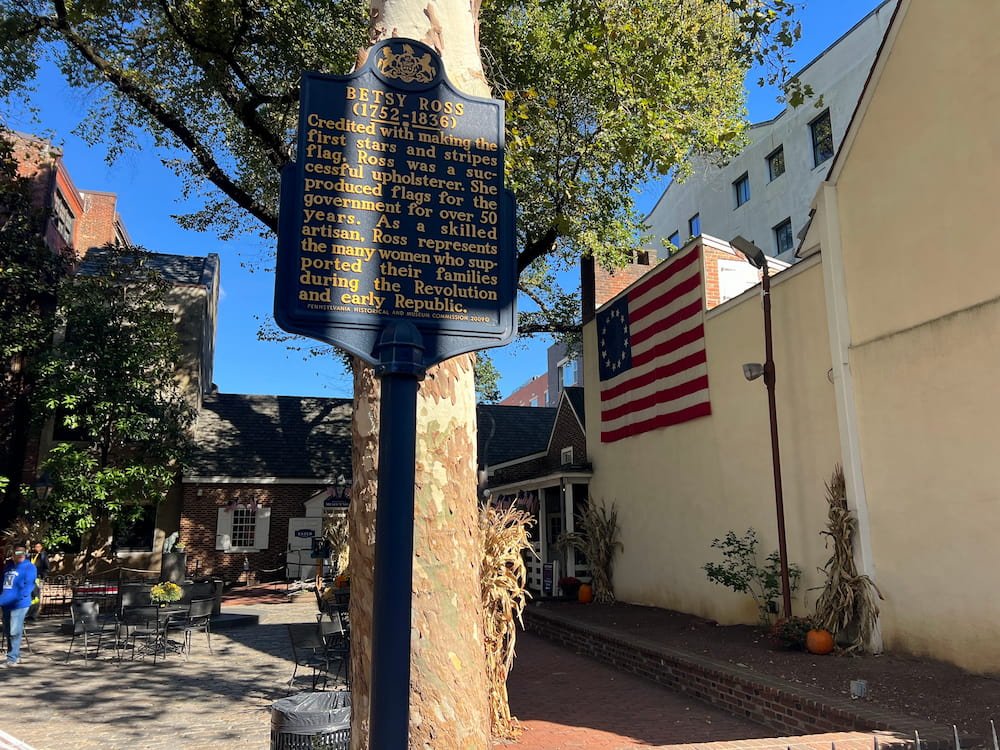
One house that was open despite the government shutdown, however, was the Betsy Ross House. Betsy was an upholsterer and seamstress from Philadelphia who is credited for designing and sewing the first American flag. There were a bunch of schoolchildren all piling into the courtyard outside the house as we wandered past, all there on a school excursion to learn more about the country's history. Living in or near Philly, they'd definitely have a lot of places they could visit!
Famine, Ants and a Church
During the Irish Potato Famine that lasted from 1845-52, about 1 million people died from starvation and famine-related diseases like typhus and cholera. An additional 1 to 2 million people emigrated to escape the famine, with many of them settling in New York, Boston, Chicago, Philadelphia, and other US cities. The Irish Memorial shows life-sized figures representing Irish immigrants who fled to the US. Across from them is a Scottish Memorial that obviously commemorates the Scots who resettled in the country, and it was a stark contrast to see them standing proud, tall and hearty in comparison to the poor, withered figures of the Irish folk...! There's a park alongside this perfect for dogs to run around as well.

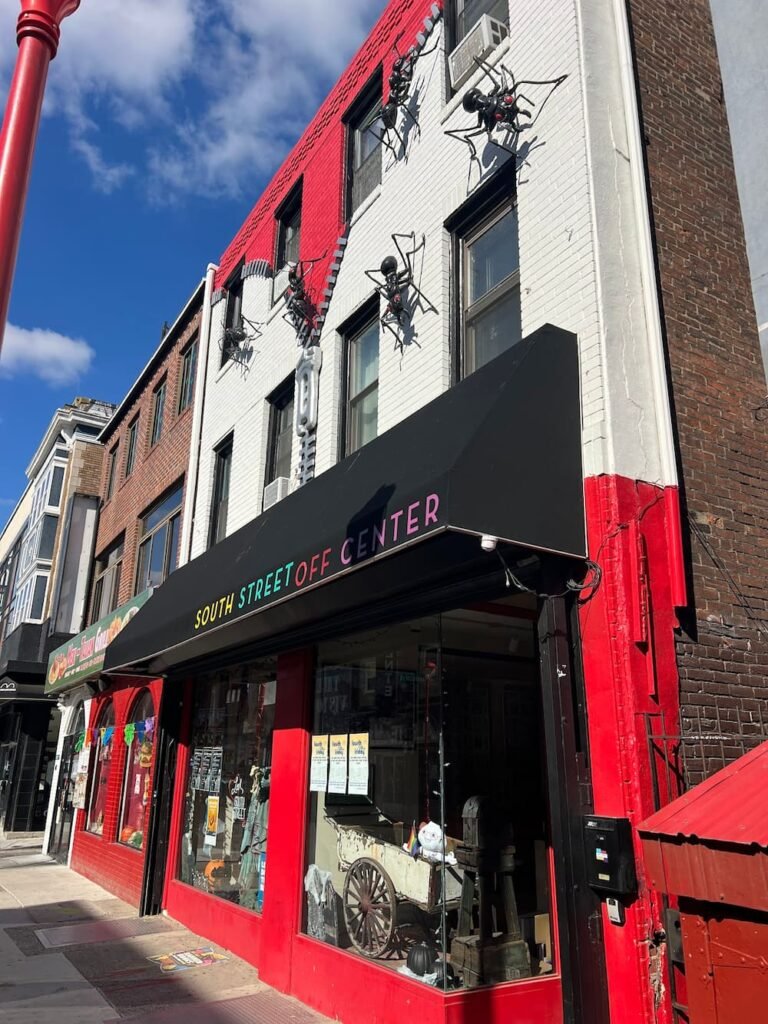
We were cycling in what seemed like a bit of a hipster neighborhood in Philly, with an ecclectic and diverse mix of cafes, shops, and restaurants. Here, visitors can expect to see Venezuelan restaurants selling arepas, Mexican taquerias, and funky coffee shops. It seemed fitting, therefore, that this neighborhood has a building with several giant ant sculptures crawling up the facade of what was once Zipperhead, a a punk rock clothing and accessory shop.
Leaving this quirky neighborhood, we next rode to see Gloria dei (Old Swedes') Episcopal Church, the oldest surviving brick building in Philadelphia. It's also the oldest church building in Pennsylvania, and has the oldest congregation in continuous existence in the country. Swedish immigrants arrived in the state in 1638, and the first cornerstone of the church was laid in 1698.
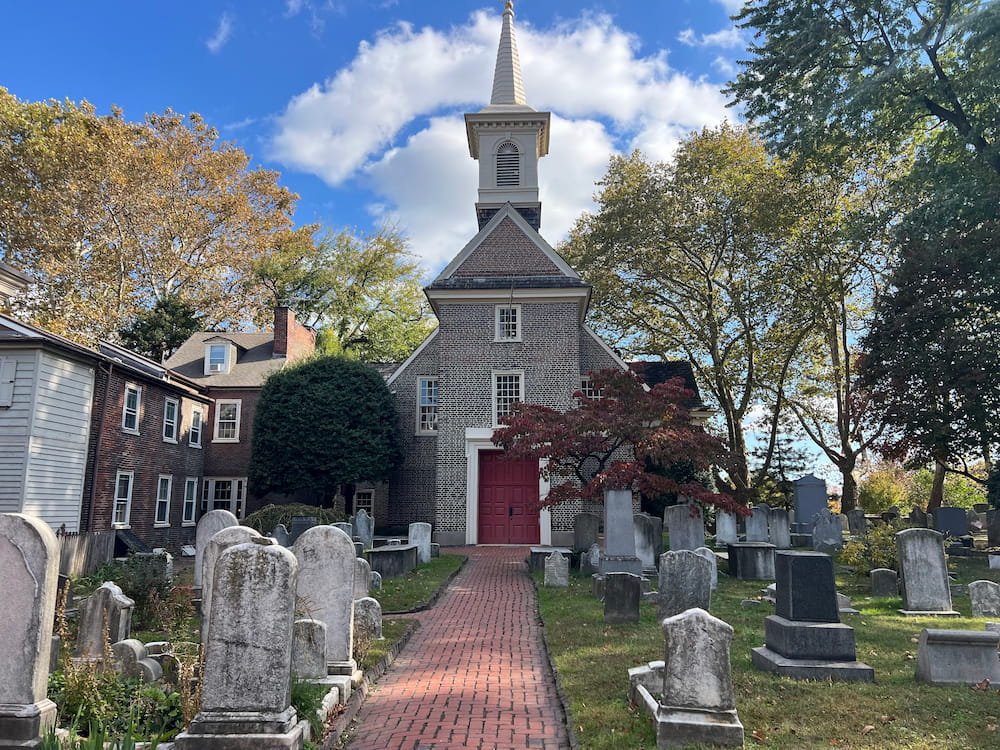
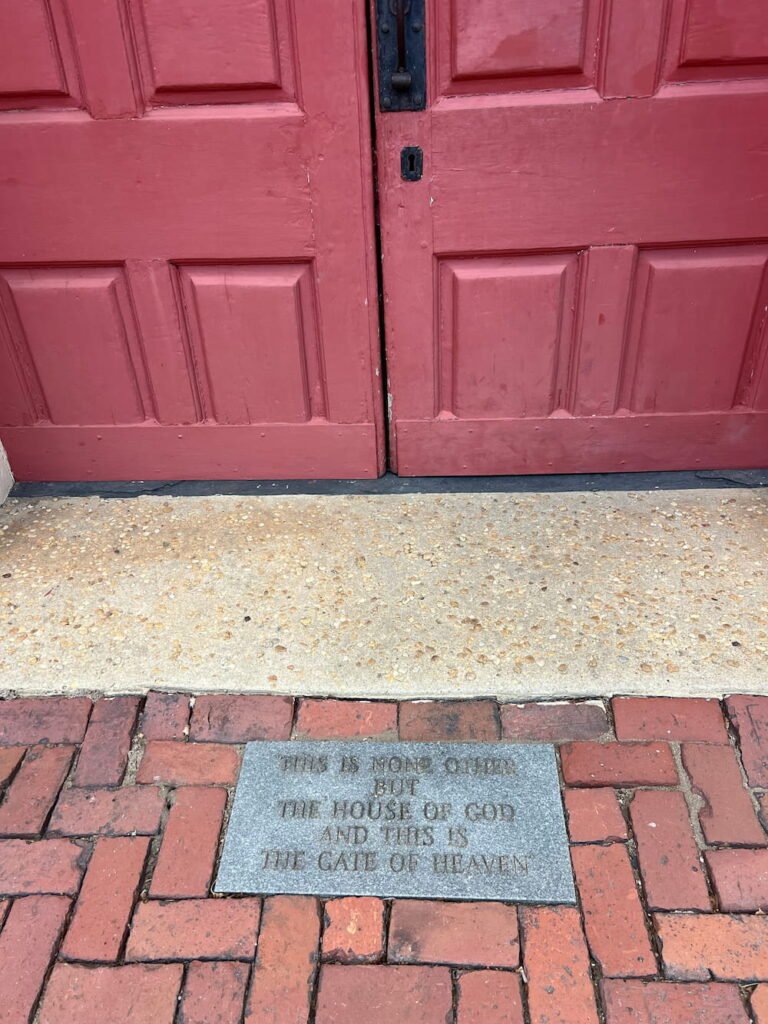
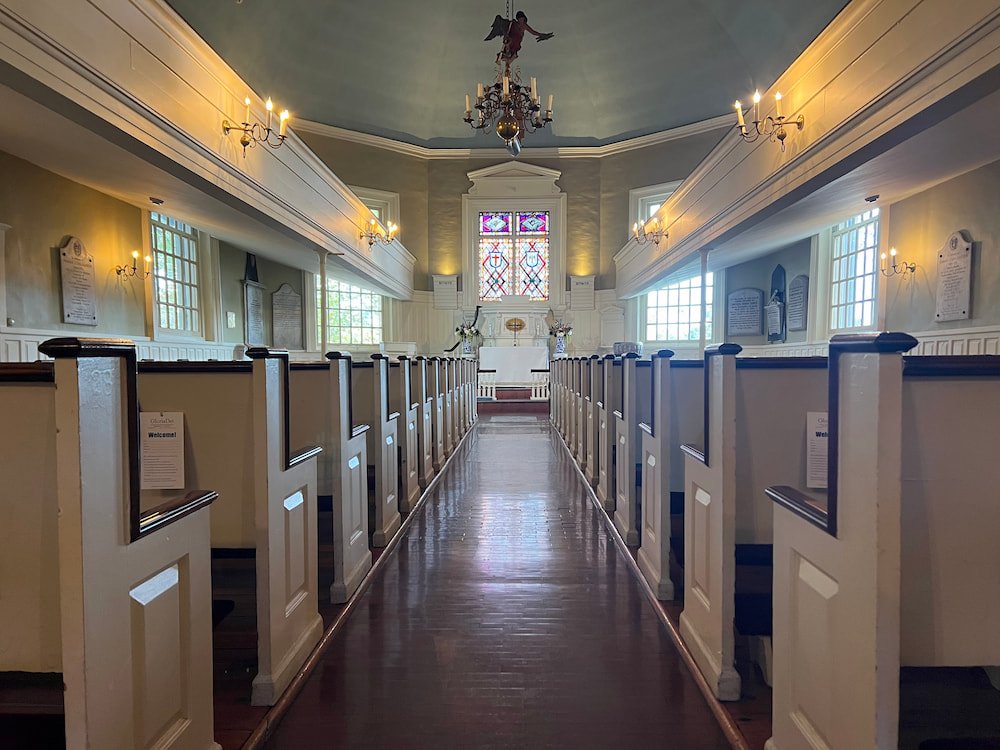
The church is simple yet elegant outside, with a bright red door, and the interior is also lovely and dignified, with lovely and organized pews facing the altar with a stained-glass window behind it. Looking up and towards the door, we could see a small reminder of the church's Swedish roots, with a ship sculpture suspended from the ceiling, dangling in front of the church organ upstairs and a sculpture of two angel cherubs with gold wings. The church is nicely renovated, and there are still services today. Outside, there's an old cemetery that surrounds the church, and when we were there it seemed that there were some folks gathering for a church event that was being set up.
Quirkier Attractions: Festivals, Magic and Art
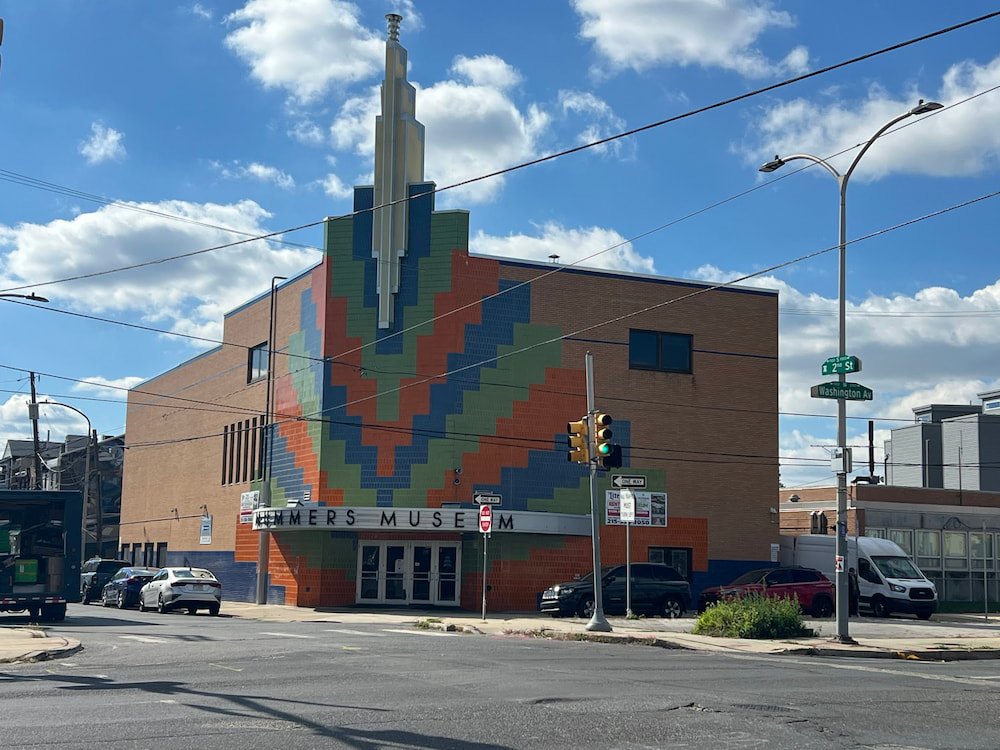
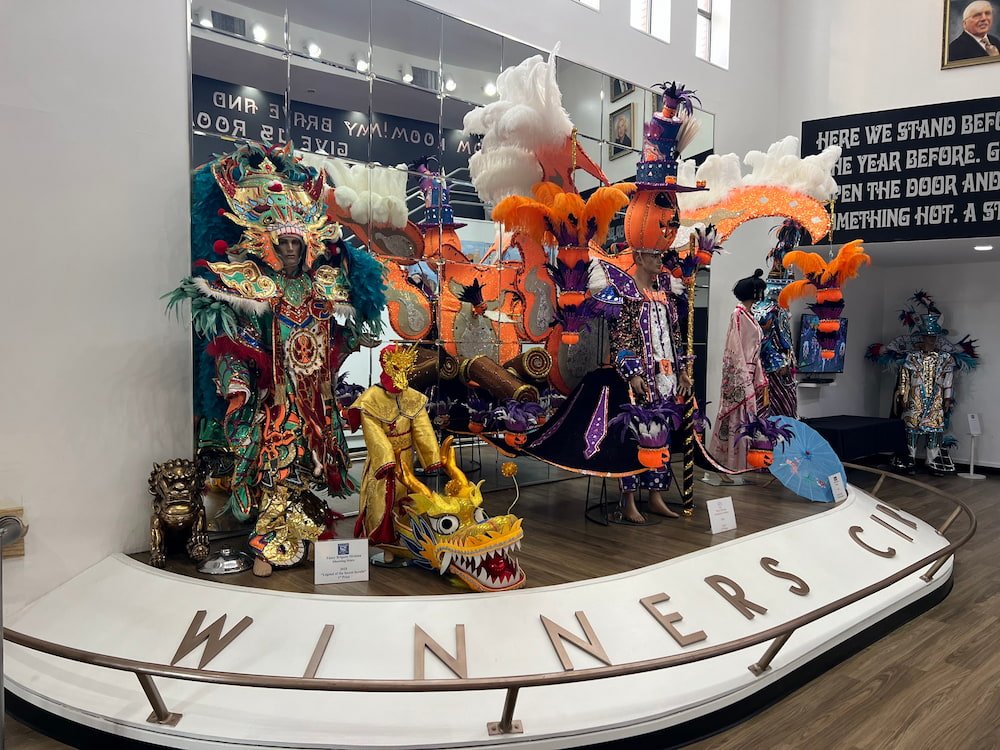
We'd never heard of Mummers until we arrived in Philadelphia! Mummers are performers who wear elaborate and often extravagant costumes to celebrate the new year, and the Philadelphia Mummers Parade dates back to 1901, though its roots go back even further to European traditions like the Roman Saturnalia. The Mummers Museum is free and is an understated on the outside, but it has a ton of costumes on display inside, which reminded us of the fun and colorful outfits that we'd seen at Carnaval in Rio de Janeiro, and Junkanoo in the Bahamas. It seems like it would be a lot of fun to be in Philly for the New Year and see and participate in the Mummers Parade!

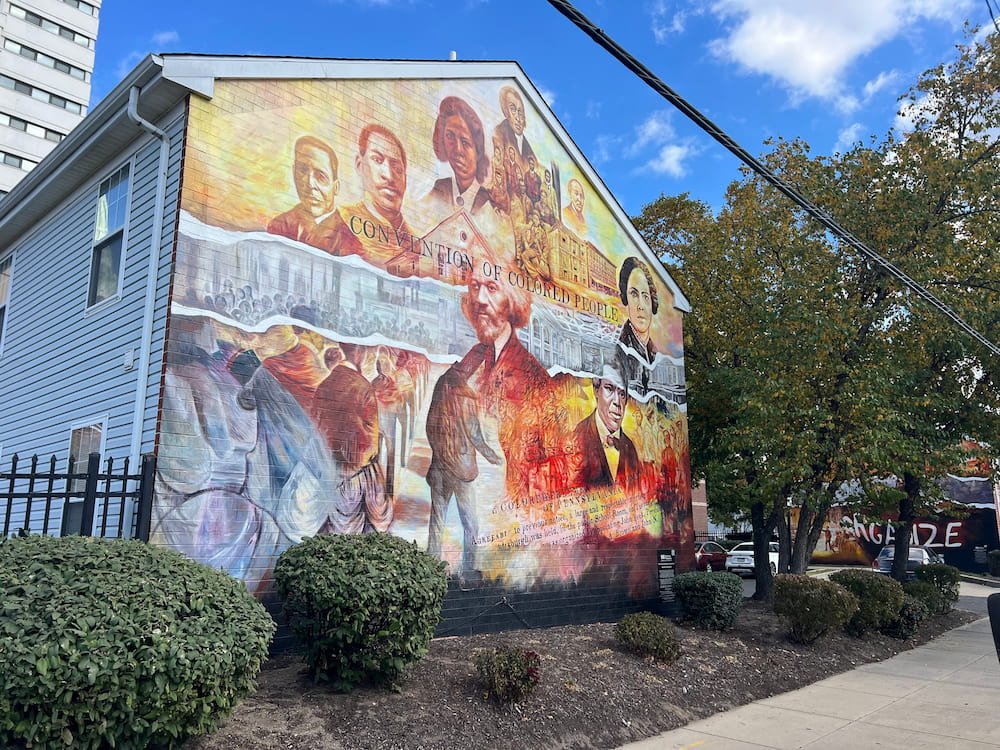
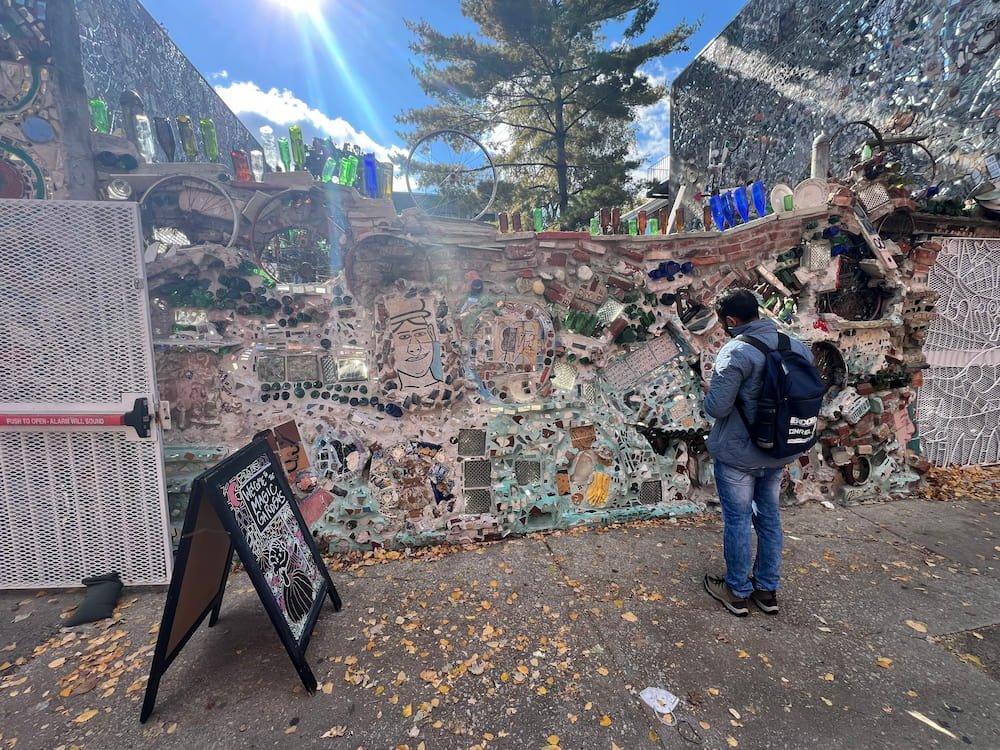
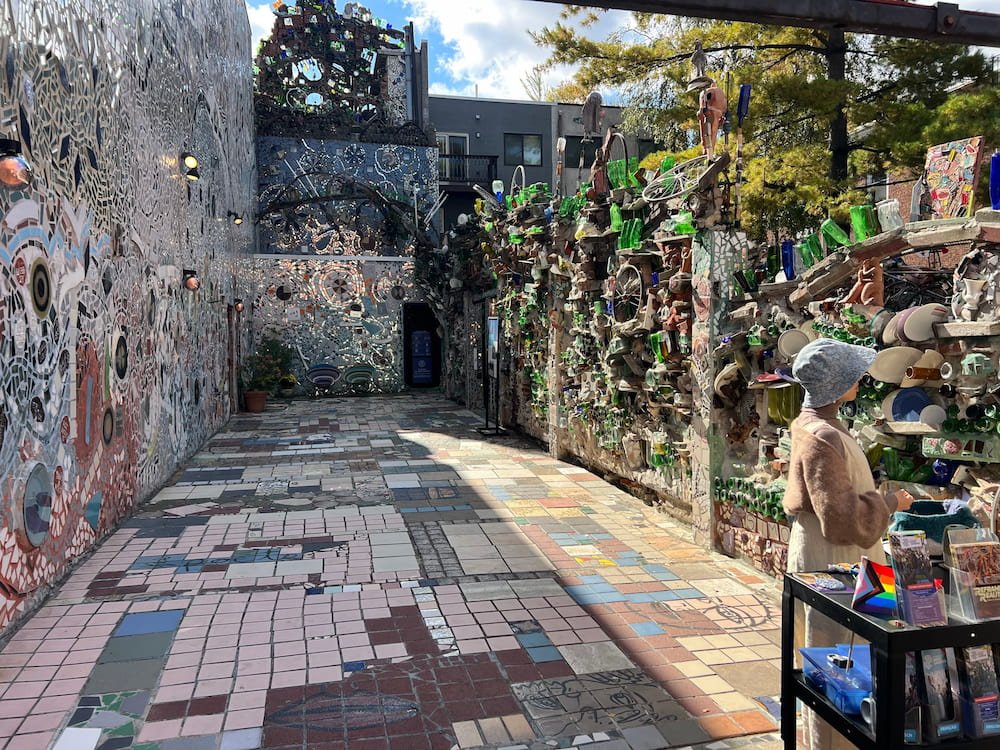
Speaking of colors, our next stop was the Haring Mural Garden. Called "We the Youth", it's a mural crated by the pop artist Keith Haring, who was born in Pennsylvania. Originally created in 1987, it is the only Keith Haring collaborative public mural remaining intact and on its original site. Lisette is a big fan of Haring's distinctive work, with his fun dancing figures, barking dogs, and other figures used to raise awareness of social issues.

Sheila Always Turns Heads
Michael felt like a coffee, so we stopped at a Rival Bros Coffee cafe, a local coffee roaster with a number of cafes around the city. The coffee was pretty good (although it seems that, just like in Boston, a "flat white" is interpreted to be the same as a "cortado", and therefore served in a smaller vessel).
While we were outside sipping our coffee and chai (Lisette's order), a lady who worked at the cafe came out and took to Sheila, who was looking adorable sitting in her little dog trailer. She was so in love with Sheila that she came out with a slice of sourdough bread to feed her. We got to chatting (her name was Mary) and told her about our trip, and she also gave us a free packet of coffee to take on the road--how lovely! It's just so nice to meet people along our trip, and encounter unexpected niceties along the way. Meeting friendly people are one of the highlights of traveling.
An Ivy League and Pizza
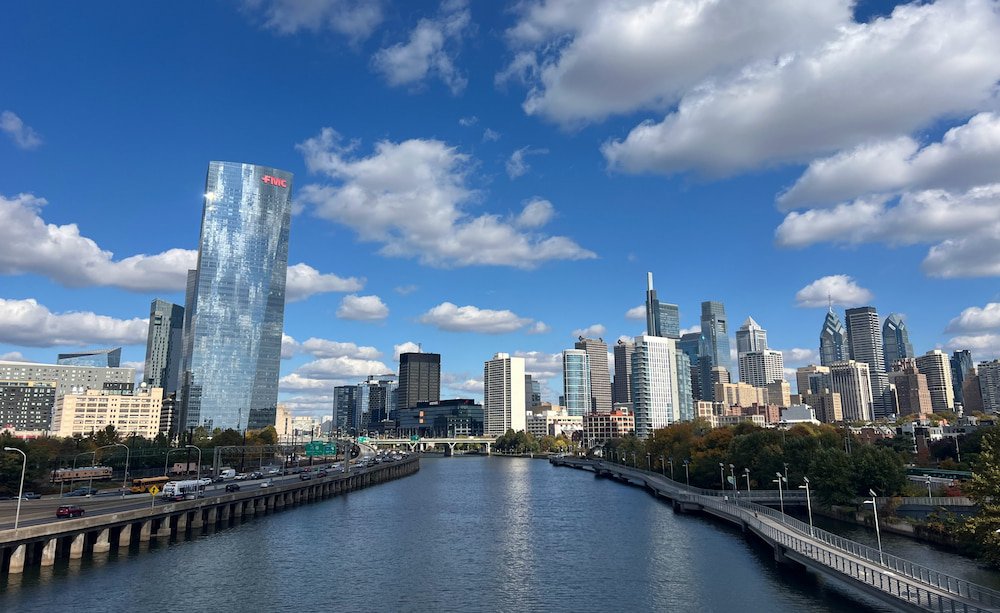
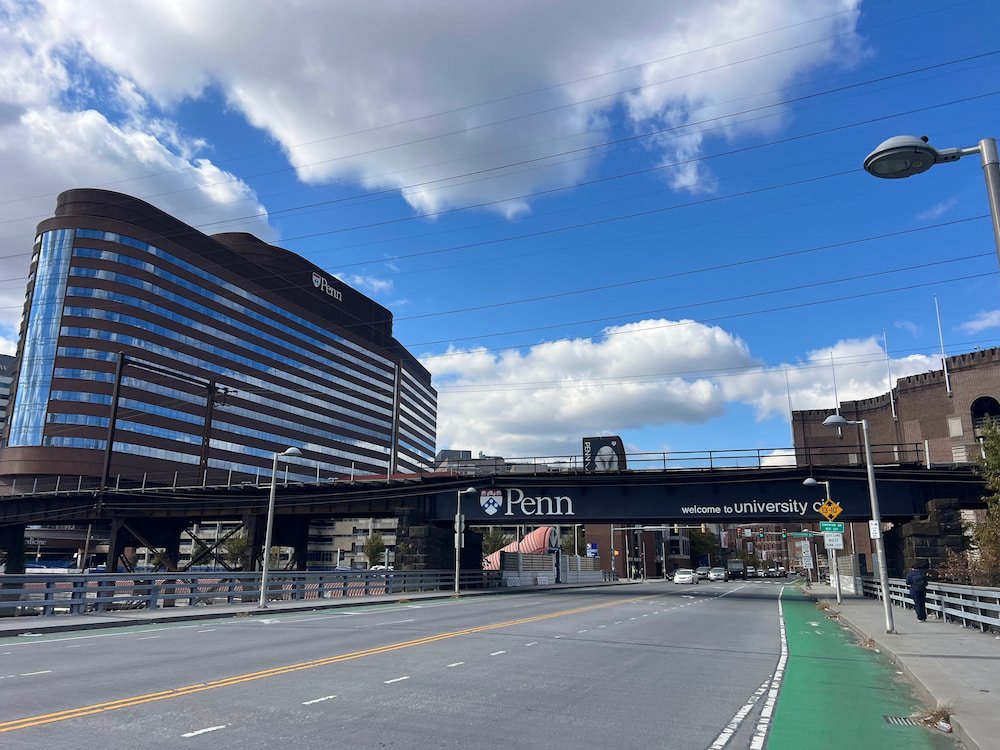
Freshly caffeinated, we cycled across the bridge to the University of Pennsylvania, an Ivy League university. While the university is away from downtown Philly, it still has a very urban feel, with lots of traffic circling around it. We unfortunately couldn't enter The Pavilion building at Penn Medicine without identification, but one of the main attractions for us was Decoding the Tree of Life, a blown glass, cast stainless steel and terrazzo sculpture, made from 22 cast stainless steel branches were welded together to create the artwork’s core structure, then over 15,500 handblown glass bulbs.
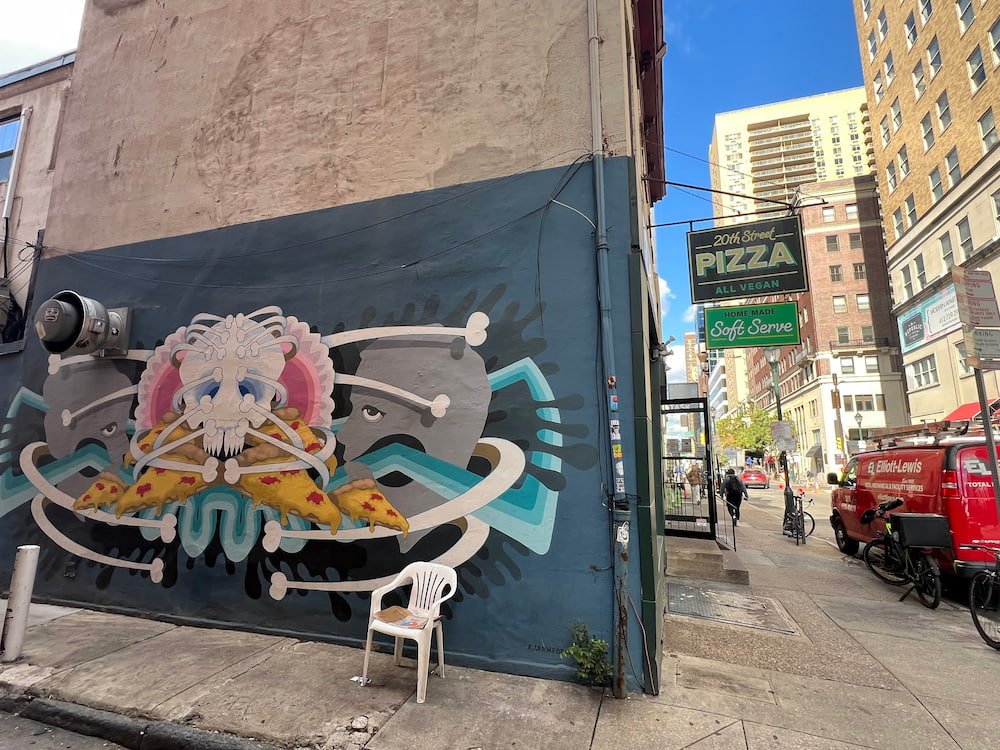
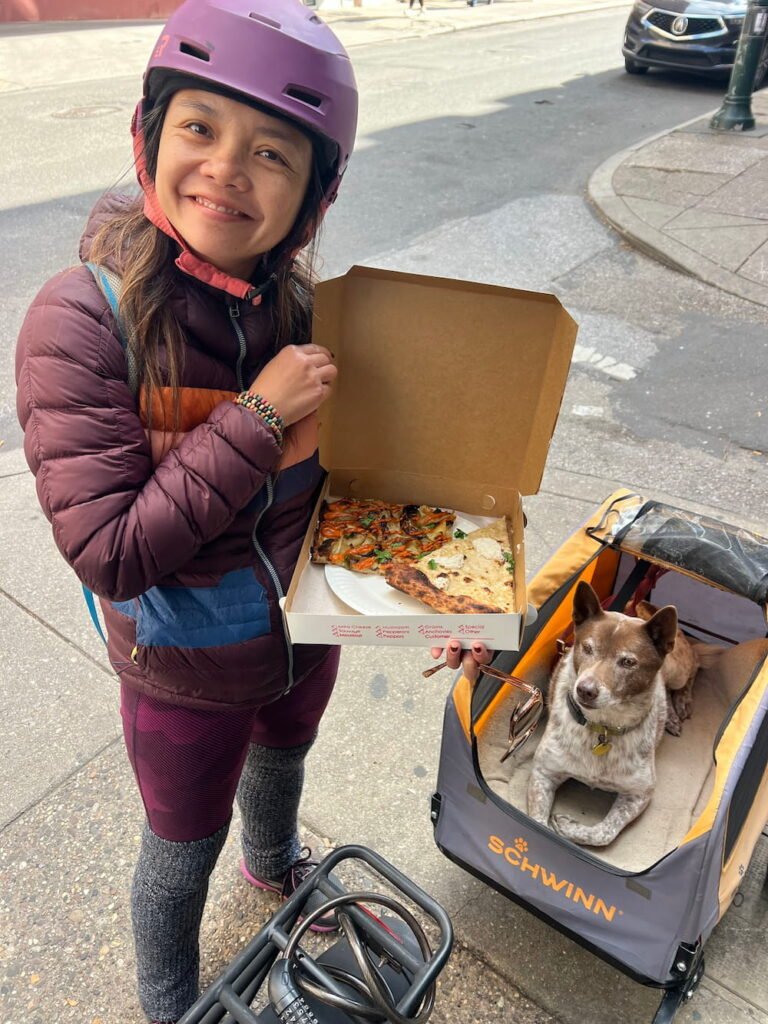
Lisette was starving at this point, but waited patiently to get back across the bridge to grab a couple of slices of pizza at 20th Street Pizza, a vegan pizzeria. Lisette tried the white pizza (garlic sauce, vegan mozzarella, cashew cheese, lemon cashew ricotta, parmesan and parsley--impressive that the vegan cheese was able to replicate the texture and flavors of dairy cheese!). But the winner between the two slices was the hot potato (thinly sliced potato, sweet onion, hot pepper, spicy Romesco sauce, parsley). Potato on pizza is delicious, and the perfect, carby comfort food!
Off to Delaware
And just like that...we rode back to our RV, packed up, and made our way to Delaware! State #46 on our trip. Time is flying by, and with each passing day we're feeling like our trip will soon be wrapping up. We drove across the border and to the Rothschild Patent Model Collection, located in the Hagley Museum & Library. Back in the day, inventors needed to submit physical models of their inventions to the US Patent Office, so the Office amassed over 200,000 creations of mostly quirky, clockwork contraptions. By 1880, the collection had grown so huge that the office switched to diagrams instead.
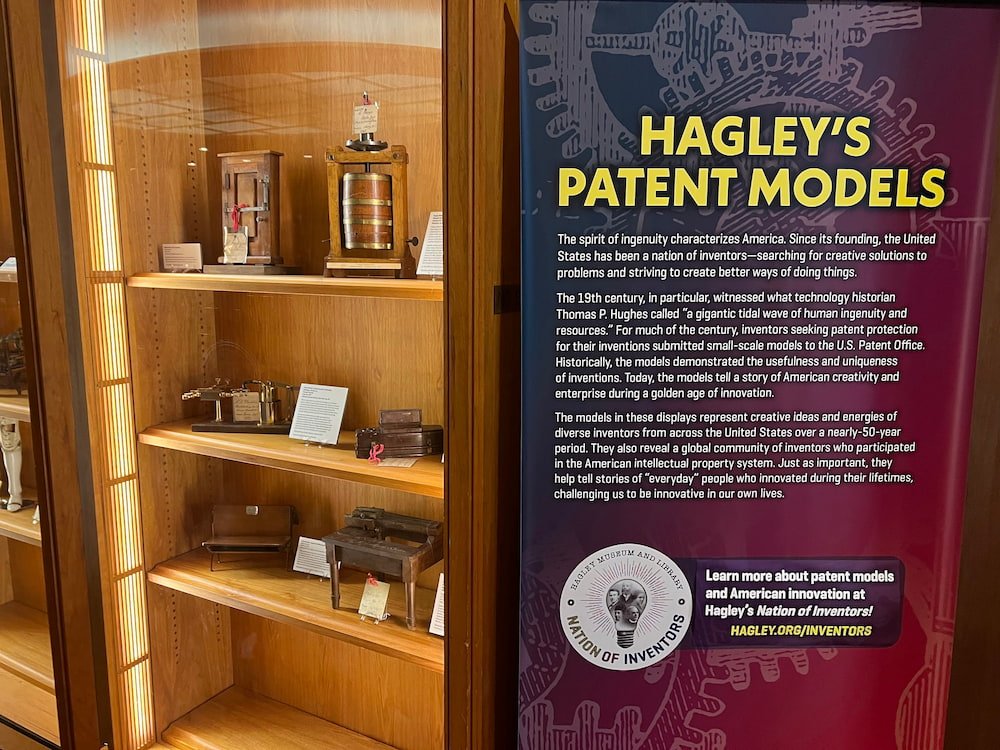
Some of the models went to the Smithsonian, but most were bought by Sir Henry Wellcome (the Glaxo founder), eventually becoming the Rothschild Petersen Patent Model Museum in 1998, and now the Hagley Museum & Library, which has over 5,000 patent models. There are a lot of quirky items like a couch that turns into a boat, as well as inventions that are improvements on existing items, like a machine for making paper boxes, or an upgrade to an old washing machine.
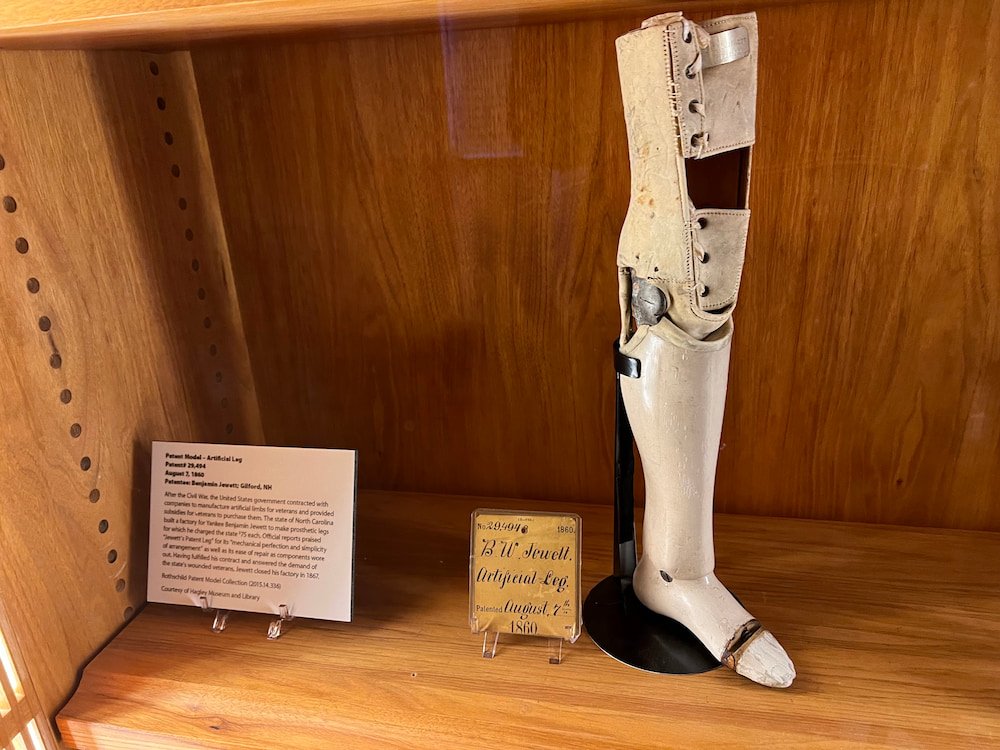
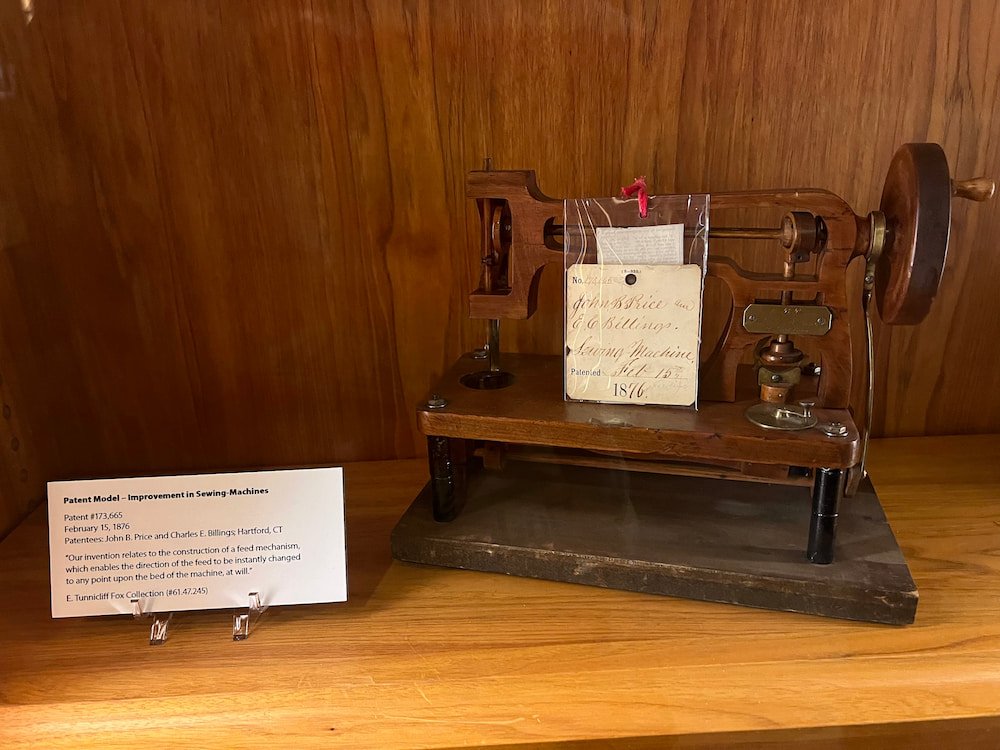
The exhibit is free, but we arrived around 4.30pm, so the very dour and bored-looking lady at the front desk told us we were too late, but we could see some of the patents in a room near reception. It was cool to see the inventions in miniature, with little tickets attached to them showing the years they were patented, and a description of the item. These days a lot of inventions don't have a physical component, but how fascinating to have models that still exist to see this slice of history and how innovations have evolved over the decades!
Before we left, we parked in the vicinity, letting Sheila run around in case she needed to go to the toilet. A man driving a transport bus saw us, drove up to park near us, got out, and when Lisette said hi to him, he simply retorted, "You can't stay here." This irked Lisette, because he didn't even bother to ask what we were doing, just assumed that we were hanging around and going to stay overnight because we were in an RV. Lisette clarified we were leaving, but clearly the folks that work at the Hagley Museum are rather cranky!
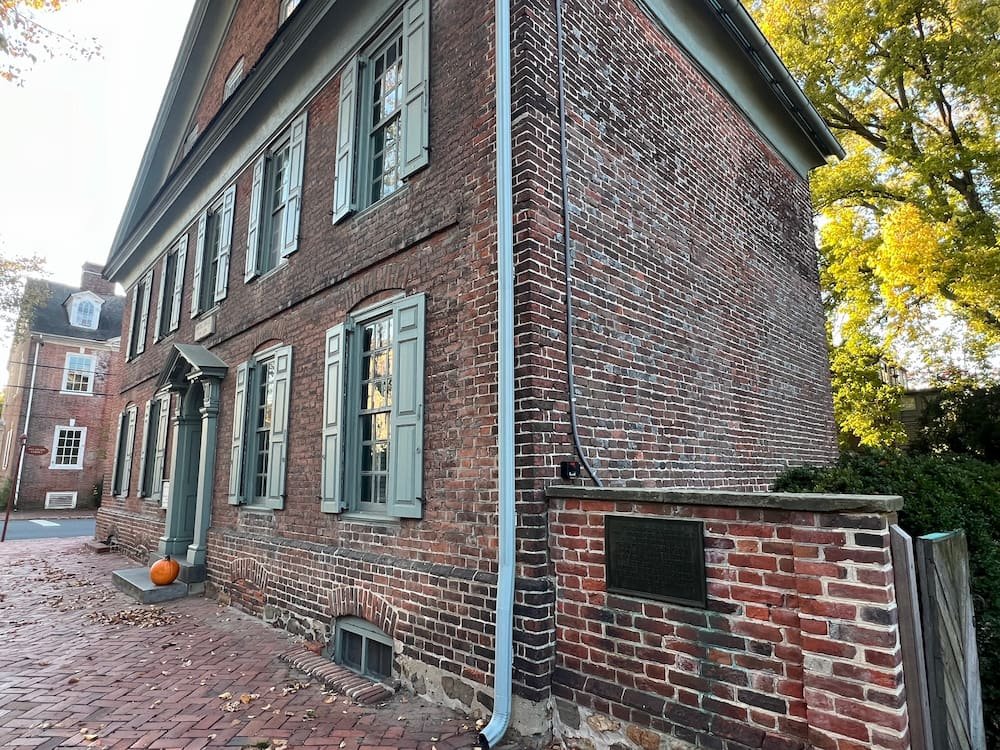
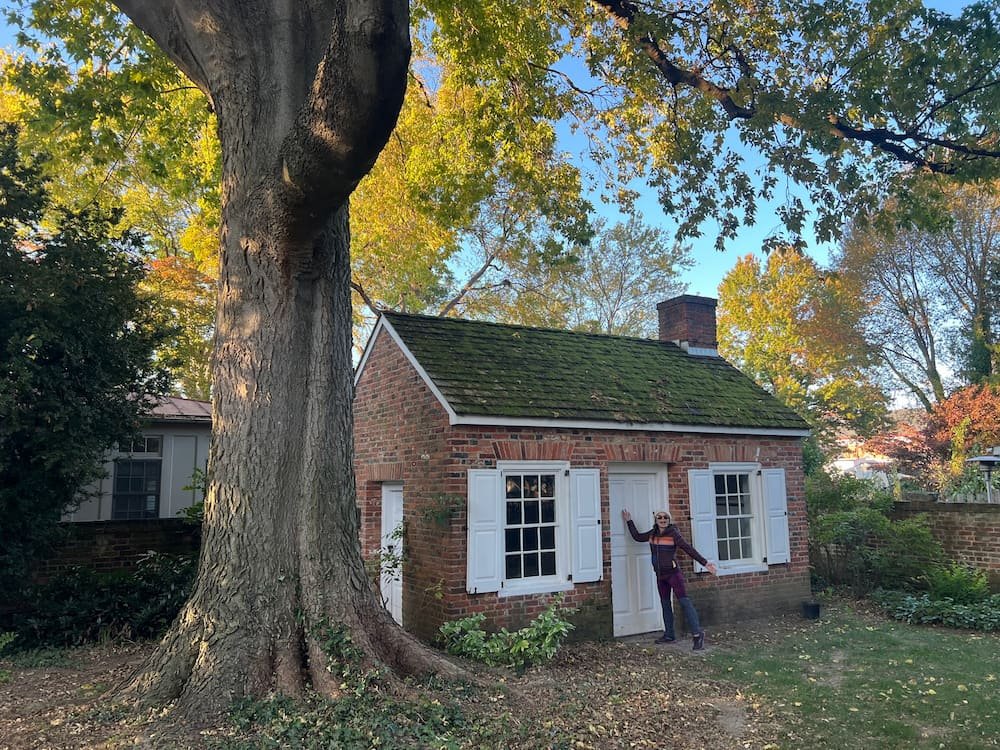
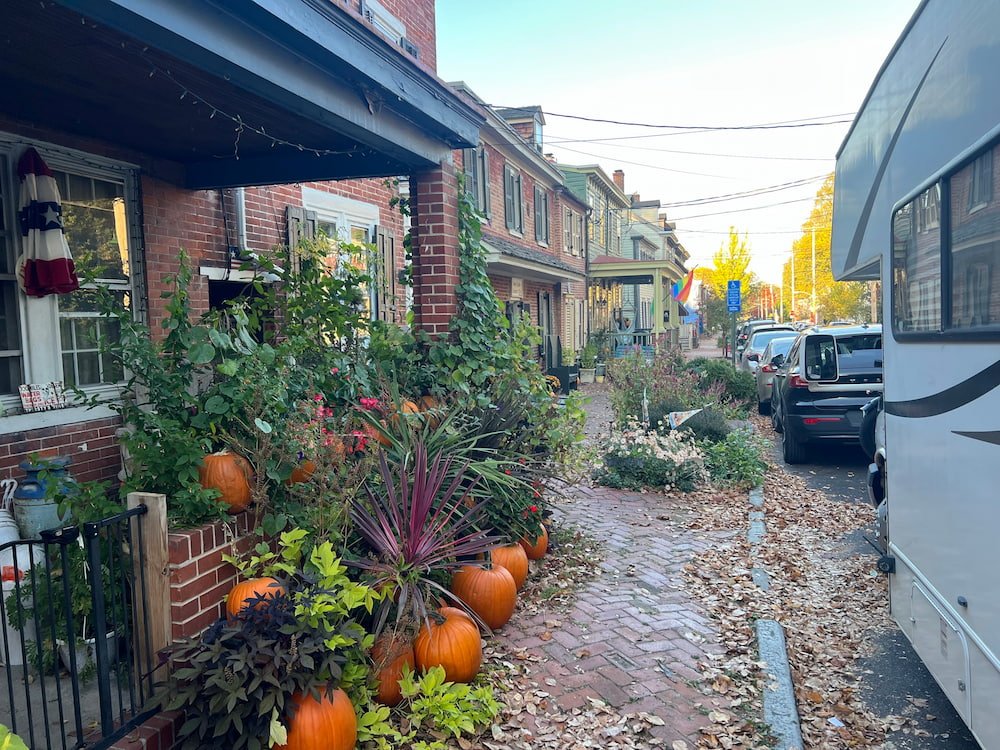
We arrived at the historic town of New Castle and found the architecture to be really charming, so decided to explore it more tomorrow as it was getting dark. One place we did briefly see was Amstel House (also known as Dr. Finney House), which was built in the 1730s and offers tours for visitors. The decline of New Castle in the 19th century meant that many owners of homes could no longer afford to make changes to them, which is why so many buildings were preserved. The first owner of Amstel House was a trader named Jan Roeloff deHaes, who was among the town’s original settlers.
The closest overnight parking option was a Walmart, so we headed there, although we noted that it hadn't shown up on our iOverlander app. Well, we figured out why, when at 7.30pm (while watching an episode of Great British Bake Off and chatting to Michael's mum), we got a loud rap on our front window. Michael stepped out and there was brutish, meaty Walmart worker who angrily demanded that we leave--and already had a tow truck ready next to him! We'd never had this experience at all the times we'd stayed at Walmart (they're always super chill and there's never been any problems), and fortunately Michael was able to calm the guy down, who ended up explaining that folks have apparently stayed here before making drugs or something, so he couldn't make any exceptions. Kind of odd, but ok, we left without any hassle after that. The folks we've met so far in Delaware haven't been very friendly, though!
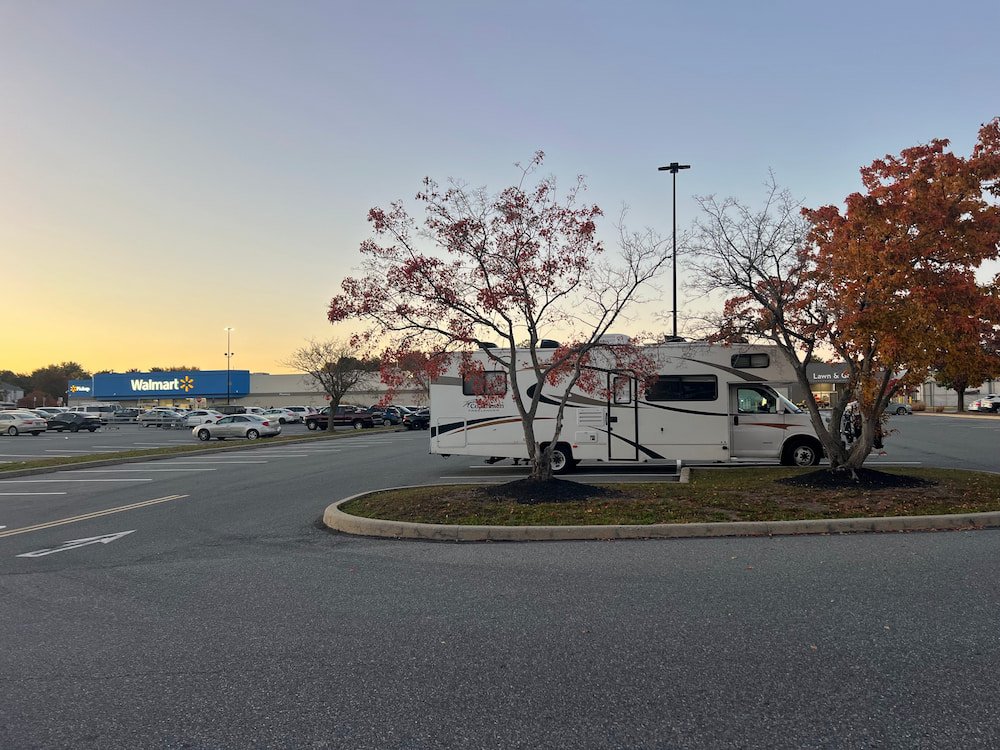
Fortunately, it wasn't a far drive to the Biden Welcome Center, a large car and truck stop with a food court, convenience store and restrooms inside the center. Hopefully we'll feel more "welcome" to Delaware tomorrow!