
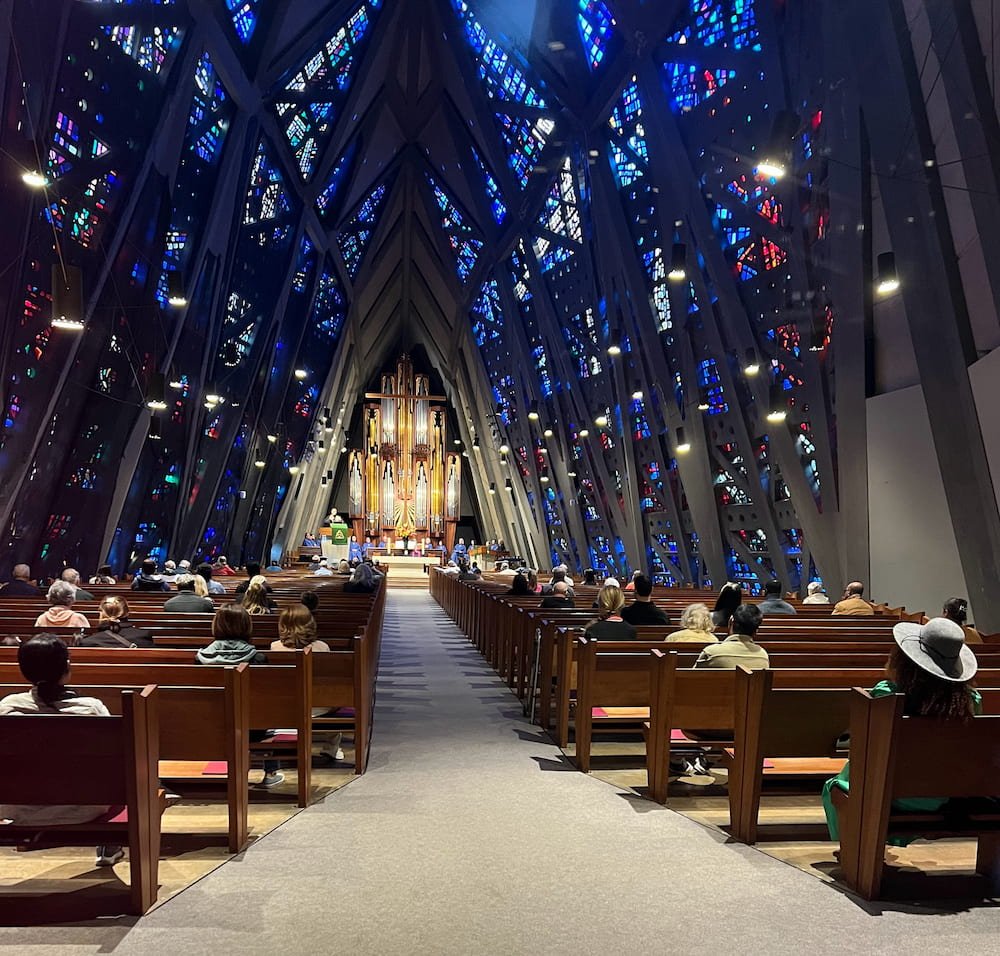
Because we used to live in California, Lisette was getting Stamford (the city in Connecticut) mixed up with Stanford (the university in northern California) when she was referring to the former! Our first visit in the morning was in Stamford (with an M), checking out the outside of the Avon Theatre Film Center, a historic movie theater that was designed over 80 years ago, with the first film shown in 1939. Then it was off to the First Presbyterian Church, known as "Fish Church" because of its angular, fish-shaped footprint. The church, which features a 20,000-piece stained glass sanctuary, was designed by Wallace K. Harrison, who also designed the United Nations headquarters. What caught our attention more, however, was the massive, 260-foot (79 meter) tower separate to the church building with a pointed end that looked like it could be a wizard's tower from the "Lord of the Rings" trilogy. Walking up the winding staircase within the tower, it leads to a carillon, which can be heard from over 1.5 miles away.

Before leaving Connecticut, we did a grocery shop at Trader Joe's and noticed a bakery that looked suspiciously familiar... it turns out that COBS Bread which has bakery stores in Connecticut and New York, is the Canadian and US-based version of the Aussie bakery franchise Bakers Delight! So Bakers Delight is the parent company--we looked at the menu and while there are some similarities, there unfortunately aren't any Vegemite scrolls sold in the American stores!
Animated Sleepy Hollow
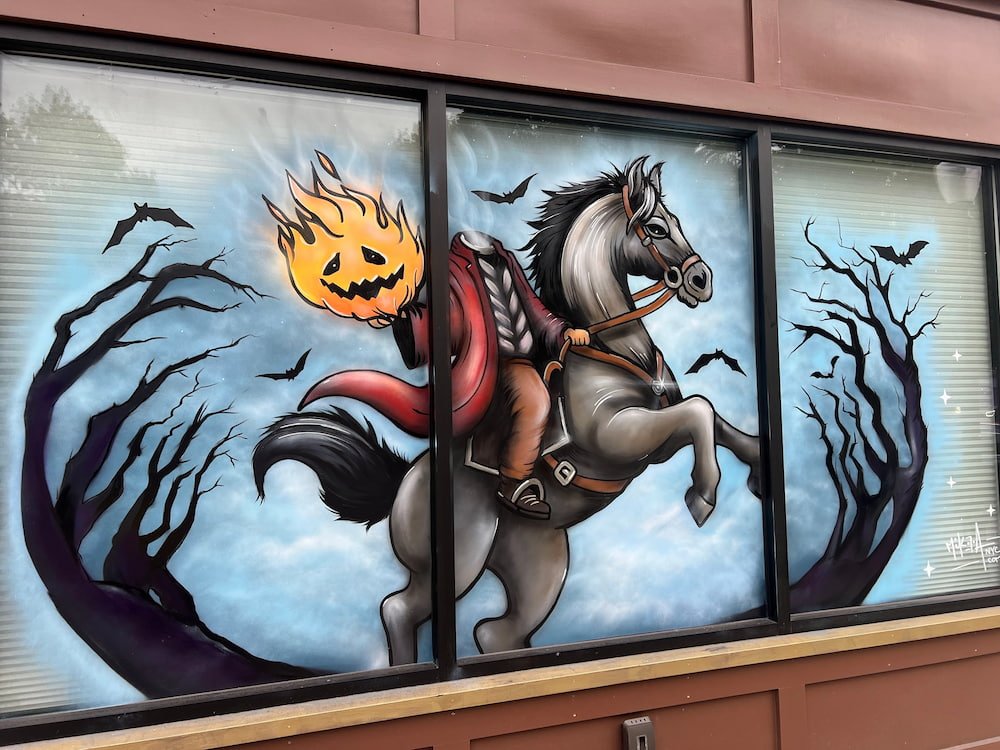
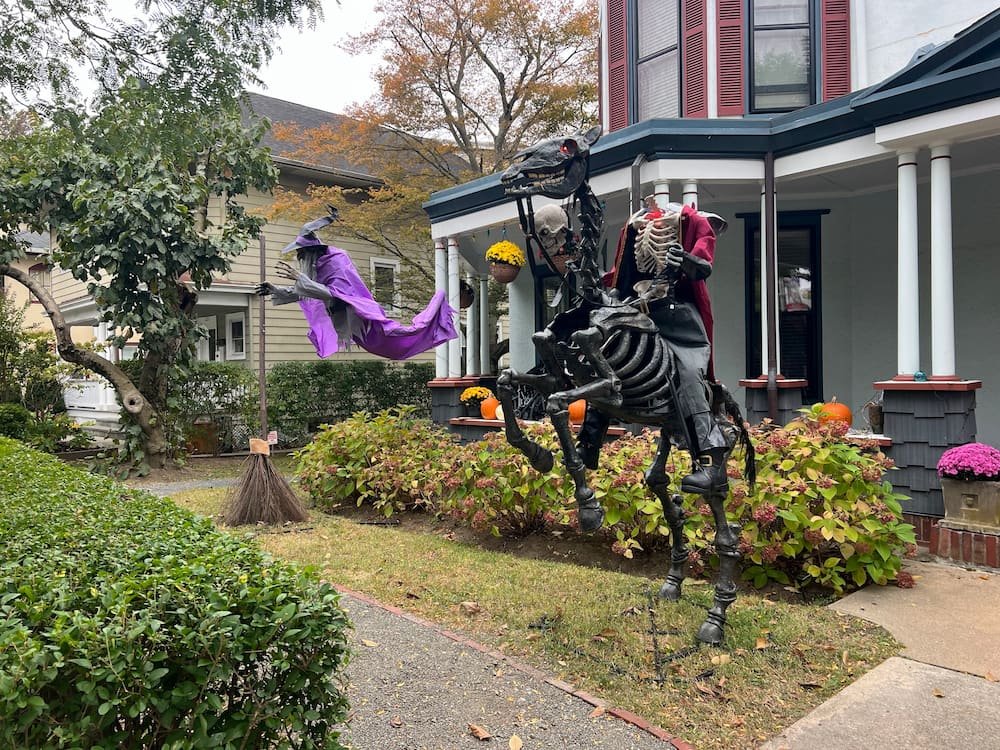
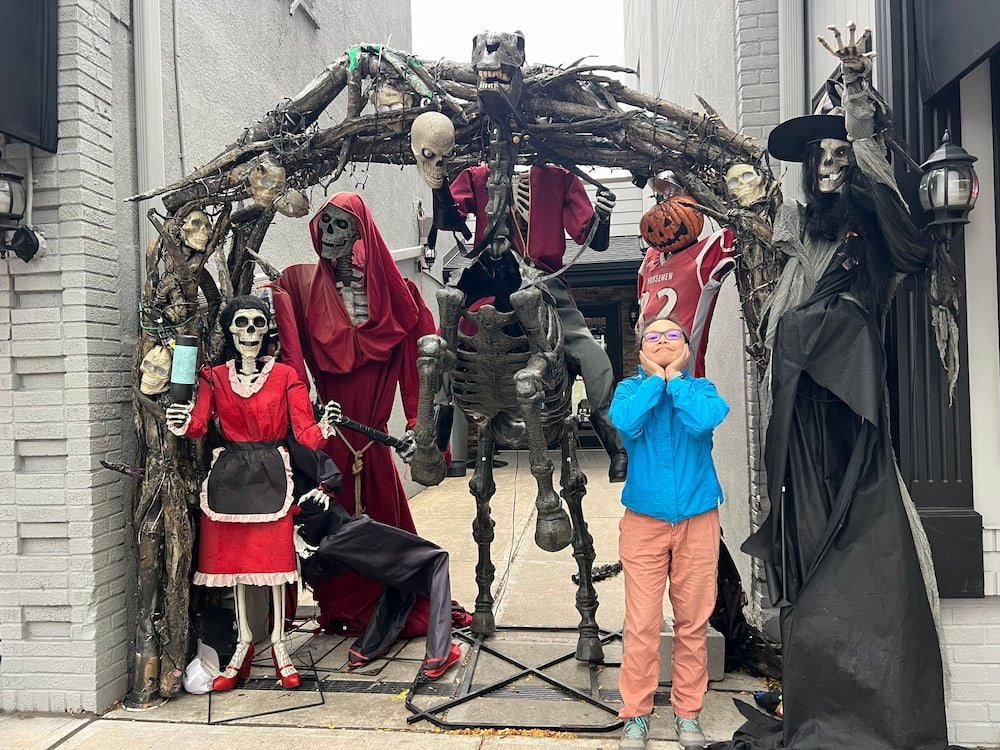
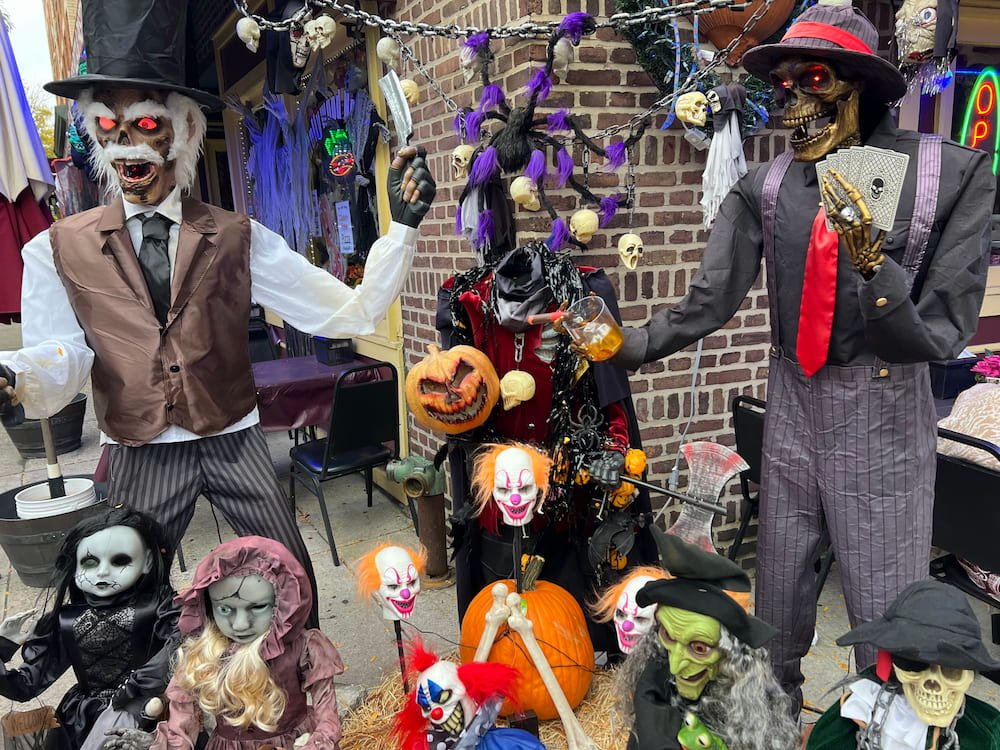
We drove eastbound, crossing the border to New York to arrive in Sleepy Hollow, famous for being the setting of Washington Irving’s short story, "The Legend of Sleepy Hollow", which was made into a number of films including one with Johnny Depp in the 1990s. Since it's a Gothic horror story, it turned out to be the perfect month to visit Sleepy Hollow, which was taking full advantage of Halloween with events, activities, and decorations--including variations of the Headless Horseman from Irving's story.
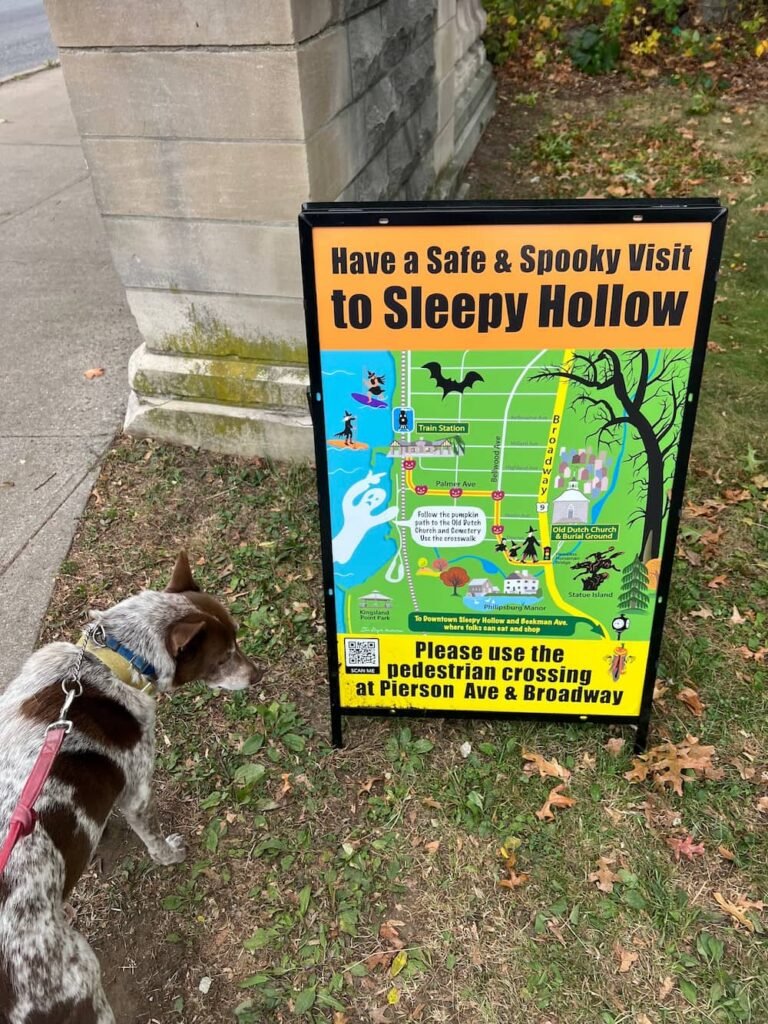

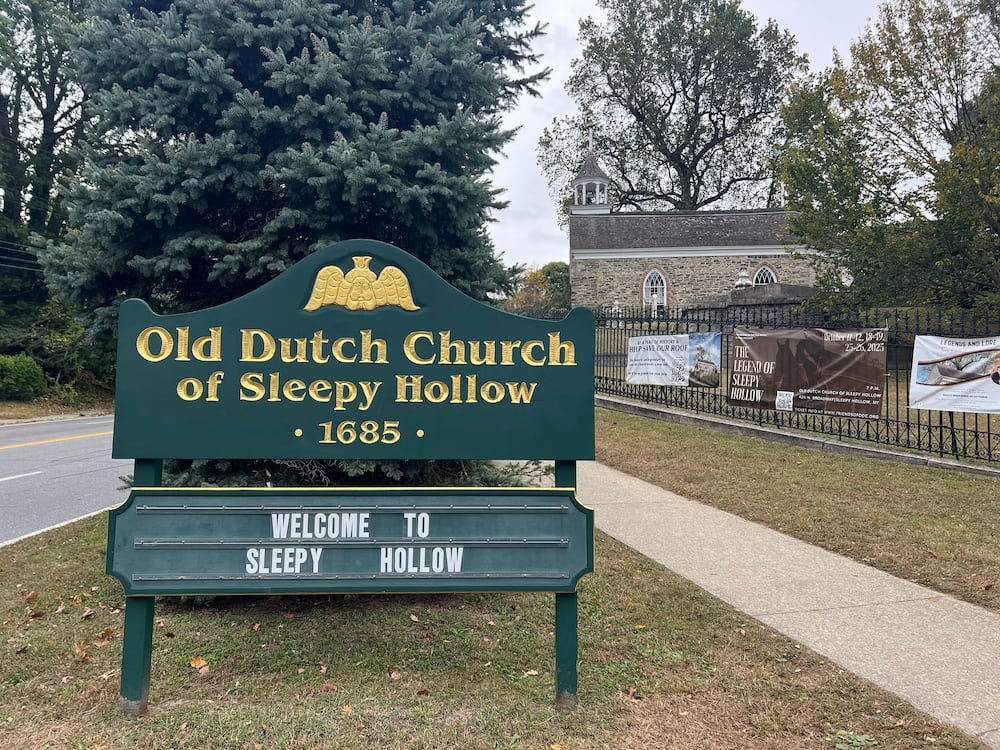
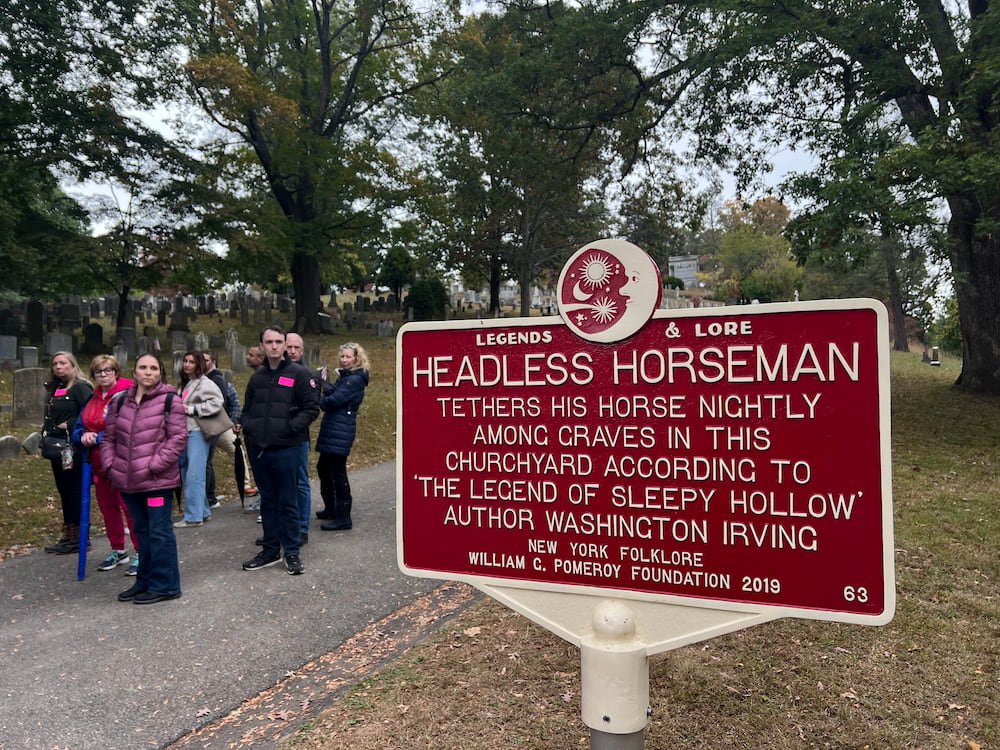
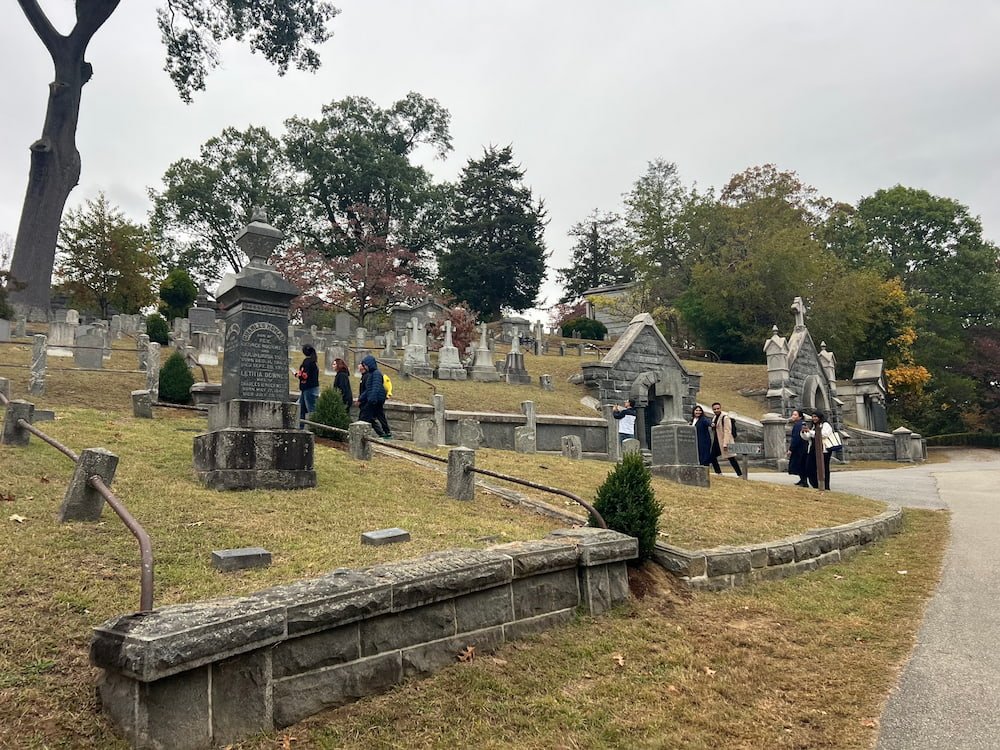
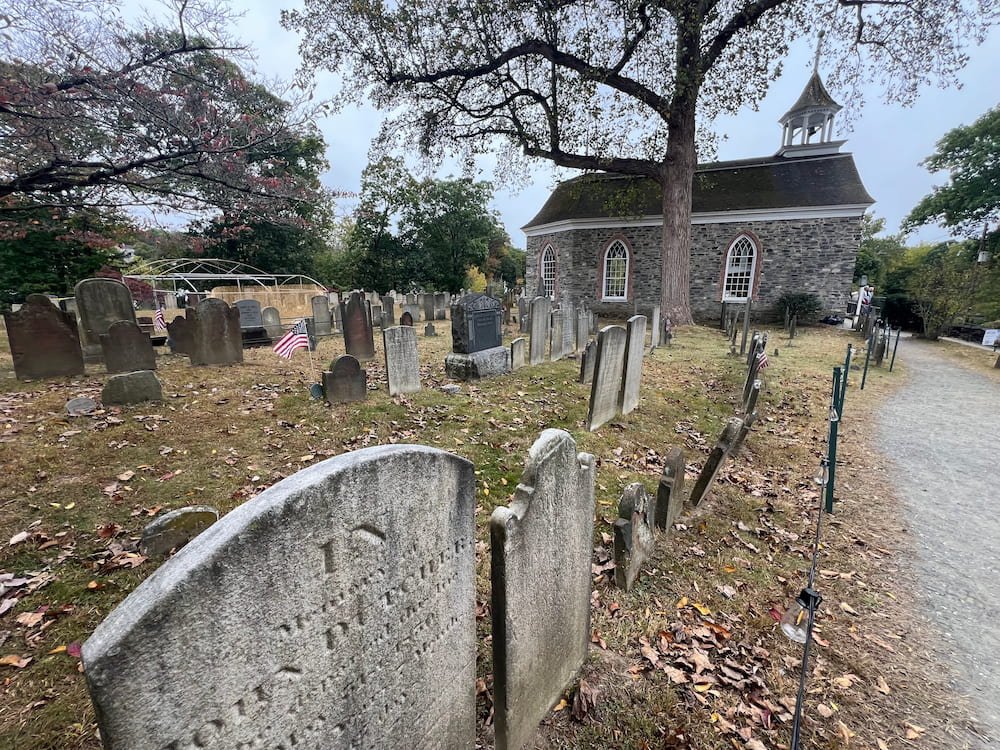
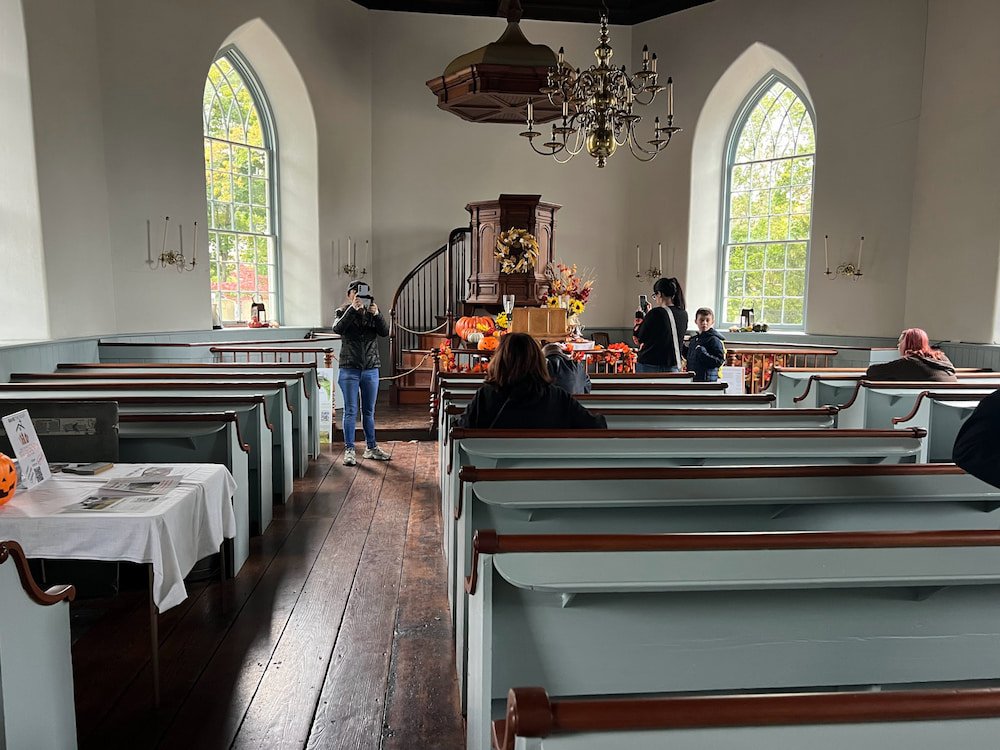
Since we were here on a weekend the town was really busy with folks walking around to explore Sleepy Hollow in its fall and Halloween glory, but we managed to find a free spot to park and walk to the Headless Horseman Bridge nearby, which represents the site of where Ichabod Crane was unseated by a pumpkin in Irving's tale. A short walk uphill from here were teems of people visiting the Old Dutch Church and Burying Ground, a cemetery that has been around since 1685(!) and which is the apparent haunt of the headless horseman, as well as the final resting place of locals who inspired Irving's characters, including Katrina Van Tassel, Brom Bones, and others. Washington Irving himself is buried in the larger Sleepy Hollow Cemetery next to the Old Dutch Church, as well as other prominent folks like Andrew Carnegie, Walter Chrysler, and Brooke Astor. Guided and self-guided tours are available to wander the 3-acre cemetery, but we opted to simply walk around and see the ancient gravestones--some so old that the engraving on the tombs had faded into complete obscurity--and also see the tiny church, which was simple in its design inside but was also adorned with Halloween decorations like pumpkins and fall leaves on the pulpit.
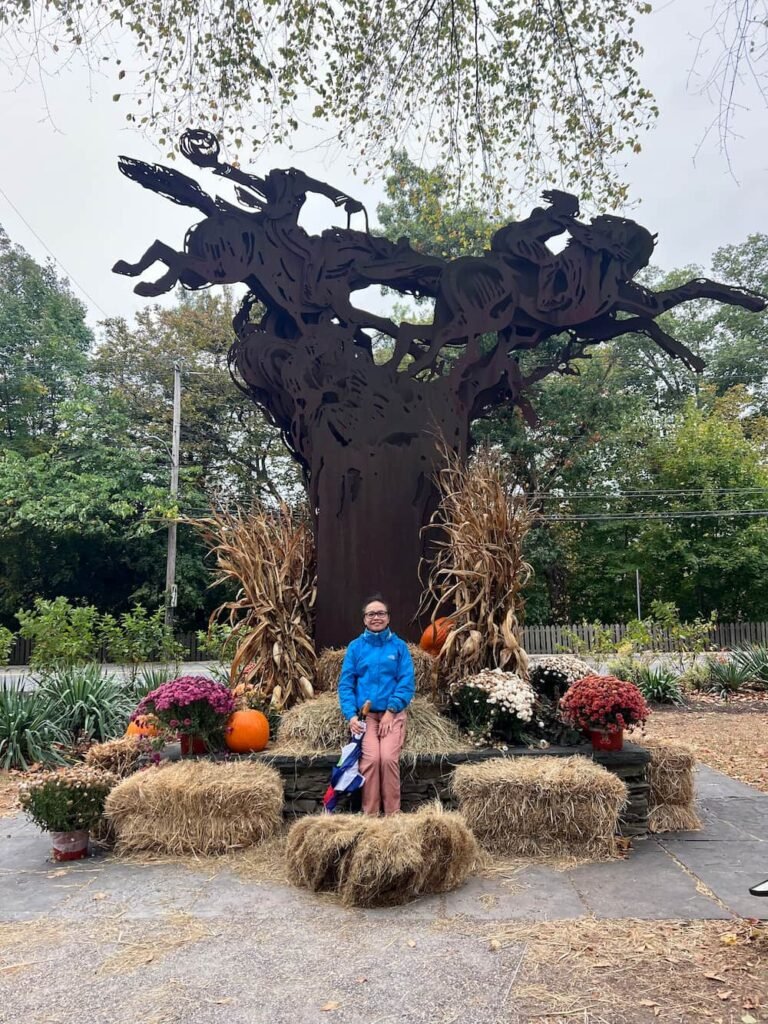
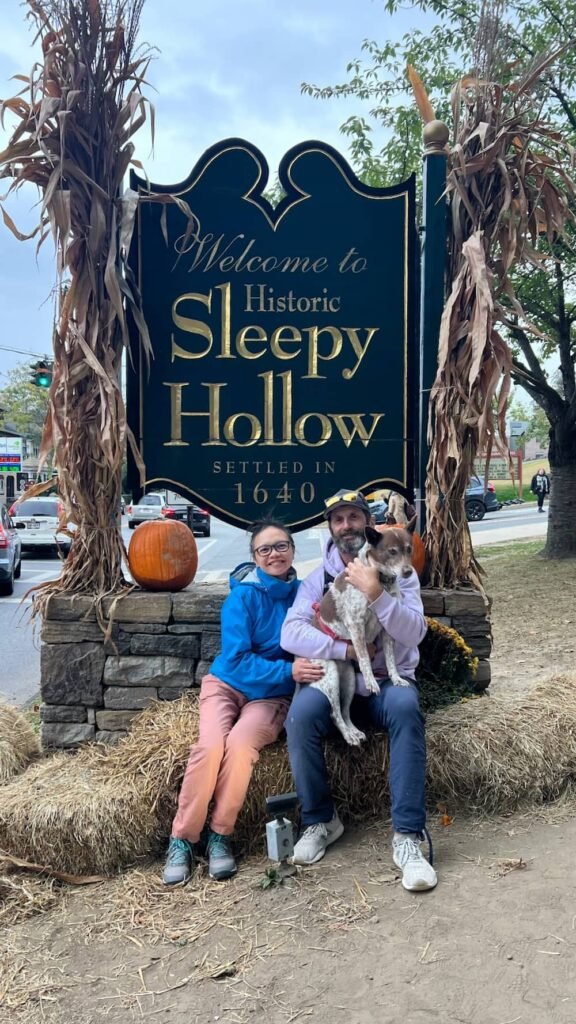
The main street in Sleepy Hollow is Beekman Avenue, and it's a lovely area to walk around, as there are heaps of quaint shops and restaurants that line the streets, and it was great to see so many decorated for the spooky season. Even the fire station had humorous skeletons mingling at the front, on haystacks! We'd seen the "Welcome to Historic Sleepy Hollow Sign" when we'd driven in on the corner of Broadway and Depeyster Street, and naturally joined the queue of folks waiting to pose next to it, which was kitted out with hay bales to sit on, and adorned with decorations for Halloween. Patriots Park, which was near the sign, was also a really pretty public park to walk through, as it had more fall foliage and colors for simply-can't-go-wrong photos.

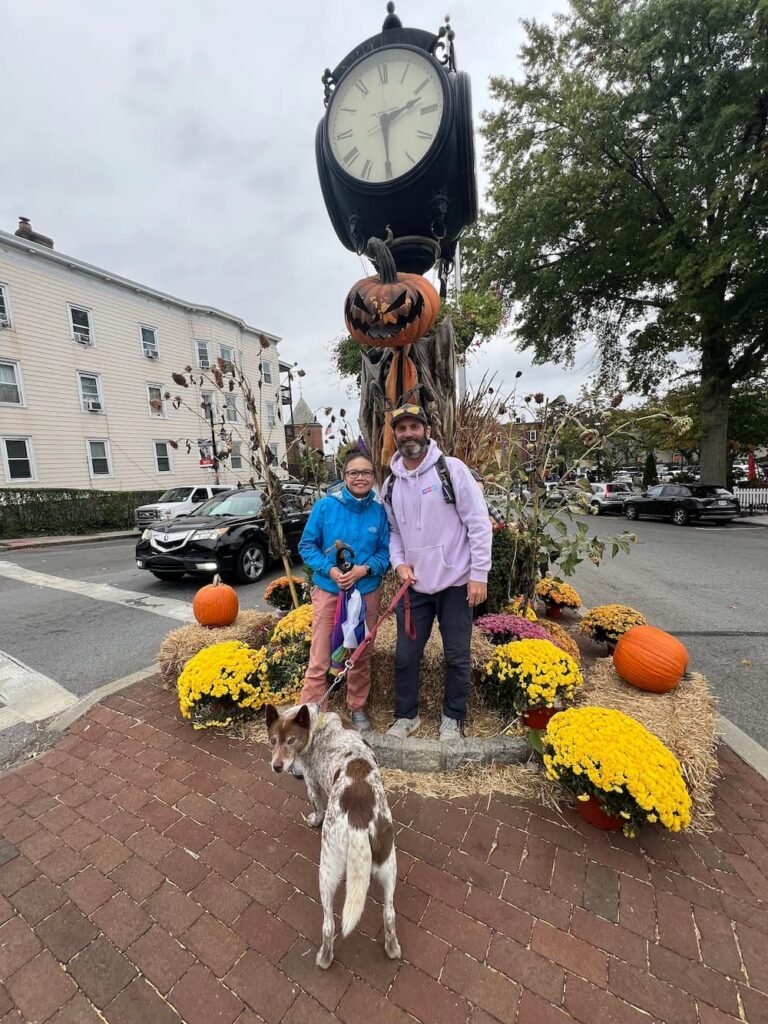


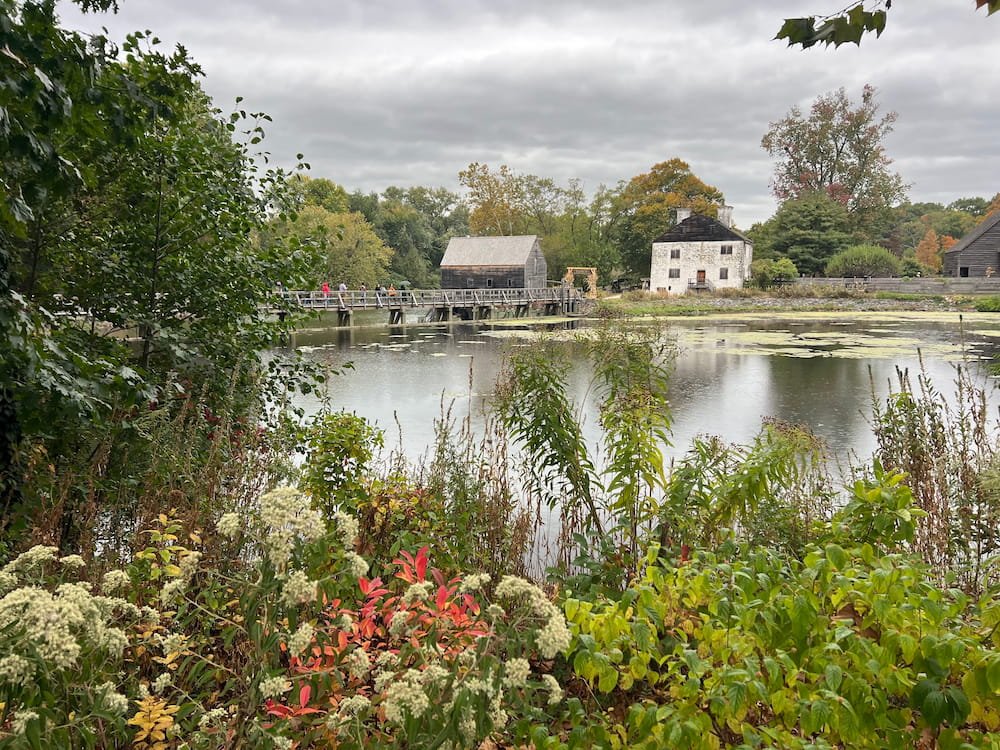
While we didn't visit Philipsburg Manor, we did check out the Visitor Center and were able to look across the body of water at it from a distance. The manor is a mill and trading complex where an enslaved community lived and labored for generations, and it's a popular, well-preserved attraction, with guided tours happening multiple times a day. We were close to where we'd parked our RV, so our walking tour had turned out to be perfectly orchestrated--and even better, it hadn't rained while we were out, despite the ominous grey clouds and dreary skies above us the whole time!
North of New York City
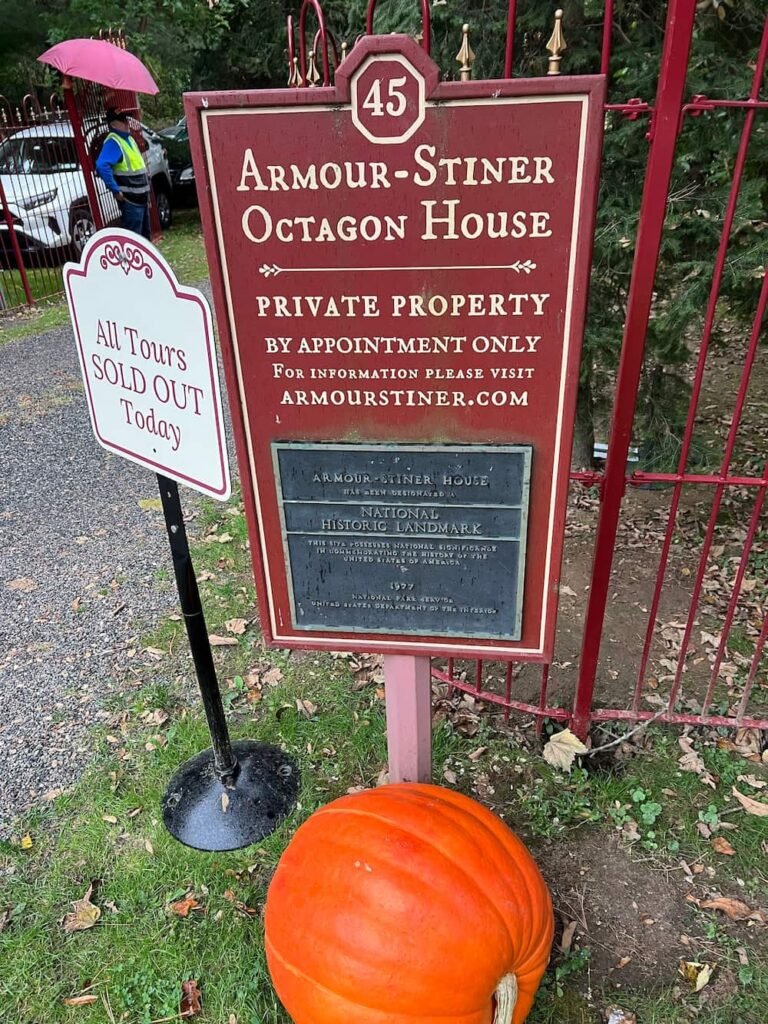
With so many years of history in this region of the country, it's no surprise that there are more iconic homes in the vicinity. We are also very close to New York City, mere miles from Manhattan! Around here are a number of historic homes, including the Lyndhurst Mansion. Also known as the Jay Gould estate after the railroad tycoon who once lived here, the mansion is a Gothic Revival country house that sits in its own 67-acre park beside the Hudson River. We wanted to also look at the front of the Armor-Stiner Octagon House, an octagon-shaped and domed Victorian-style house that's the only fully domed octagonal residence, but security was tight at the front by the gates, preventing us from even having a sticky beak!
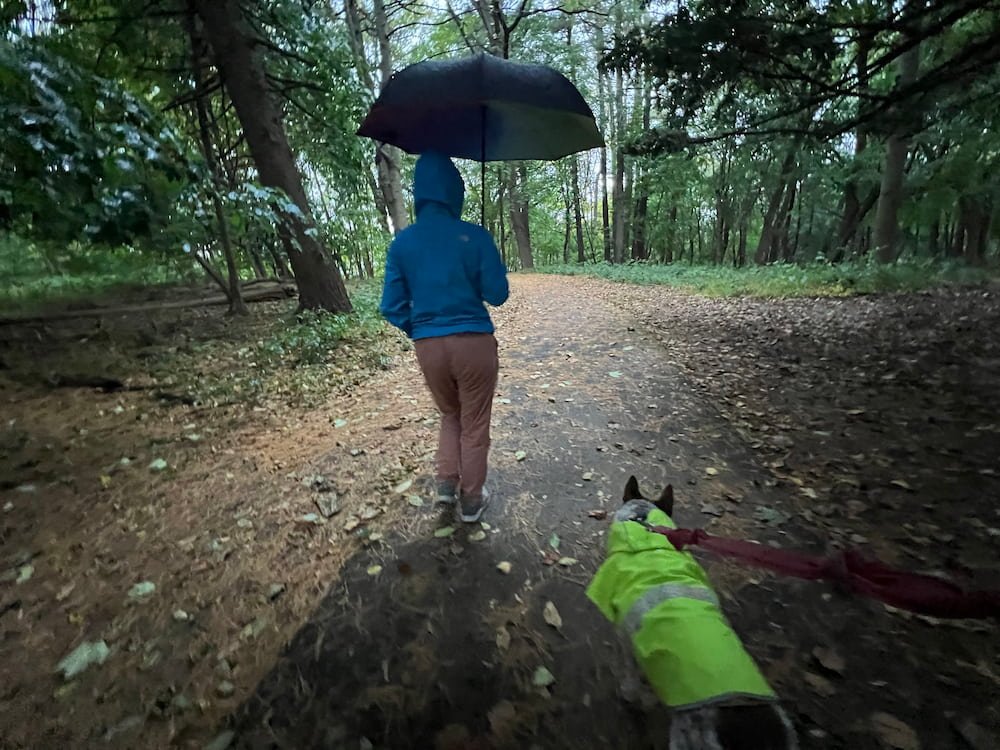
The Old Croton Aqueduct Trail is 26.5 miles (over 42.6 kilometers) long, spanning from around Dobbs Ferry to the Bronx, with a dirt pathway through communities and trees. It would be a really lovely walk, particularly since with the autumnal tree canopies and crunchy fallen leaves on the ground, and normally we would have been stoked to go for even a short stroll, but it was getting more overcast and darker as it soon approached sunset. Adjacent to the trail is the Lenoir Preserve, with a litany of trees and shrubs from all over the world, including native sugar maples, red oaks, pines, and tulip trees, as well as wildlife including woodpeckers, owls, and bats. Within this preserve are a couple of historic homes, which we went to see...so actually, we did go for a bit of a short trek after all!


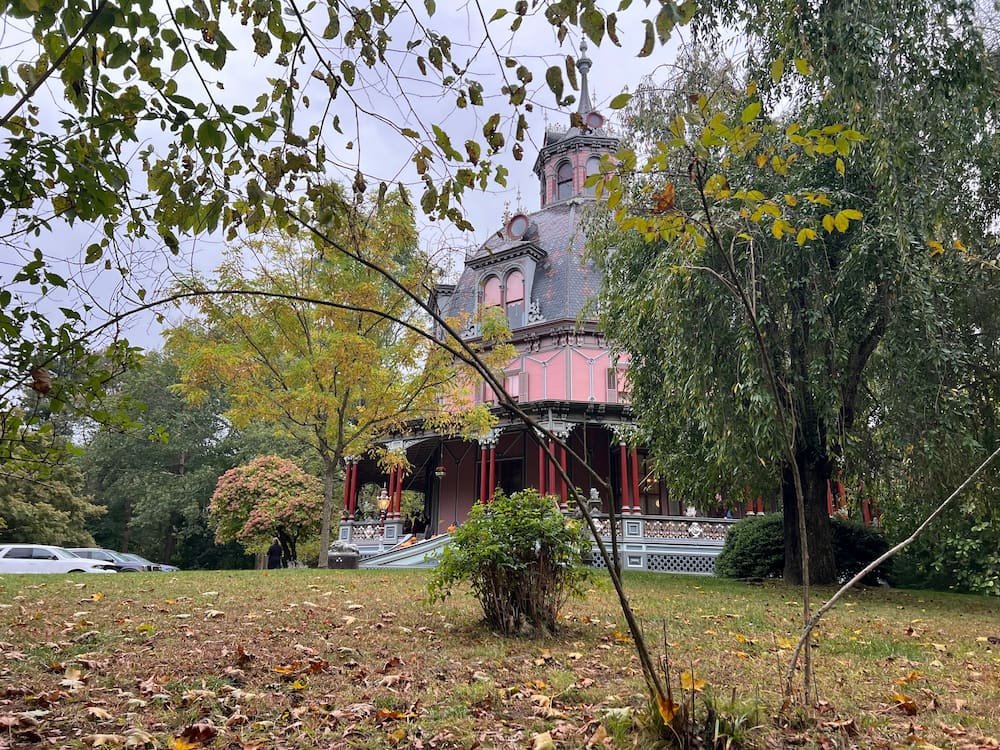
Lenoir Preserve has a paved trail that led to Wightman Mansion, which dates from the mid-1800s and had further expansions added in the early 1900s. Granite quarried from the site was used in constructing the mansion. Nobody lives there now and restorations have taken place to maintain its formidable look since its heyday--it definitely seems like a historic estate that you'd expect to see in the English countryside. Inside it looks completely empty, but it would be cool to wander inside it and take in the views and aesthetic from within.
Before we headed out we passed the Lenoir Nature Center again. While it was closed, there was an interesting sign outside of it that mentioned that it was formerly "The Carriage House," remains of an estate named Ardenwold, which was once lived in by the Duell-Stilwell family. In the 1930s, the Stilwells purchased the estate to the east, called Fairlawn, which already featured a colonial-style mansion. Fairlawn made sensational news with a double murder in 1900, when a suitor knocked on the front door and shot a servant girl who had turned down his advances. He then shot himself and died next to her. So much history and intrigue! It seems that the Fairlawn mansion was demolished by the Stilwells in 1938, leaving only the hill and stone wall.
These Rest Stops Are Nice
As we returned to our RV it had started to drizzle, so it was our sign to find rest and respite for the night. Fortunately, in New York state it seems common to have rest stops that are alongside the highways, complete with a petrol station, convenience store and fast food options. This travel plaza, Applegreen, operates stops in Ireland (where the company hails from), the UK and the US, and it was clean and convenient, with a Starbucks, Chic-Fil-A, and Burger King inside as the food choices. While we luckily have dinner options in the RV, we were happy to park somewhere for the evening and have access to the amenities!