
When we'd been driving eastward after visiting Columbus yesterday, we noticed a lot of signs for Amish furniture, and it occurred to us that we may be near Amish Country. While Pennsylvania has the largest Amish population of any US state (Lancaster County is the oldest and one of the biggest Amish settlements), Ohio is a close second, with many Amish in Holmes County and other settlements in the state. The Amish population is also growing steadily, doubling every 20 years due to high birthrates. We decided on a whim to head to Amish Country, since it is apparently less "touristy" compared to Pennsylvania, which has a lot of visitors from major cities like Philadelphia and New York City since it's easier for them to get to. Plus, we'd have to detour a couple of hours to get to Lancaster County, while this detour in Ohio was only about an hour and a half. We could also still visit the Amish community in Lancaster County if we had the time and wanted to later.

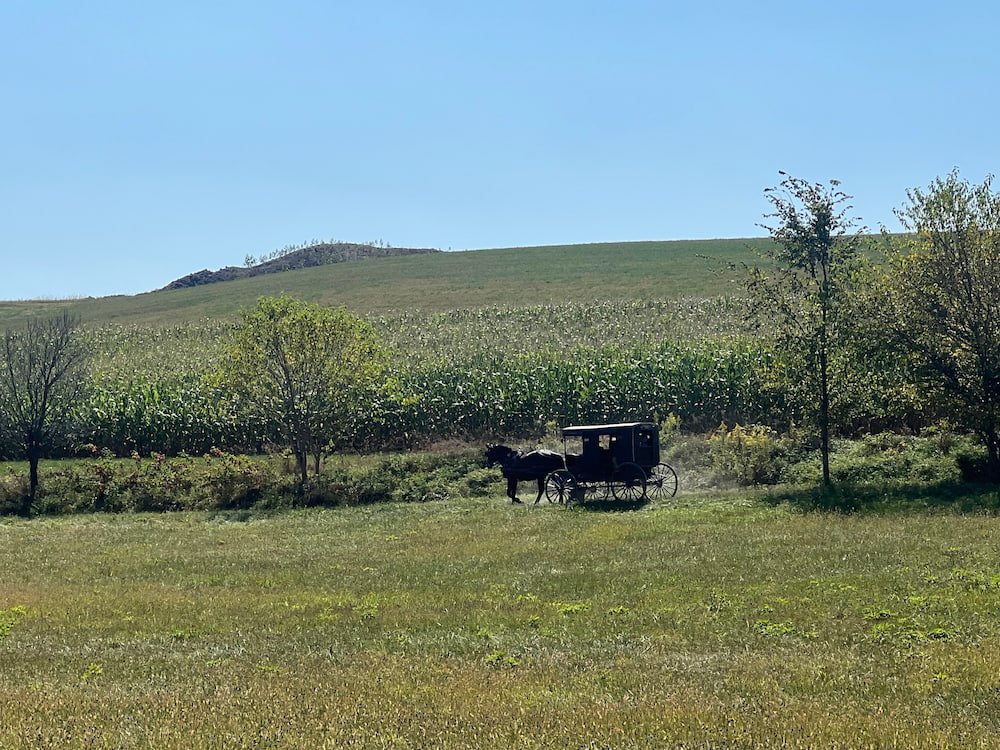
We arrived in the town of Millersburg in Ohio, and we could already see a lot of Amish folks--including on horse and buggy sharing the road with us (there were also street signs with a silhouette of a horse and buggy, noting that they'd be around!), and in the midst of chores in their front yards. We were under the impression that Amish folks shied away from motorized vehicles, but we saw quite a few of them on e-bikes, riding along the road, wearing their traditional clothing along with fluorescent yellow road vests!
Guggisberg Cheese
In Millersburg, our first stop was Guggisberg Cheese, founded by a man named Alfred Guggisberg who studied cheesemaking in his homeland of Switzerland before coming to the US in 1947, where his skills were highly sought-after by Amish farmers who wanted a cheesemaker to provide a market for their milk. After Alfred passed away, his son took over, and the company is now one of the largest manufacturers of Swiss cheese in the country. Its Baby Swiss cheese was awarded the #1 cheese in the US, and its other cheeses have also won numerous awards.
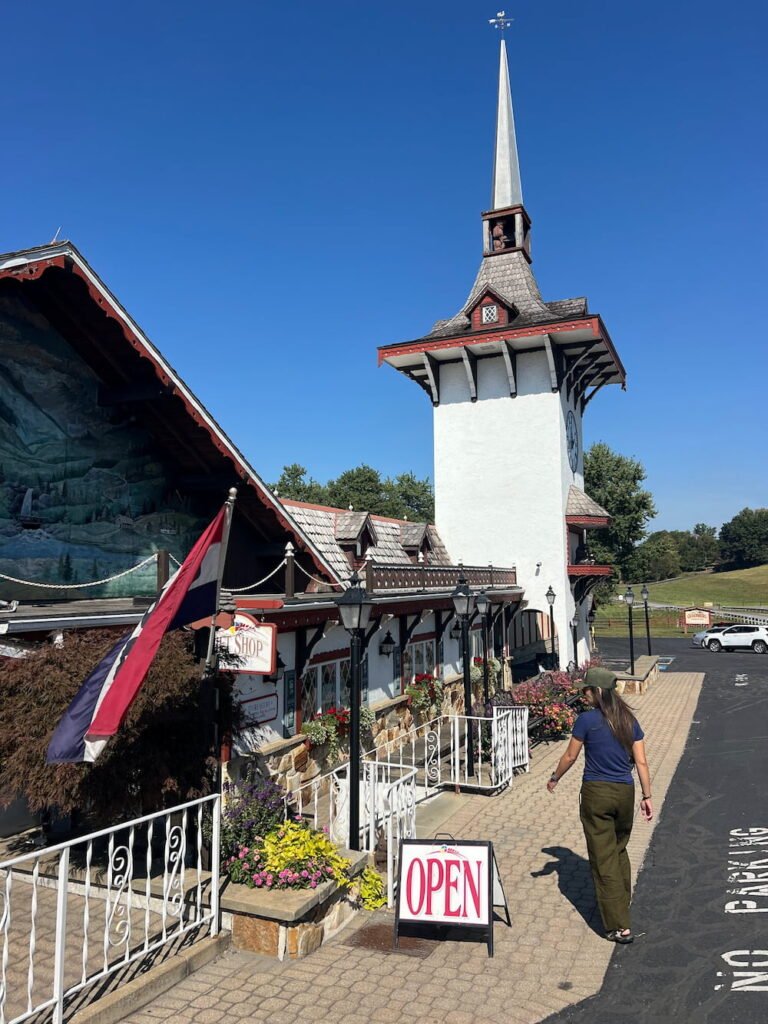
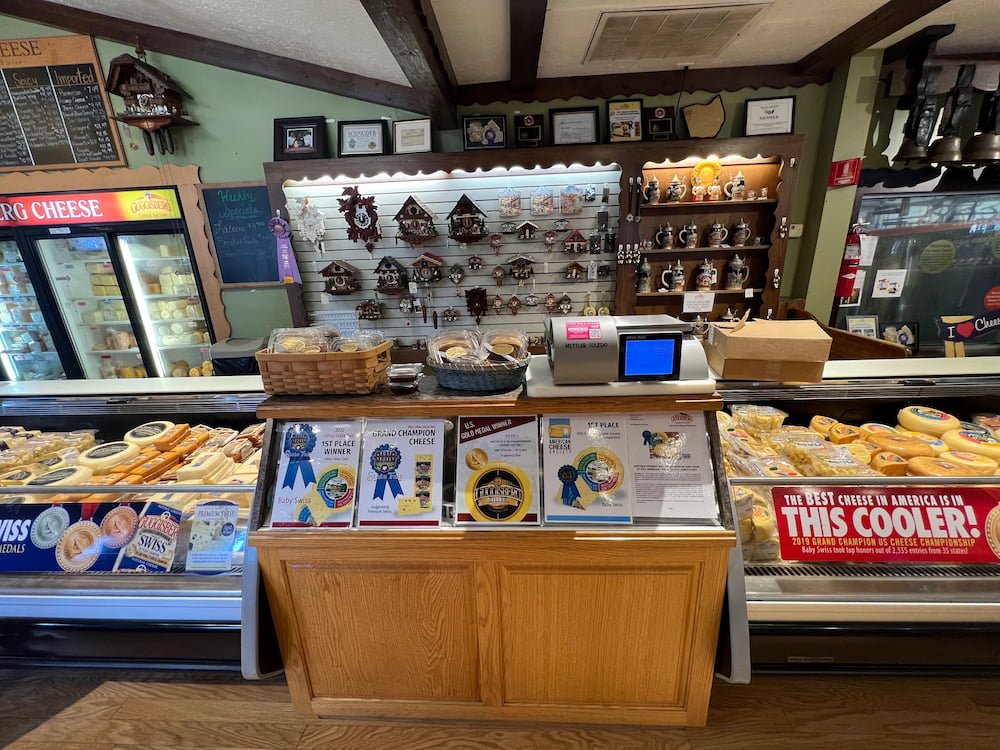
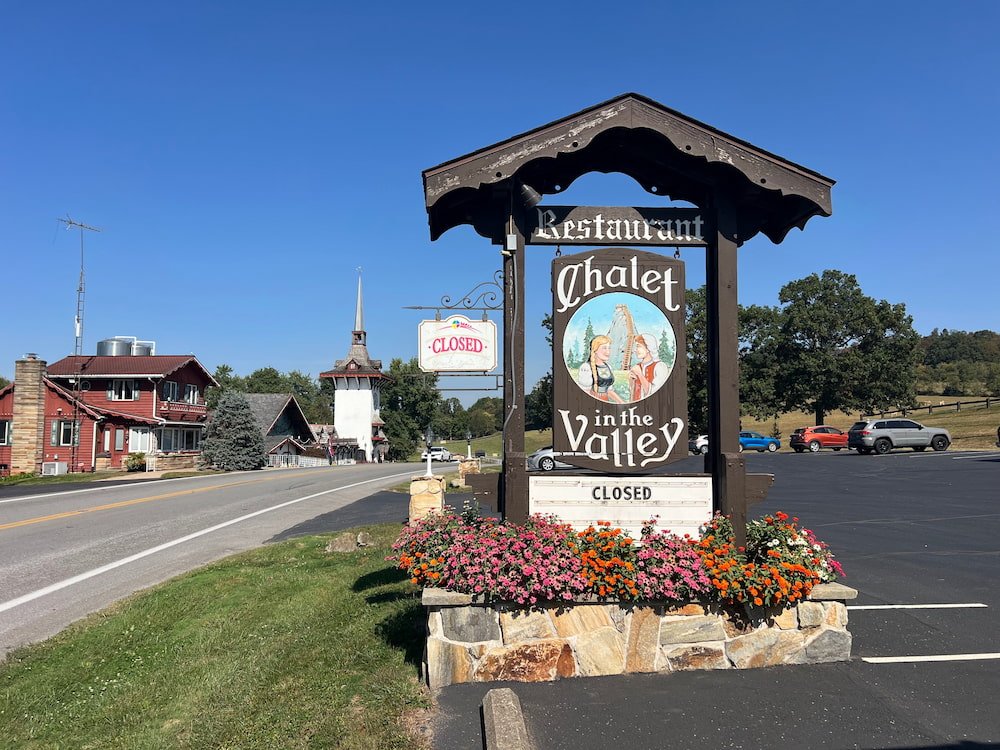
Across the road from Guggisberg Cheese is a cute Swiss-style chalet, called the Chalet in the Valley restaurant. It was closed when we arrived, but it felt like we had wandered into Switzerland! The Guggisberg Cheese building is also very Swiss in style, with a tall white steeple and bears embedded in the structure. Entering Guggisberg Cheese, we realized that the shop itself is not very big, with groceries and cuckoo clocks at the front, and a small window towards the back that shows some of the vats being used to make the cheese. We spent most of our time at the back of the store because that's where all the cheese for sale was!
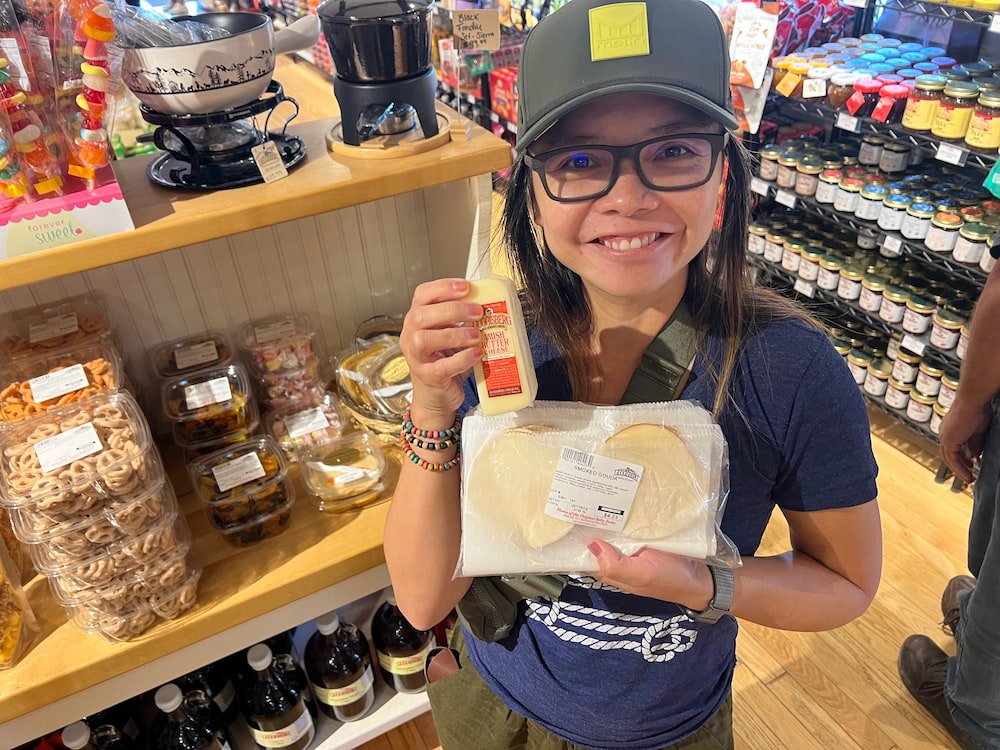
The incredible thing about Guggisberg Cheese is that they let us sample any of the cheese they sold, including their award-winning Baby Swiss, plain gouda cheese, and others (there's a lot of cheeses listed on the board)! The sample sizes were also very, very generous--either chunky cubes or decent slices of cheese that the two workers were handing over to us. The cheese we were most in awe of (and bought!) was the smoked gouda. We both love gouda but hadn't had a smoked version before--and this one tasted exactly like ham! If someone gave us a slice to taste blindfolded, we wouldn't have known it was cheese. We ended up buying this and the "Amish Butter" cheese, a smooth and creamy cheese that we figured we could use in toasted sandwiches or just snack on. We still have quite a bit of cheese in the fridge, but couldn't pass up the chance to get these unique cheeses that we likely won't find outside of Amish country!
Behalt - Amish Mennonite Heritage Center
After Guggisberg Cheese, we drove to the adjacent town of Berlin, where we visited the Amish Mennonite Heritage Center, which aims to inform visitors about the faith, culture and lifestyle of the Amish, Mennonite and Hutterite peoples, who are all Anabaptist groups sharing roots in the 16th-century Protestant Reformation.
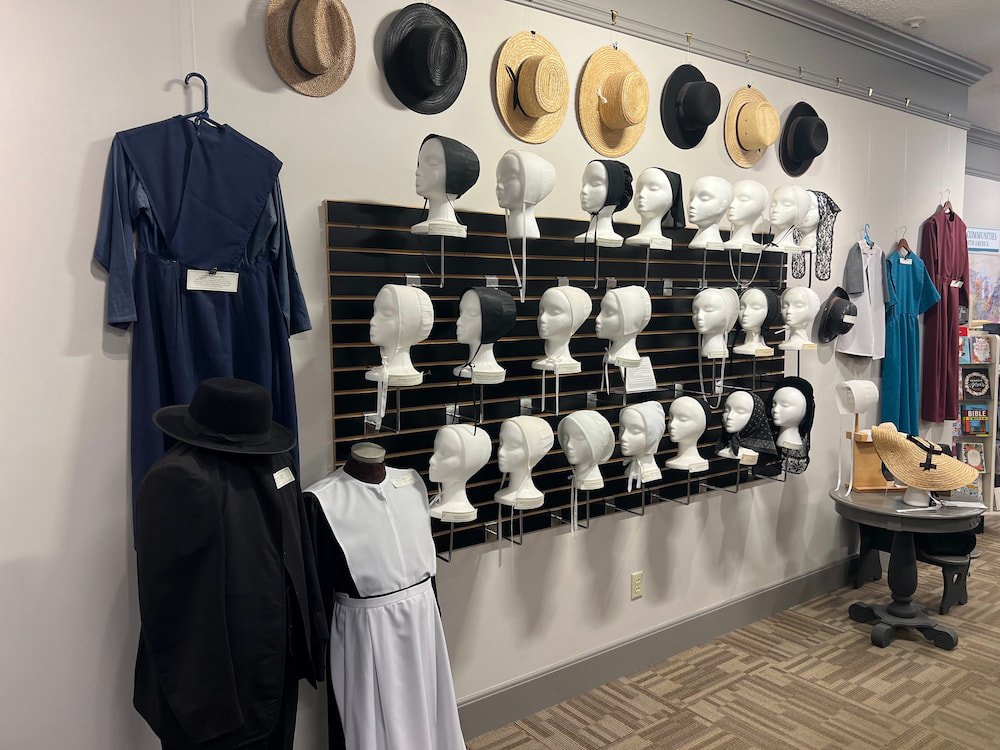
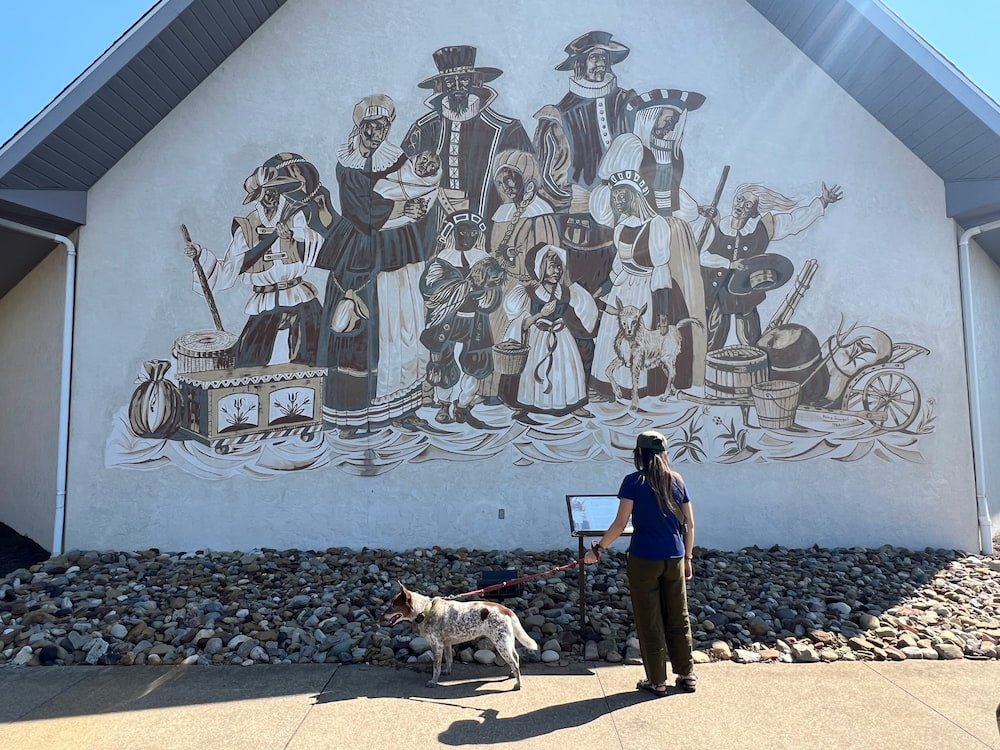
The Center offers a couple of tours: one to see a model school and barn, and another to see Behalt, a huge mural that illustrates the heritage of the Amish and Mennonite people from their Anabaptist beginnings in Zürich, Switzerland in 1525 to the present day. We decided to skip the tours (although they are rated highly), because we were going to see a replica school and barn at our next stop. If you don't do the tour, you can see a lot of Amish and Mennonite artifacts in the Center, including many religious books dating back hundreds of years that detail their history and beliefs.
Yoder's Amish Home
We visited Yoder's Amish Home in the countryside of Holmes County. The property, including a very rundown barn that is over 140 years old, was purchased by a couple, Eli and Gloria Yoder, in 1972. After extensive repairs, they opened the Amish Home for tours in 1983, and have been doing this ever since. Eli was part of the "Old Order" Amish faith until he was 21 years old, and Gloria was raised "English" (not from an Amish upbringing), but lived within the Amish community.
Tours of Yoder's Amish Home cost $15, which includes a home and barn tour, buggy ride, and school tour (otherwise these can be purchased separately). We bought the entire package in the main home/gift shop, passing a small bridge and a picnic area that was strewn with cats and kittens lazing about, enjoying the attention that many visitors were giving them.
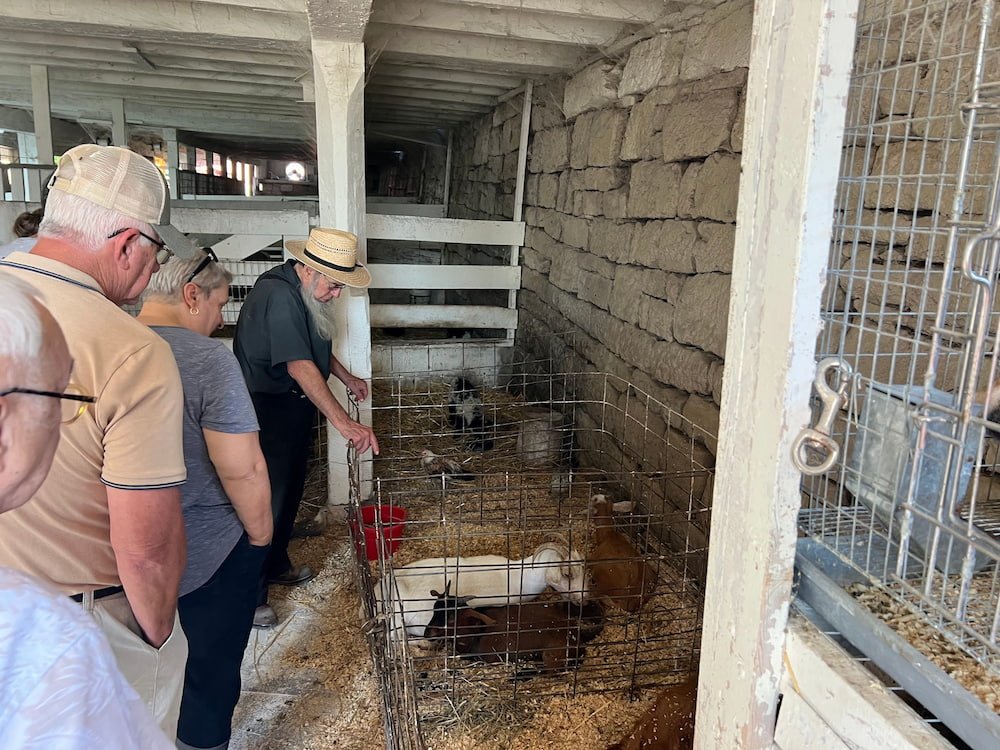
There was a small group of us that did the barn tour together, where we met Eli, who walked around showing us all the animals, including puppies, goats, horses, cows, turkeys (one is called Thanksgiving, the other Christmas), rabbits (who will also become a meal), and many others all hanging out together. Since nobody but the owners live on the property, apparently the gate is left open at night for the animals to wander freely, but right now as they were all inside seeking shelter from the sweltering sun. While Eli is no longer part of the Old Order, he still was dressed as someone who looked to be part of the Amish faith, including having a shaved mustache, full beard, and wearing a straw hat, and having a thick Pennsylvania Dutch accent.
Amish Home and Traditions
After seeing the barn, we met a lady who was not from the Amish faith but who lives in Amish Country (she was a former school bus driver), who showed us around the house. She explained more about the Amish faith to us, which we found interesting as we didn't know much ahead of this trip. There are apparently about 18 different "orders" of Amish faith, with some groups, like the Swartzentruber Amish, considered more conservative, while others, like the New Order Amish, adopting more liberal interpretations of their rules. It all comes down to the interpretation of the different groups over the "Ordnung," the set of rules governing a community's beliefs and practices. The most conservative Amish groups eschew technological advancements--including indoor plumbing, electricity, and motorized vehicles, so life will be is still like it was hundreds of years ago, with very manual labor. But the more liberal Amish groups will be okay to ride bikes (even e-bikes, which we noticed while driving), and some even allow their children to have mobile phones, although they will need to give these up when they're baptized as adults.
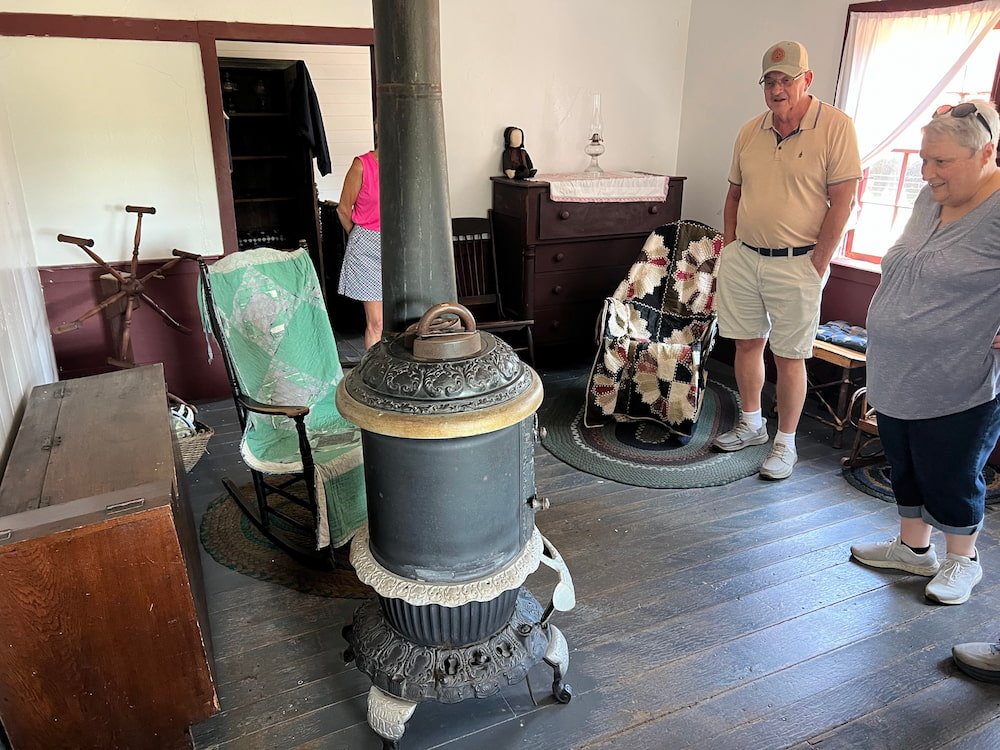
The home was an example Amish home, showing the simple lifestyles of an Amish family. It was interesting to learn more details about Amish traditions as we went into the rooms. For example, a lady's cap could indicate whether she was married, single, and also what order of faith she was from--just like the colors of a lady's dress (the more conservative groups tend to only wear muted colors like black, navy blue, deep green, brown, and purple, with no patterns).
Additionally, Amish don't like to have their photographs taken, as many interpret the Second Commandment ("Thou shalt not make unto thee any graven image") to include photographs. They believe that physical representations of themselves are improper and can lead to idolatry. So, it's important to ask before taking any photos of Amish people.
We could have asked more questions, because we were admittedly very curious and found it all very fascinating! When you strip all of life's excesses away, there's something really wholesome, wonderful and appealing about living life simply, and focusing on what's truly important.
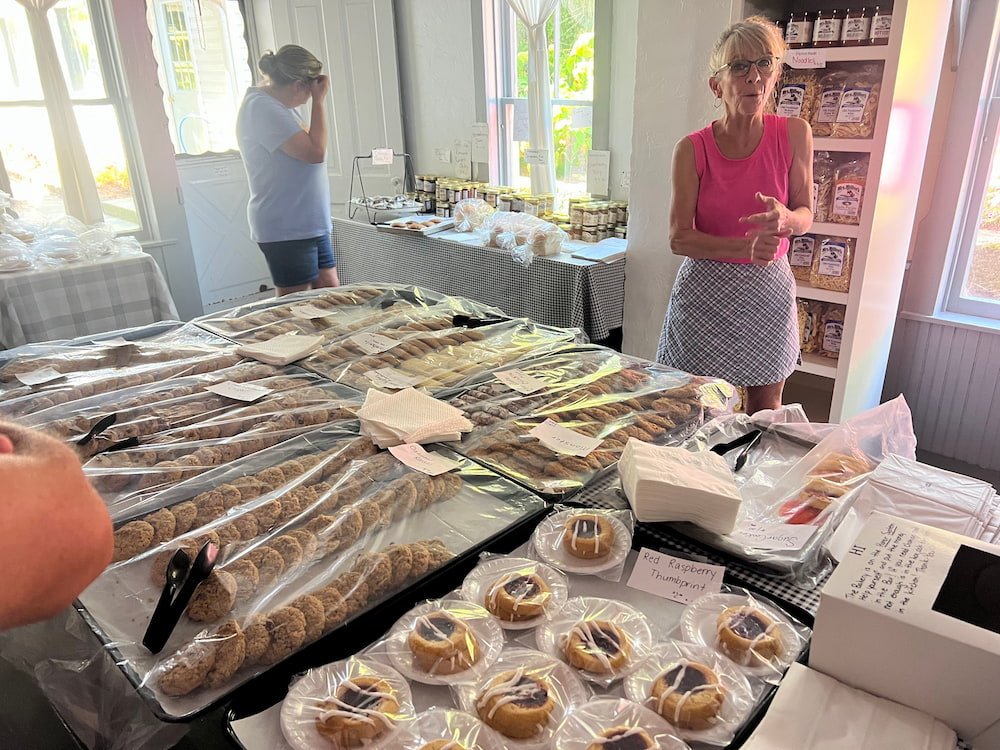
As we wrapped up the tour of the house, we walked through the kitchen, which smelled divine! One of the ladies was in the midst of making cookies, and on a big table there were a ton of different cookies, pastries, breads, homemade Amish jams, and peanut butter (Amish people use it like mayonnaise as they add marshmallow cream as an ingredient, and a common treat is a ham and cheese sandwich with peanut butter!) We vowed to return to pick up some treats after finishing the tour.
Buggy and Amish School
Leaving the model Amish home, we met Marty, an elderly Amish gentleman who would take us on a horse and buggy ride. The horse's name was Duke, but Lisette got confused and asked "how old is Marty?" to which he replied, "Me?" Oops--it would be rude to ask his age, we meant the horse! For the buggy ride, Sheila was permitted to join us, sitting in the back with Lisette while Michael and Marty sat upfront. We did a couple of laps, chatting with Marty, and learning that he has lived in this area for all but 4 years of his life, has 6 children and 24 grandchildren! Not all of his family are still in the Amish faith, but all but one still live in Amish Country, although that one was arriving tonight from Michigan to visit!
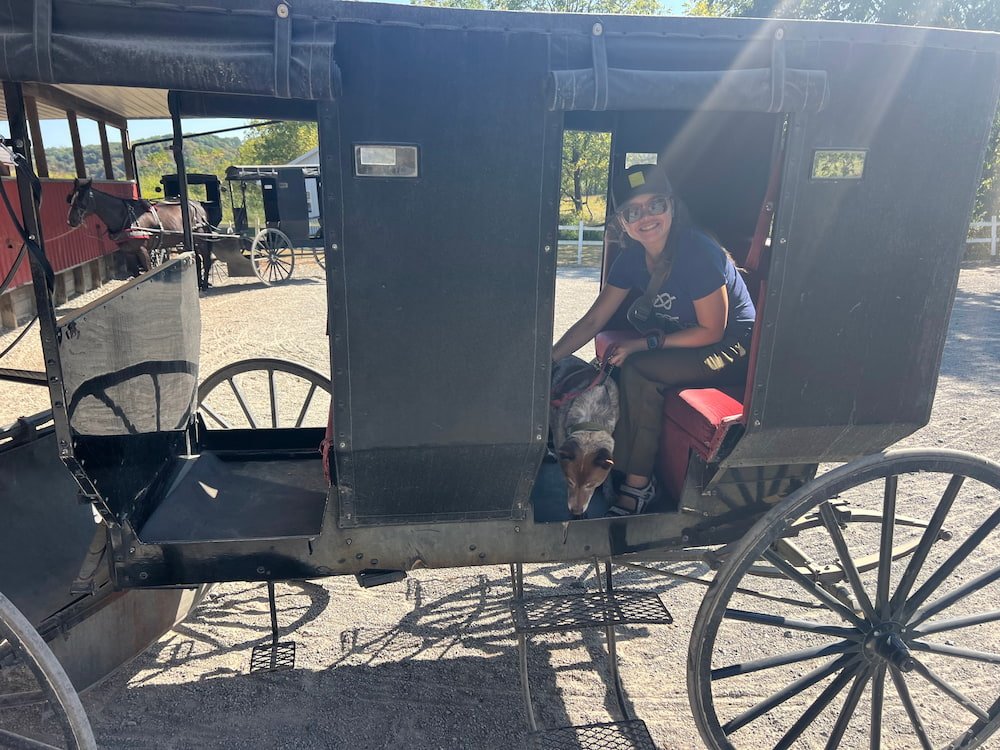
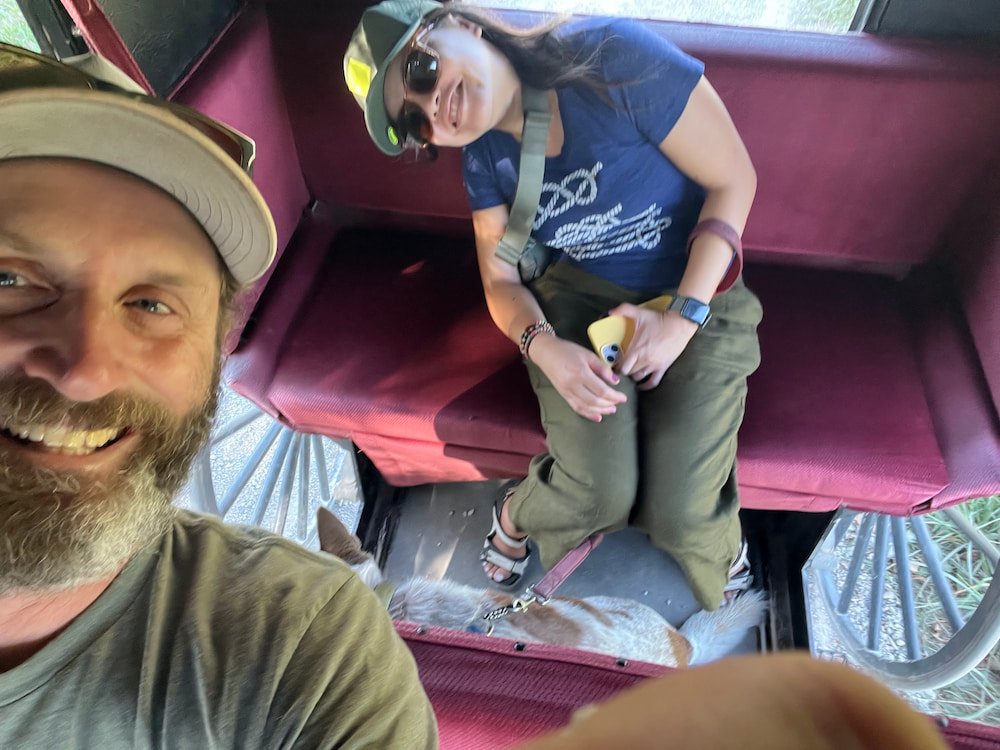
We've seen a few horse and buggy carriages around, and while we shared the road with some (and had to carefully overtake them at points), we also found it to be quite a funny sight to see them parked in front of stores, with the horses standing patiently right next to cars and pickup trucks!
Finally, we met an Amish lady named Naomi at the replica school, who told us about an average day in the life of a school kid. The curriculum is rooted in their religious beliefs and way of living, including Biblical studies and practical skills such as farming, woodworking, cooking, and sewing. As such, subjects like physical education, modern science, and politics are not included.
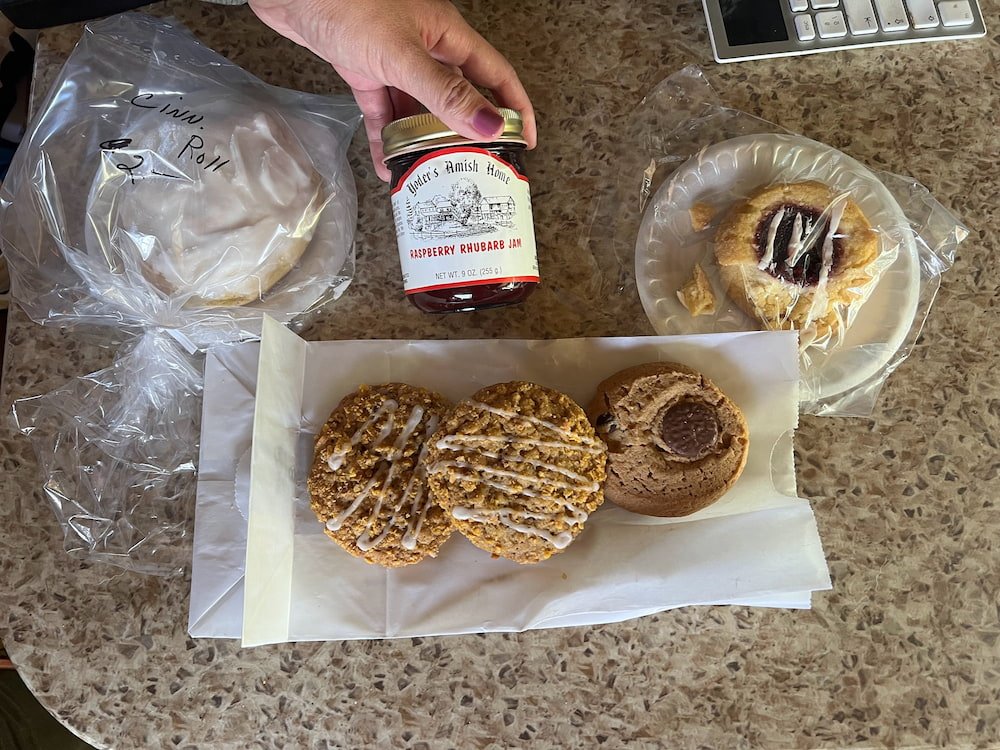
After the school visit, we headed back to the replica Amish home to stock up on snacks, grabbing a couple of coconut and oat cookies, a peanut butter and chocolate one, a cookie with some jam on it, as well as some homemade rhubarb and raspberry jam. We tried all the cookies and the only one we didn't like was the peanut butter/chocolate one--to us, the peanut butter didn't appeal to our palates, likely because we're accustomed to peanut butter without marshmallow cream!
The package tour on the website said it would take approximately 1.5 hours to complete, but we were definitely at Yoder's Amish Home for much, much longer. It was fascinating and fun, and everyone working there was so friendly and lovely!
Lehman's: Home Goods Galore
Our final stop in Amish Country was in the town of Dalton, visiting Lehman's within an hour of them closing (at 6pm). It's a family-owned store that's been around since 1955, and was founded by a man named Jay Lehman, who was born and raised in Amish Country and wanted to have a store to serve the local Amish community, starting with non-electric household goods. While the store definitely still sells a lot of simple home and hardware products, it has now ballooned into a massive store, with all sorts of farming, home, kitchen, toys, and appliances for everyone.
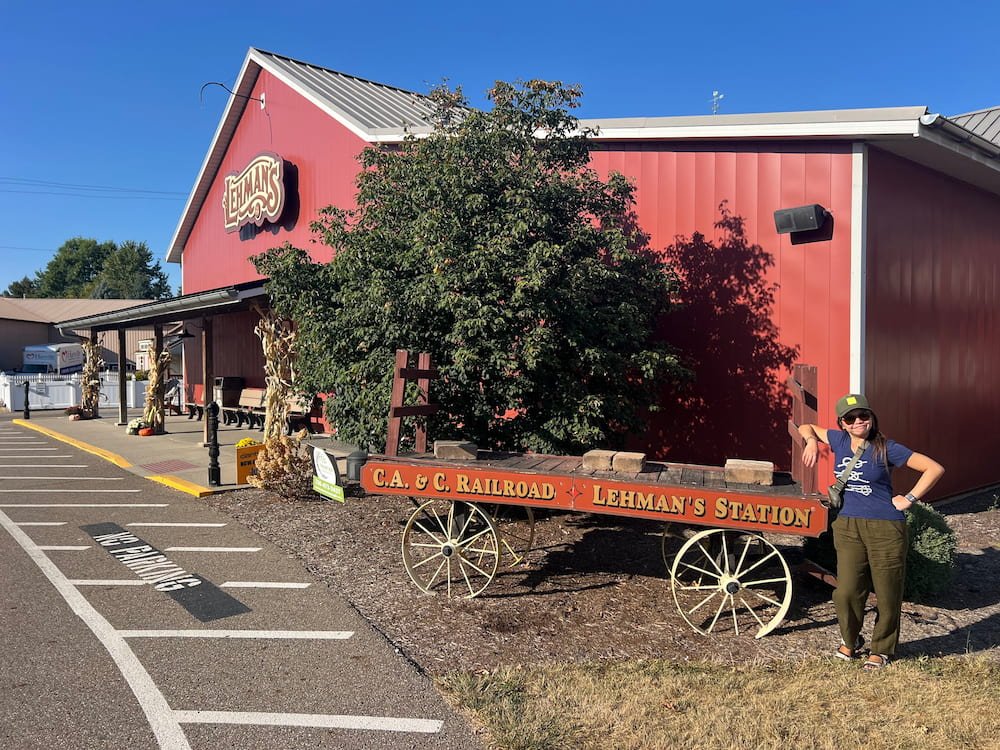
Lehman's brochure actually recommends to "please allow at least 2 hours to visit Lehman's rambling retail store" and we could have spent more time than what we had wandering the aisles of this part museum, part cafe, part store. There was, for example, a whole section just for stoves, with antique ones that could still be in Amish homes today displayed in this section, as well as many wooden stoves being sold that wouldn't be available at the average homewares stores around the country. Home cooking is also part of Amish life, so the section just for homemade jams, preserves, hot sauces, and all sorts of appliances for cooking, baking, and mixing was enormous! Clearly this is a place for Amish folks to also sell their goods and make them accessible to visitors.
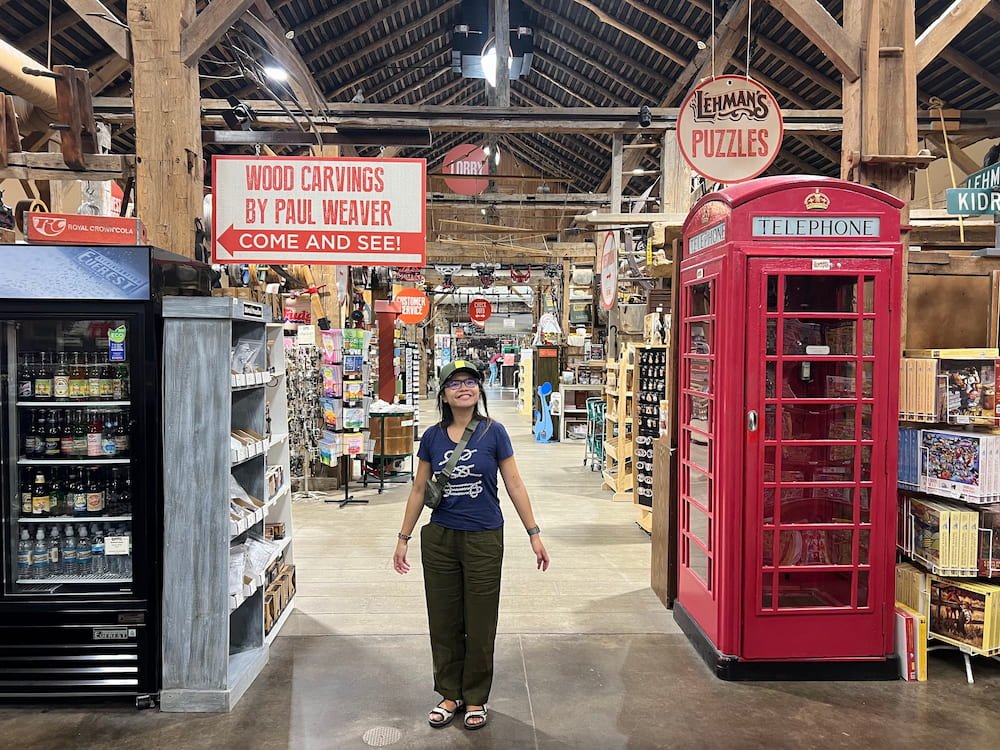
We met an Amish lady who was clearly less conservative, with a head cap but a patterned modest dress and an Apple Watch! Michael asked if this was her favorite store (it was one of ours!), and she mentioned she'd never been here before! So maybe most of the customers to the store these days are tourists like us.
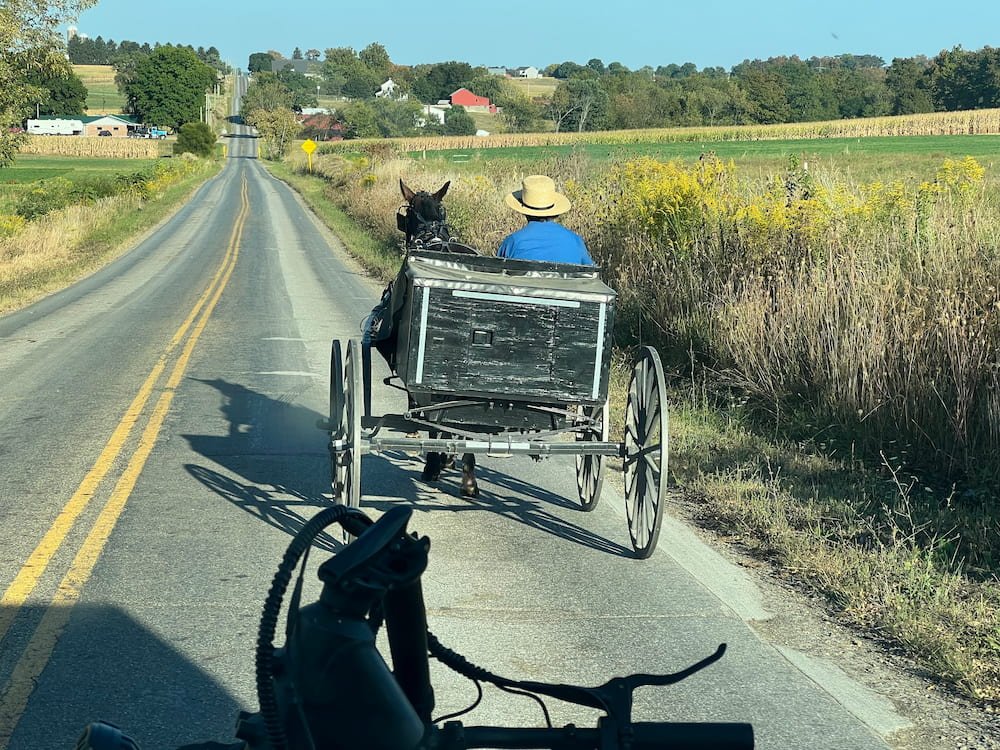
As we left Amish Country, we continued to pass folks riding past in their horse and buggy carriages, as well as whizzing past on bicycles. Eventually, the horse and buggy street signs, simple homes, and rural settings transitioned to folks roaring around on motorbikes, houses with several cars at the front and satellite dishes on the roofs, and busier surroundings, where we ended up stopping at a rest stop for the night. What a fascinating day we had!