
After another night at Cracker Barrel (uneventful in a positive way), we drove to St. Simons, an island off the Georgia coast. It definitely gave retirement vibes when we got here--the average age seemed of the people walking around seemed to be mid- to late-60s. It's a charming town and community, and certainly seems to be a pleasant place to retire, with lots of places to walk, cycle, and relax away from the rat race.
St. Simons: Spiritual Trees and Retirement Village
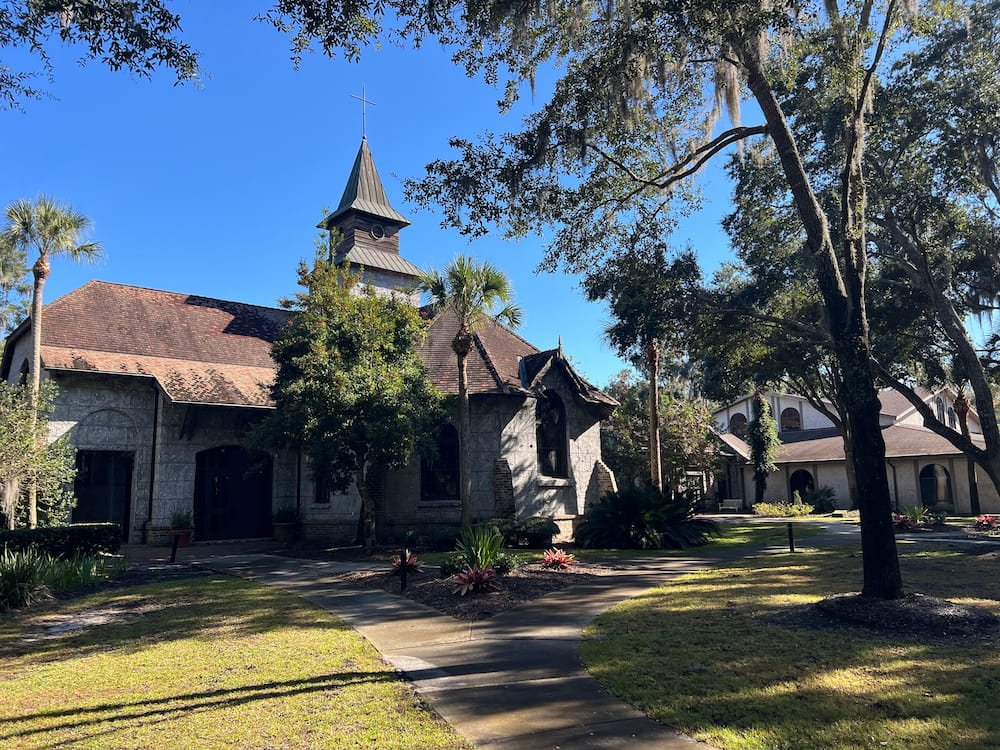
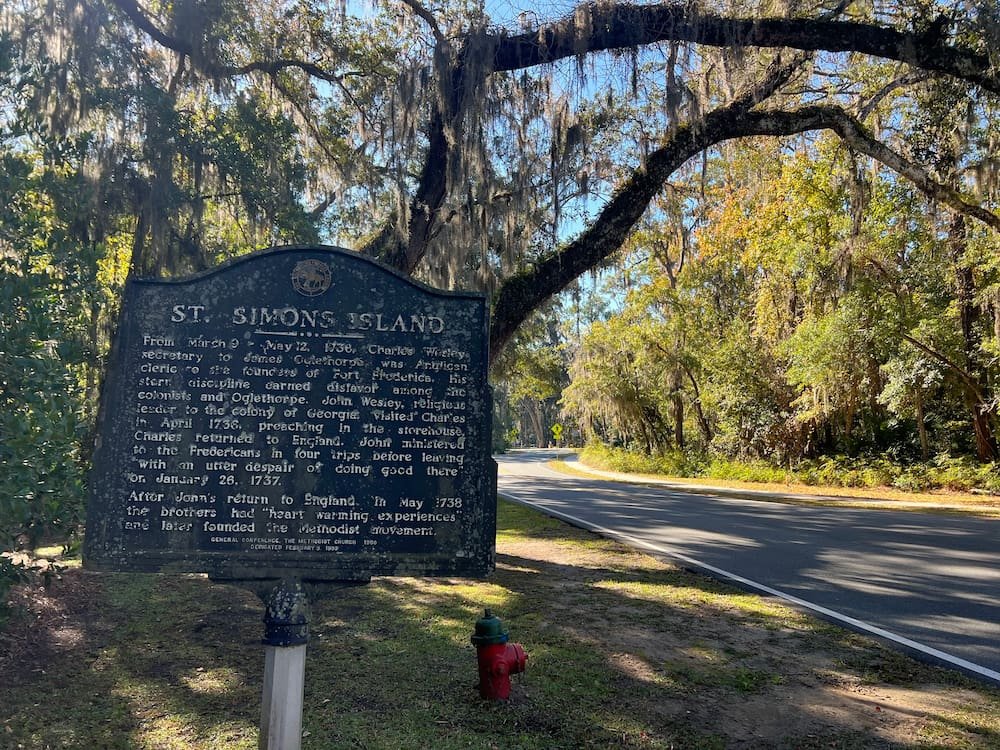
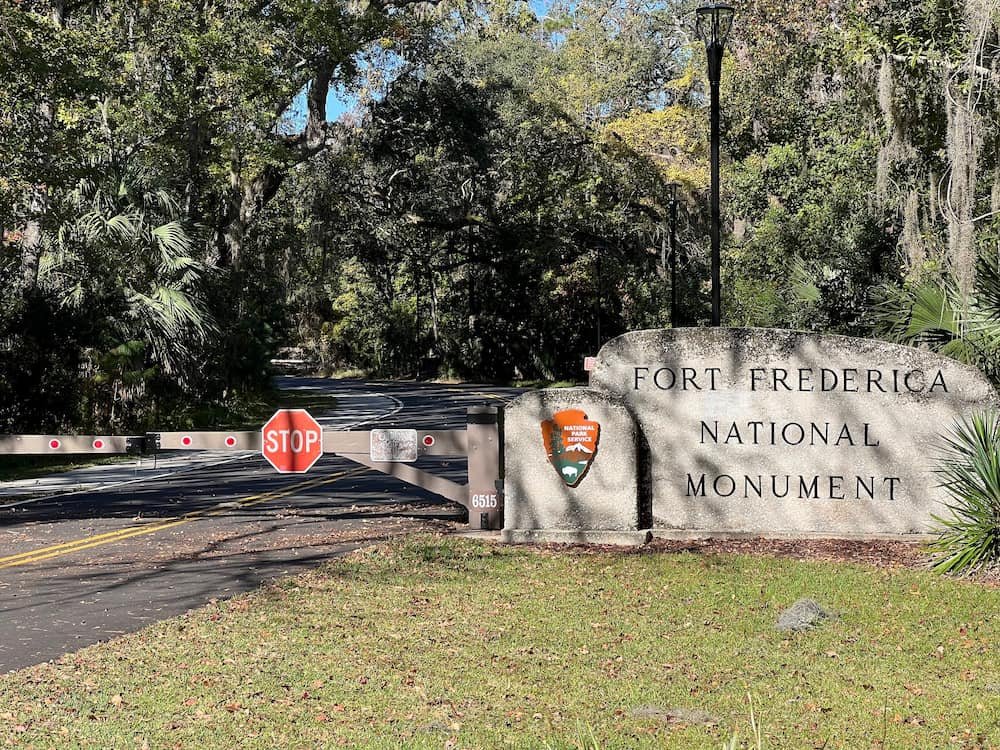
We first drove towards Fort Frederica National Monument, which has the archaeological remnants of a fort and town to protect the southern boundary of the British colony of Georgia from Spanish raids. About 630 British troops were stationed at the fort. We arrived at the entrance to find...it was closed! We parked outside the neighboring lot of the United Methodist Church, and after chatting to someone here, we deduced that despite the shutdown ending, it was still taking some time to get employees back to work. Oh well!
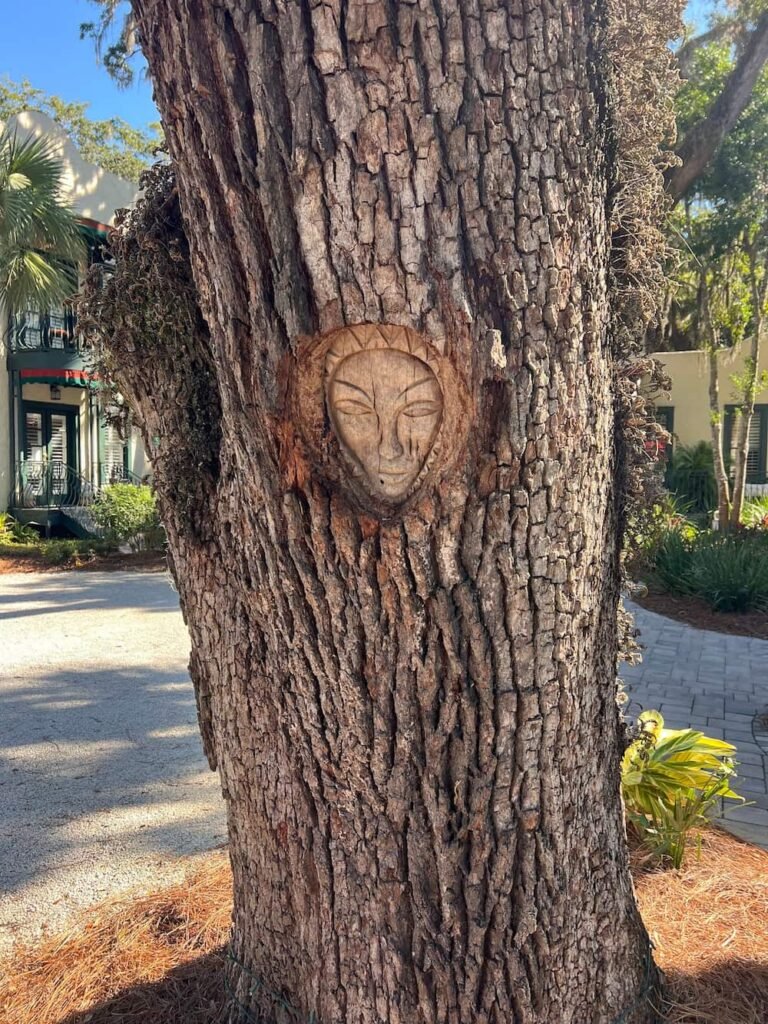
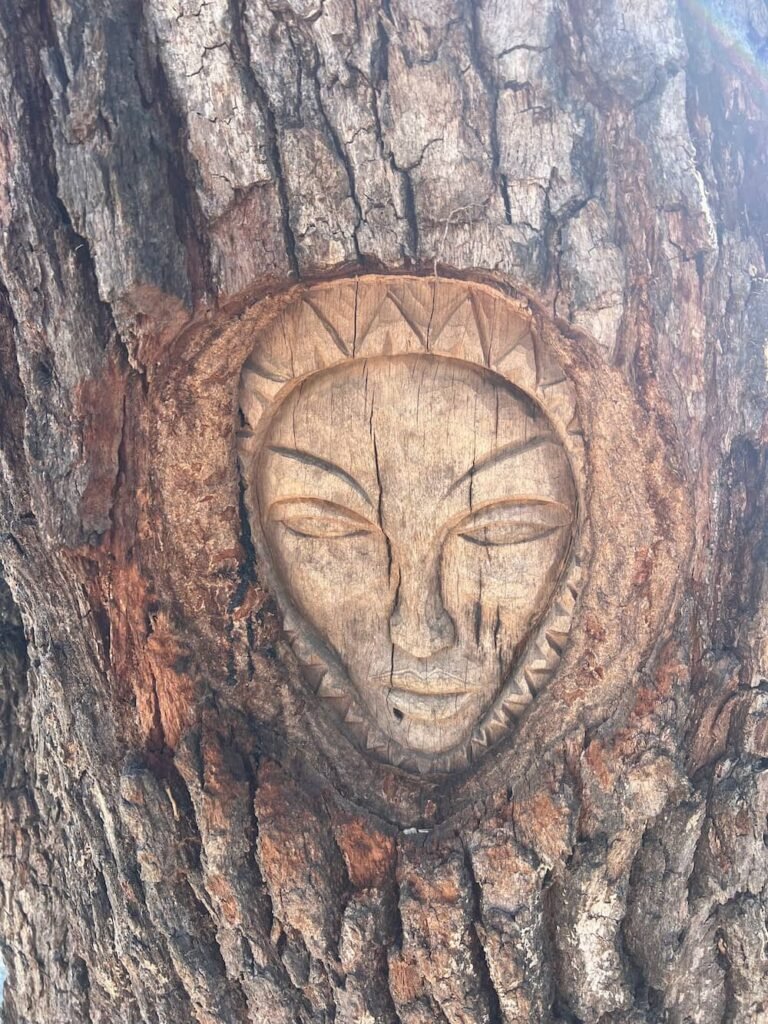
If you're into scavenger hunts and have some time to go on one, St. Simons has about 20 tree carvings scattered around the island. The carvings are of faces staring back at you, and are the works of artist Keith Jennings and his son, who use each tree's unique characteristics to carve these somewhat morose-looking and ethereal faces. Not all of the tree carvings are on public property, and we weren't sure if we would be able to spot any, but Michael managed to stumble on one! It looked kind of like a tree spirit, or some kind of ancient carving--but what do you think?
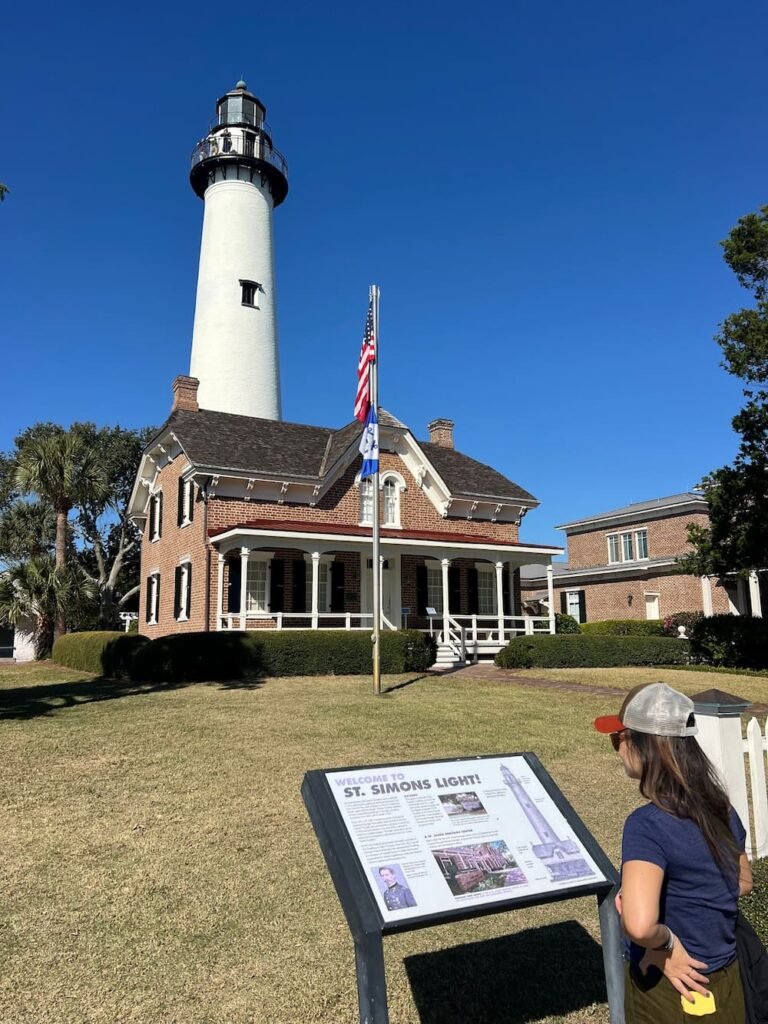
Before we left St. Simons, we stood outside of the St. Simons Lighthouse, with its awesome views out to sea. It's an all-white lighthouse, and there's an admission fee to enter (we didn't go in). It does make us wonder though--we've seen so many different colored lighthouses (black/white horizontal stripes, red, brick, etc). How does one decide what color a lighthouse will be?
Visiting Jekyll Island
Jekyll Island was another place that we'd heard great things about before visiting. The entire island is a state park, so we paid a daily rate of $10 to enter and park (an annual pass is $100). We were actually meant to pay $15 as we have a bigger vehicle (over 8 tonnes), but there was only a machine to pay, so it was charging everyone a flat rate. I guess it's one of the benefits perhaps of traveling during the off season! Jekyll Island is a popular tourist destination especially over the summer, with plenty of activities for families (well, all ages really), with beaches, wildlife watching, bike trails, and campgrounds. There are also guided tours of the historic district, which has buildings dating from the late 19th and early 20th century.
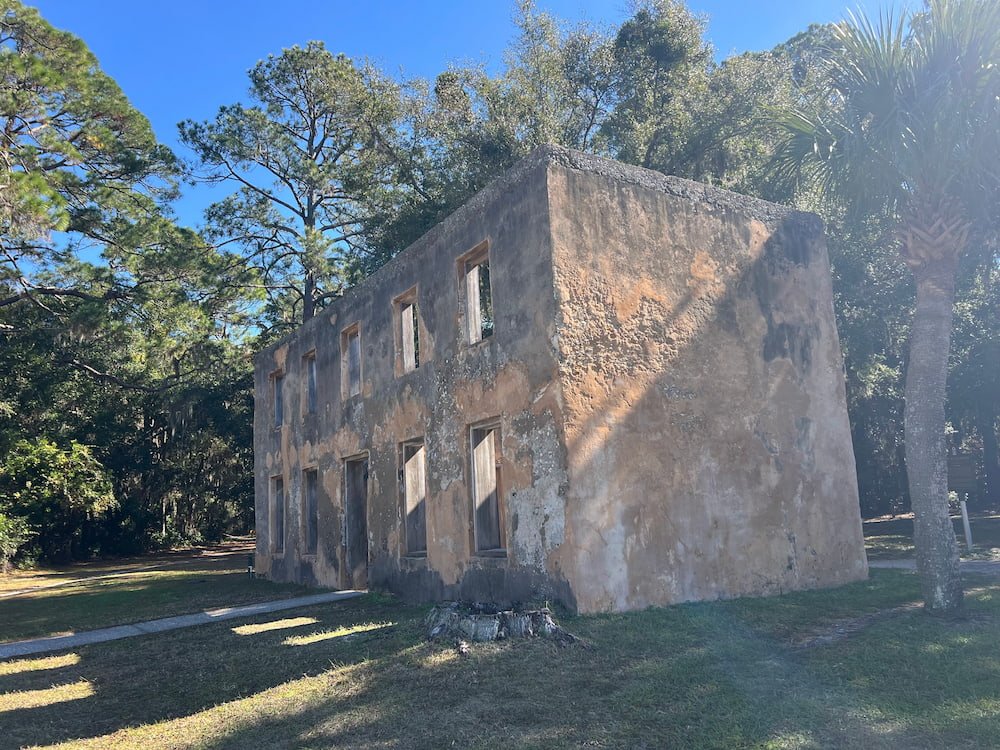
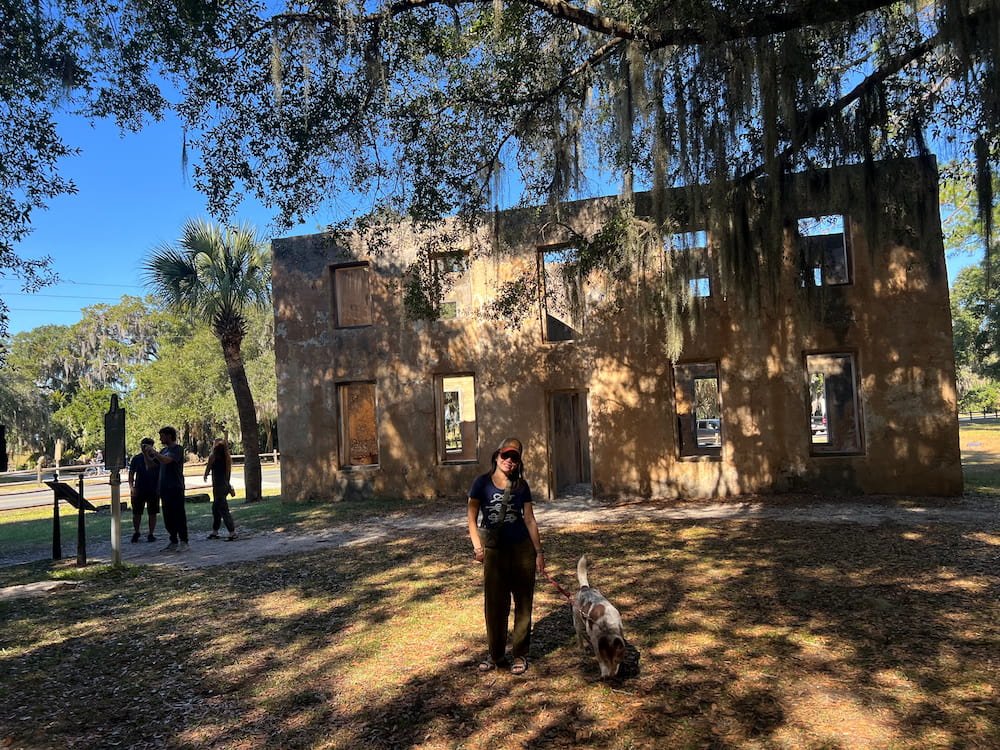
Our first stop was Horton House, one of the oldest tabby houses in Georgia, originally built in 1743. We didn't know what a tabby house was before this trip. Tabby is a concrete-like material made from burned oyster shells, sand, water, and sometimes ash and whole shells. If the concrete chips away, it exposes the shells packed together underneath, which is really cool! This type of material was really common to coastal buildings in the American Southeast region, including in Georgia, the Carolinas, and Florida.
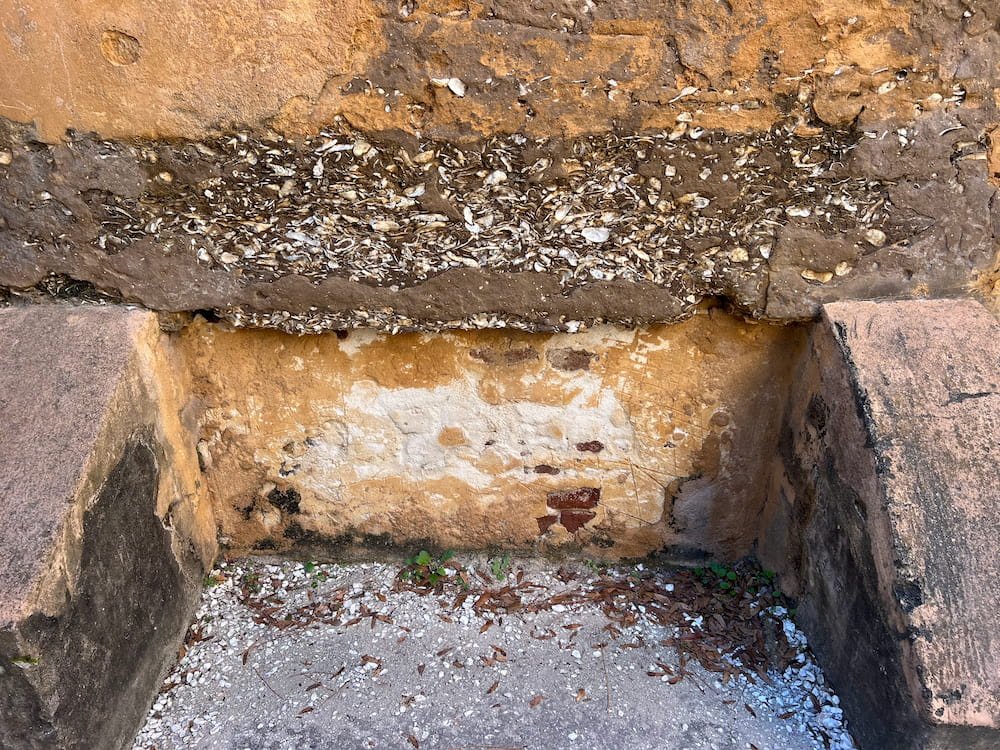
The house was built for William Horton, an Englishman who was one of the top military aides, and was lived in by his wife and 2 children. In its heyday, it featured chimneys, 2 bedrooms on the first floor and 2 bedrooms on the second floor, plus a balcony off the back of the home. Since Horton House is well over 250 years old, it very much looks like a relic that's been exposed to the elements--there's no roof, no windows, and the structure of the building is all that remains. Some of the building's walls are orange from recent preservation--this modern finish of stucco has local sand, which will then fade into a paler, creamy color like other, older layers in the building.
A Serene Beach and Bleached Trees
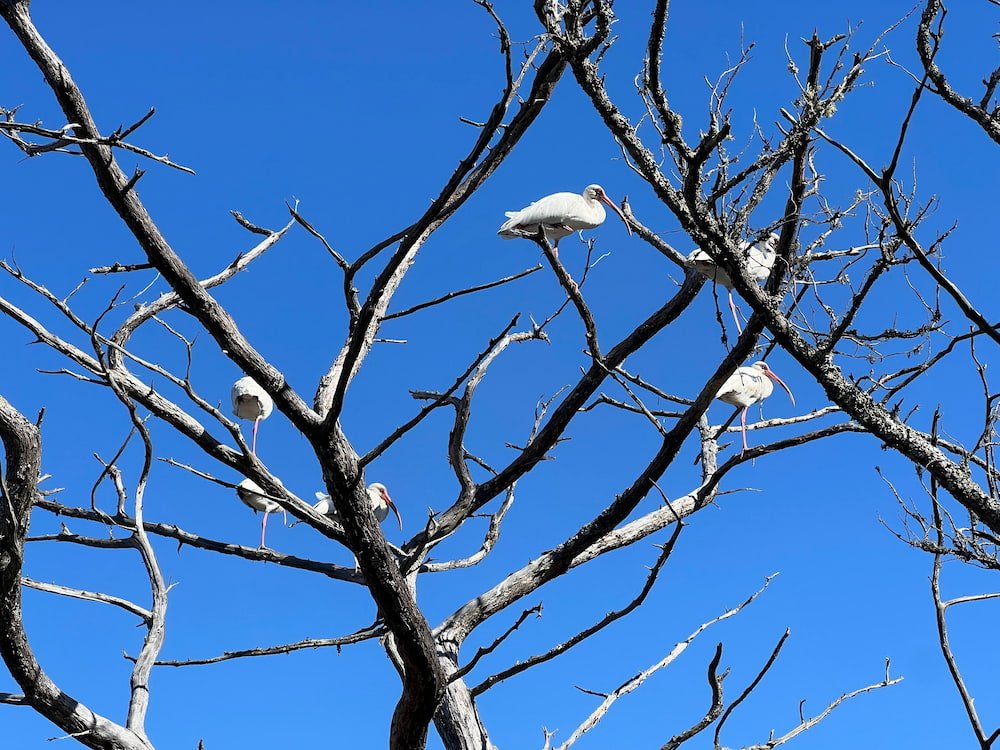
Driftwood Beach was our next stop, and while it's not a swimming beach, it's one of the most picturesque beaches we've been to! We parked across from it and wandered first into a marshy area filled with ibis, with many of the white birds chilling on branches, or just relaxing in the water. It was such a cool and dramatic sight to behold!
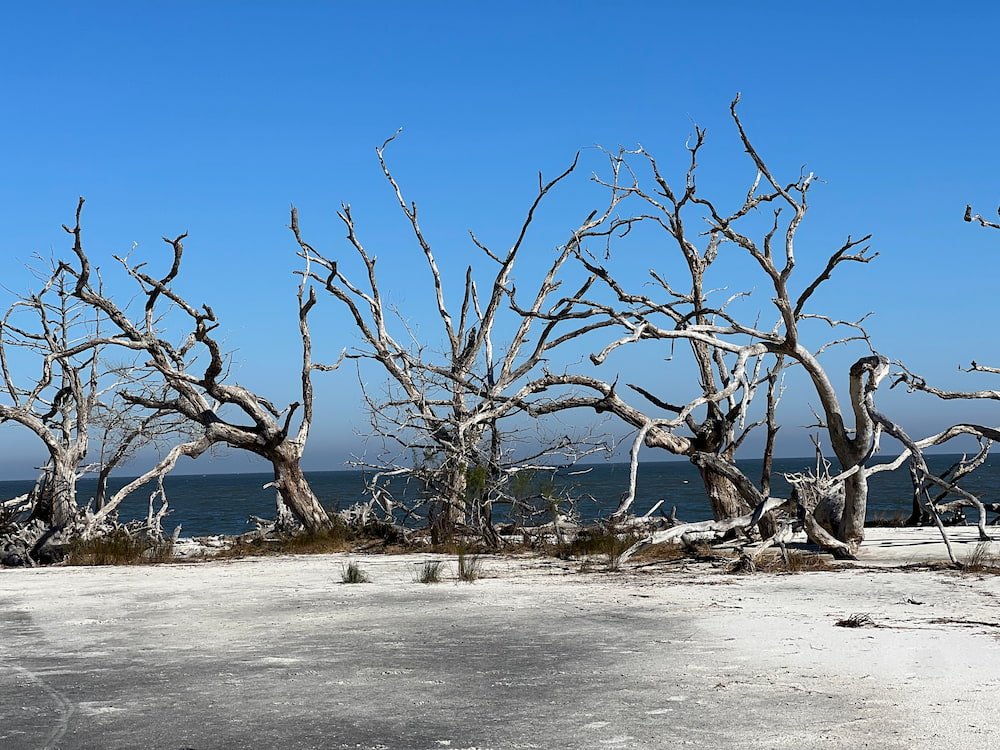
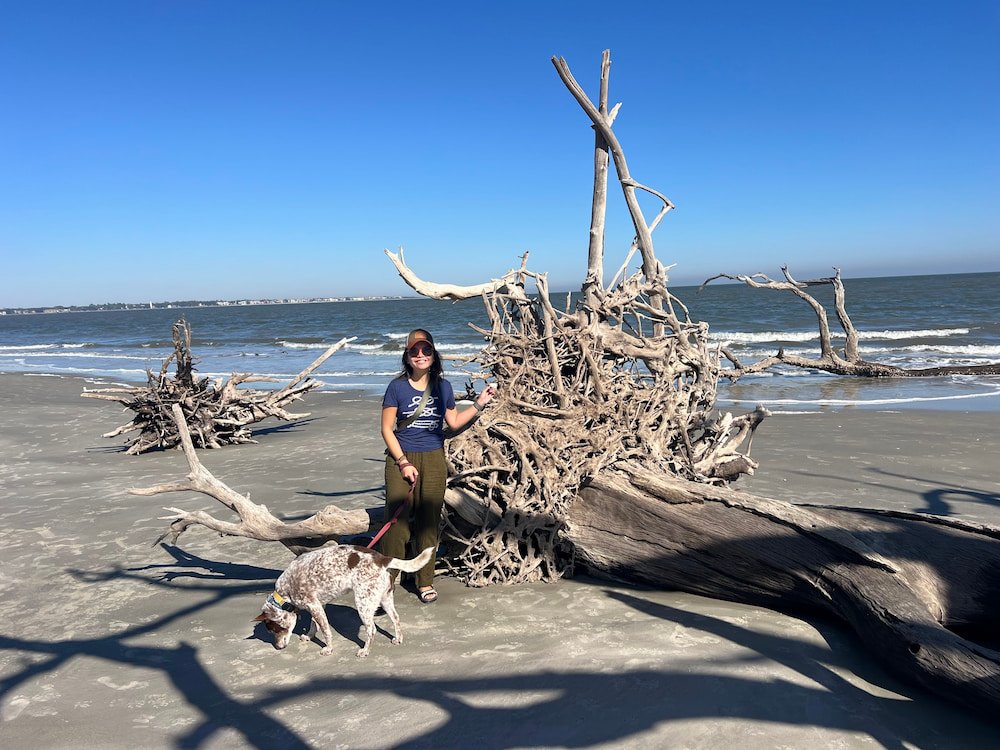
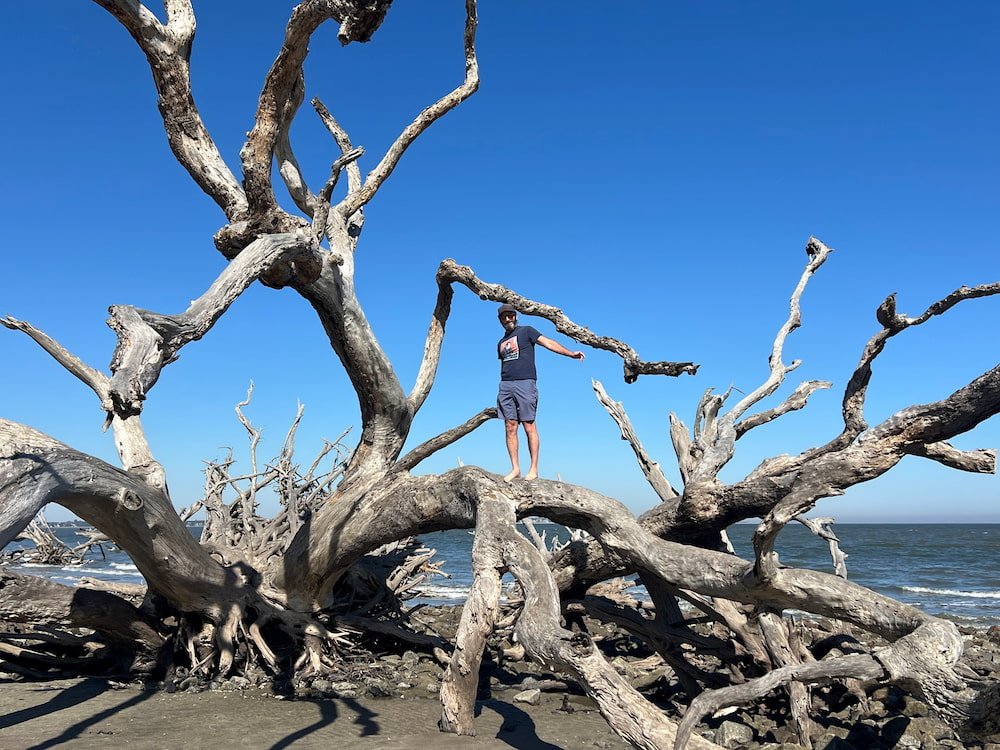
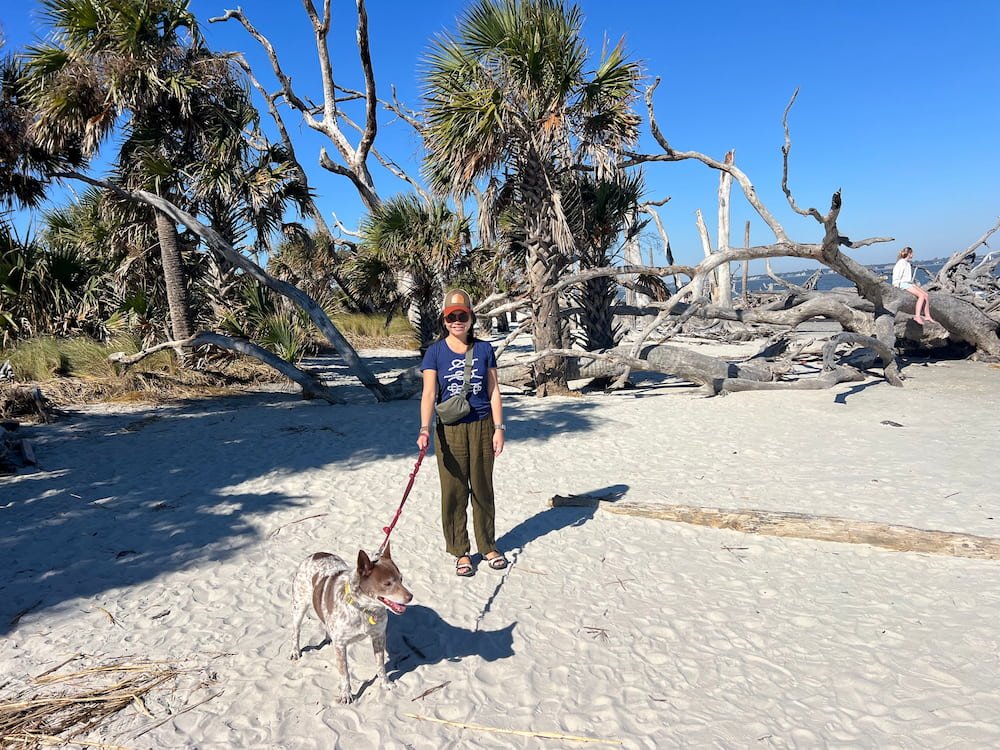
We then crossed over onto the part of the beach along the coast, and here we saw a ton of massive trees, posing and twisting along the sand, with their sun-bleached branches a dazzlingly bright white color. The trees were sculptures in their own right, with the combination of the wind and water naturally eroding them into these dramatic figures. It was fun to simply wander along the beach and clamber over a few of these trees! Some of the massive trees had uprooted and were right on the shore where the waves were coming in, while others were hanging out further back from the tide, a nest of big branches all interweaving among each other. The landscape definitely makes for a popular, Instagram-worthy photoshoot!
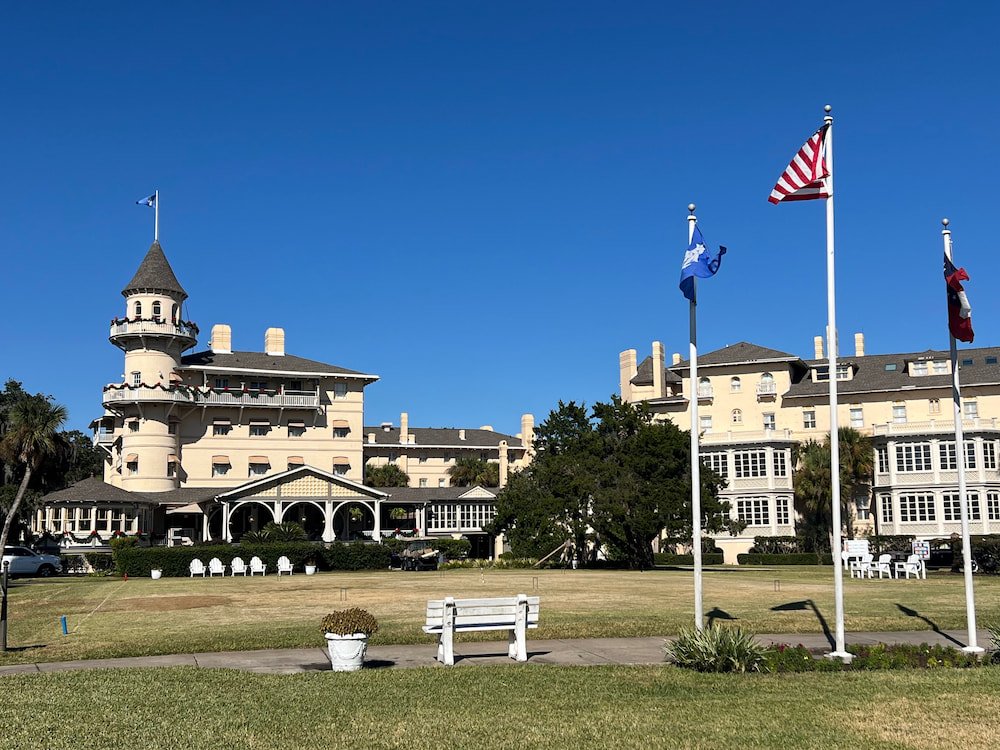
After wandering up and down the coast, we tore ourselves away and headed back to the RV, briefly checking out Jekyll Island Club Resort (briefly because we couldn't park anywhere, no adequate space for our RV). Jekyll Island Club was a private club that was founded in 1886. In the 20th century its members were the 1%, with the Rockefeller, Vanderbilt and Morgan families all part of the Club. It closed in the 1970s but was restored and reopened as a luxury resort hotel in 1985, and still retains a lot of its Gilded Age aesthetic.
Back to the Sunshine State
Leaving Jekyll Island, we kept driving, until we arrived at the Florida border--hi again, Sunshine State! Lisette took a video of us passing the Florida border sign--we were playing the song "Hey Sunshine" as we drove past, and we couldn't help laughing at the sheer coincidence!
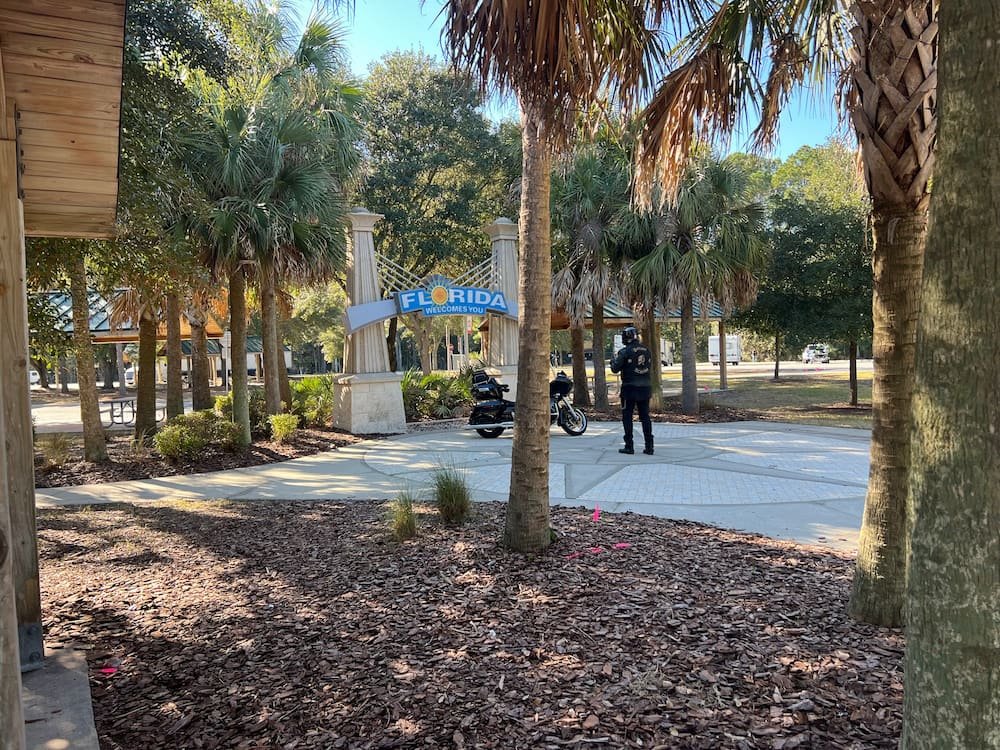
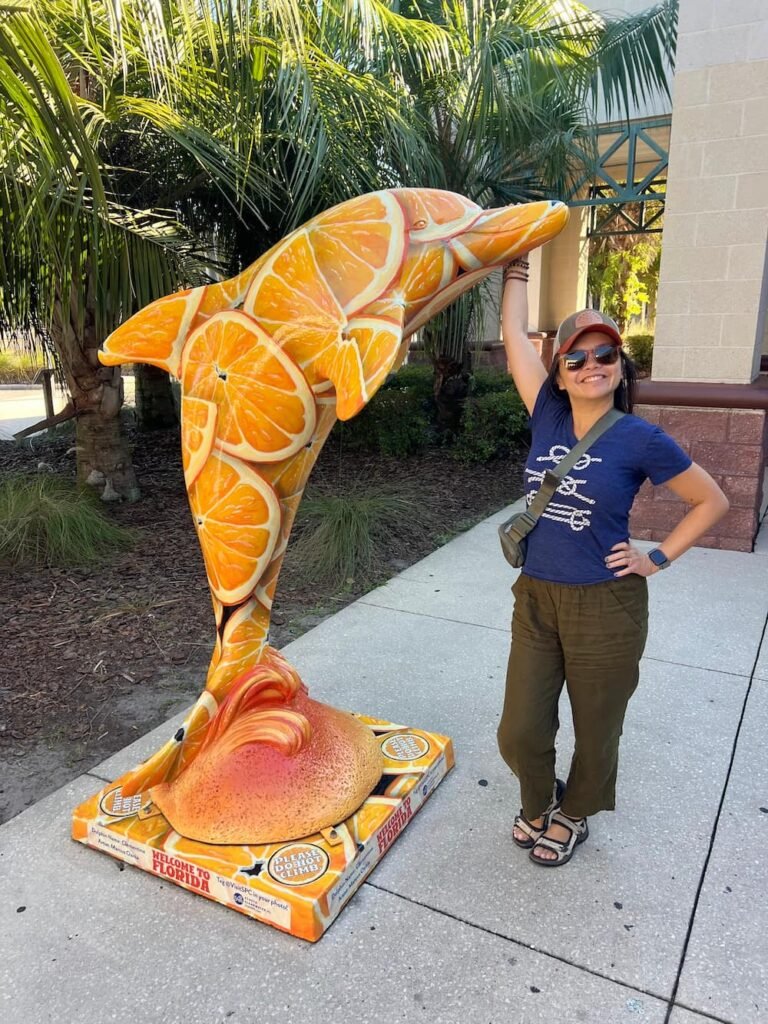
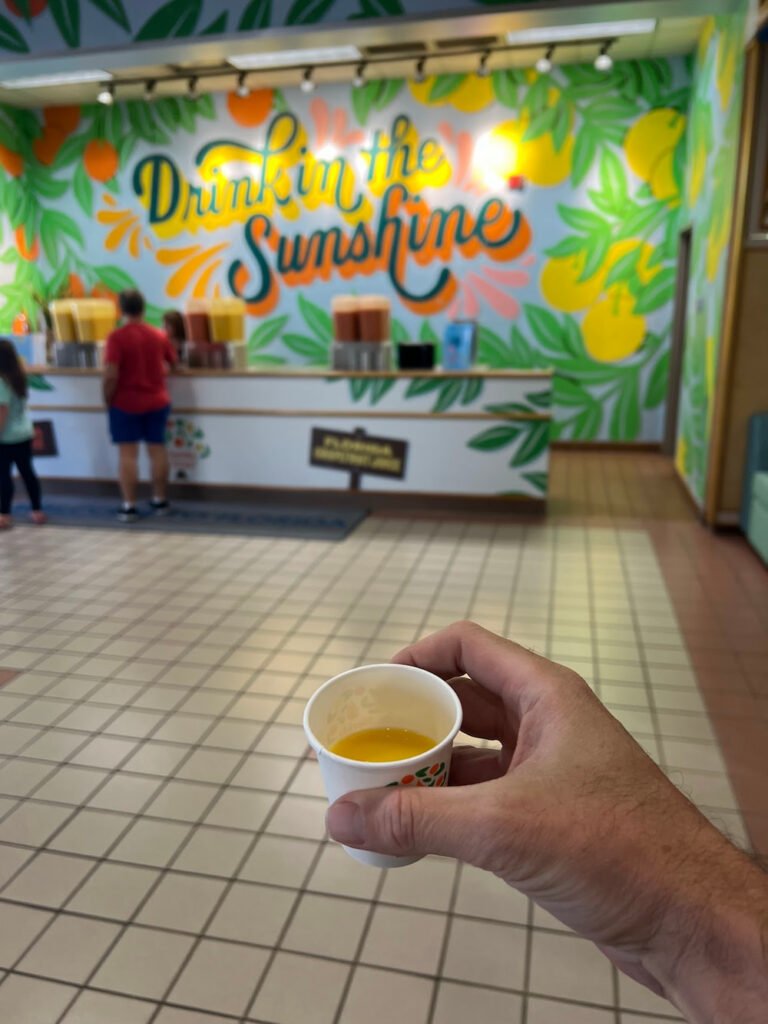
We stopped at the Florida Welcome Center to stretch our legs, and this is a pretty big visitor center--there are plenty of restrooms, picnic areas (we saw a group of Filipinos taking advantage of it, setting up a picnic, complete with Filipino condiments that we definitely recognized), a section with maps and brochures for every region in Florida (organized by region), Florida-inspired statues (like a dolphin colored with orange slices, and a NASA astronaut as a symbol for the Kennedy Space Center). And... they offered a free glass of orange or grapefruit juice! A lady was at a booth handing them out to people. So no pun intended, but we had a rather warm welcome to the Sunshine State!
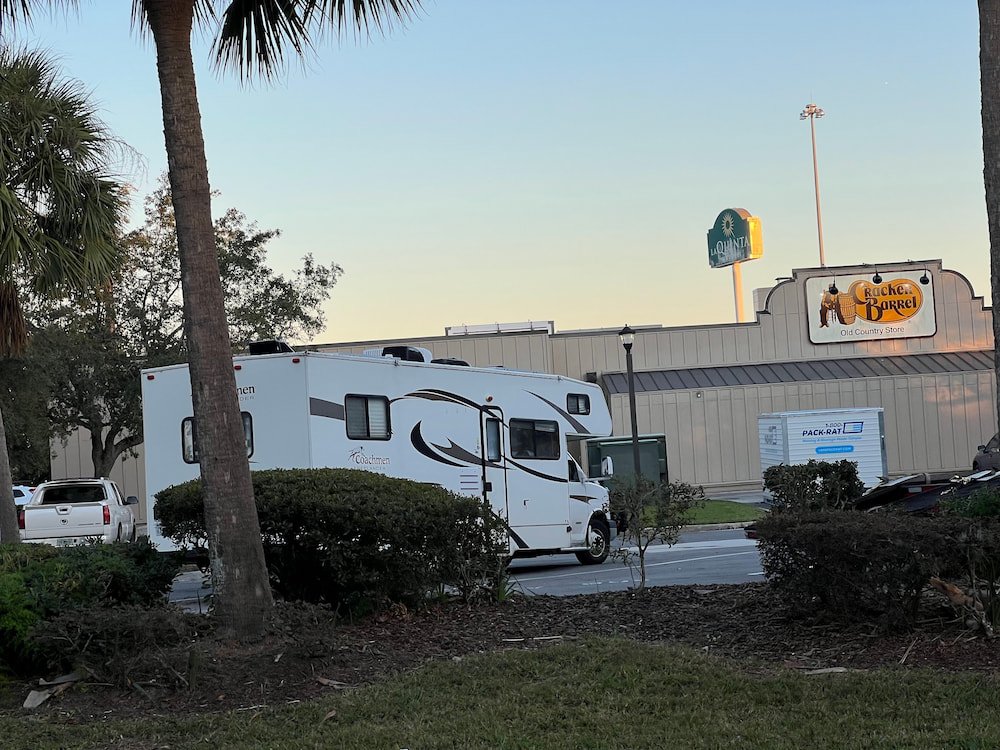
In the evening, we stopped at yet another Cracker Barrel. Tomorrow, we'll be exploring northeastern Florida!