
The morning was freezing and raining, but imagine our surprise when the rain started to turn into sleet, and then snow! Our second time seeing snow on this trip, and both times it’s in Arizona–a state where you’re more likely to conjure up images of sunny skies and hot desert temperatures!
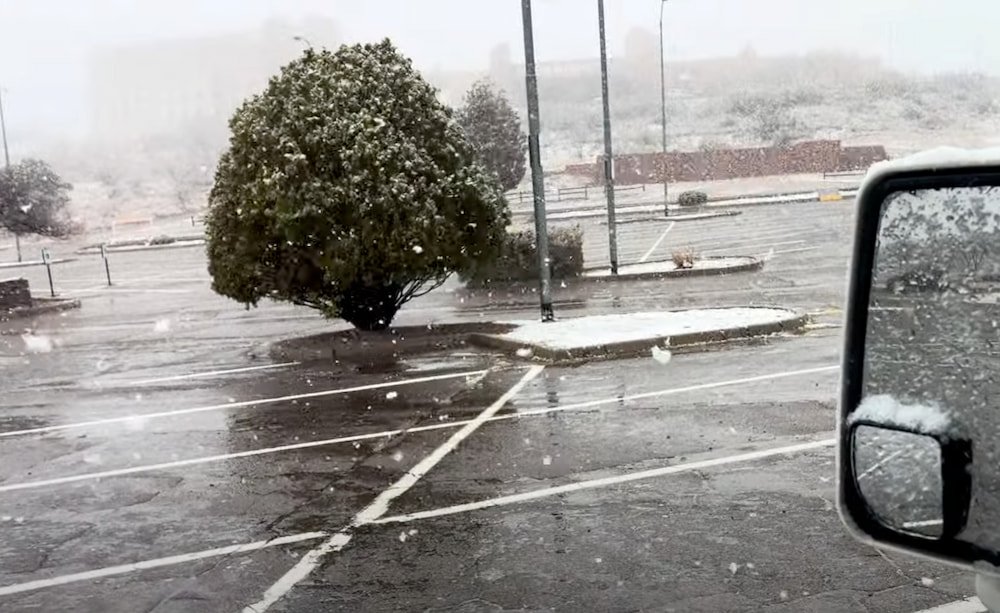
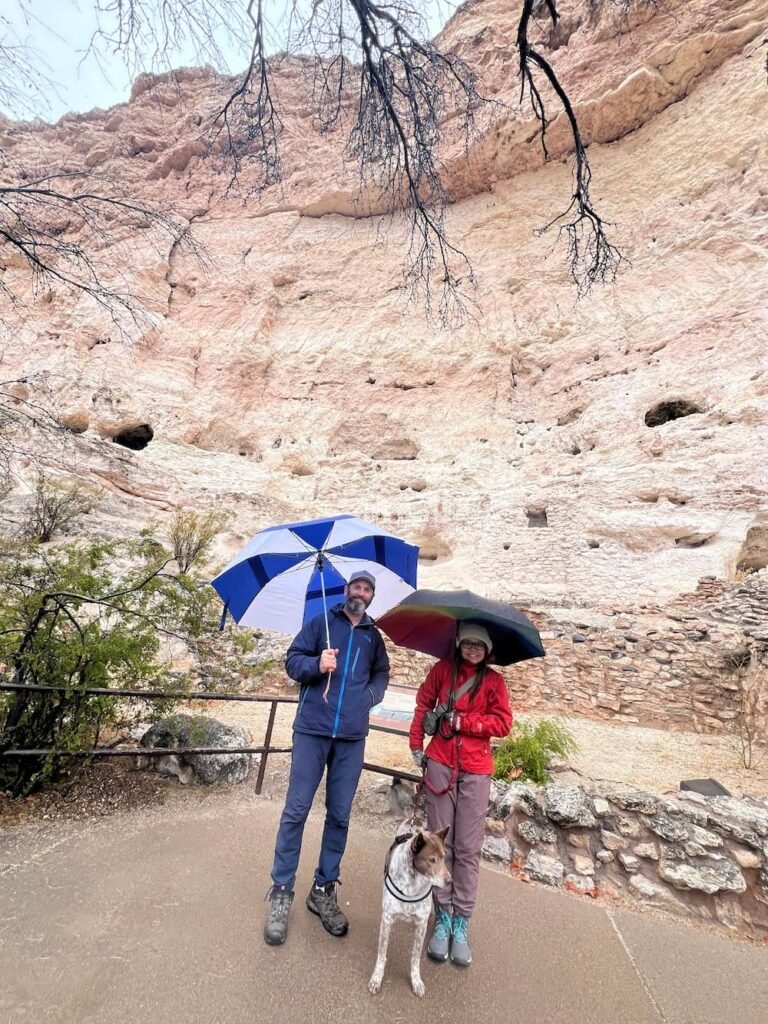
We walked outside briefly with Sheila (a dog’s gotta go do her business, after all). There was a converted school bus that had stayed overnight as well in the parking lot, and it turned out that there was a family traveling in it, including 2 little kids that were having a blast throwing snowballs and playing in the snow as the dad filmed the experience–very cute. Once the snow had subsided somewhat around lunchtime (turning back into rain), we made our way to Montezuma Castle National Monument, one of the first national parks designated in the US by Theodore Roosevelt.
Aztec in Name, But From the the Southern Sinagua People
Montezuma Castle (and nearby Tuzigoot–if you pay for entrance to Montezuma then Tuzigoot is also included), gives visitors a glimpse into the lives of the Southern Sinagua farmers who flourished in the Verde Valley hundreds of years ago. The indigenous people built this five-story, 20-room dwelling sometime between the years 1100 and 1300, which is entrenched into a cliff recess about 30 meters (100 feet) above the valley. Early American settlers marveled at the structure, assuming it was Aztec in origin, hence the name. Even though the dwellings were built using soft limestone, because it was protected from the elements it has lasted for over 700 years to be one of the best preserved prehistoric structures in the Southwest United States. Not far from Montezuma Castle is Castle A, a five-story apartment building with about 45 rooms.
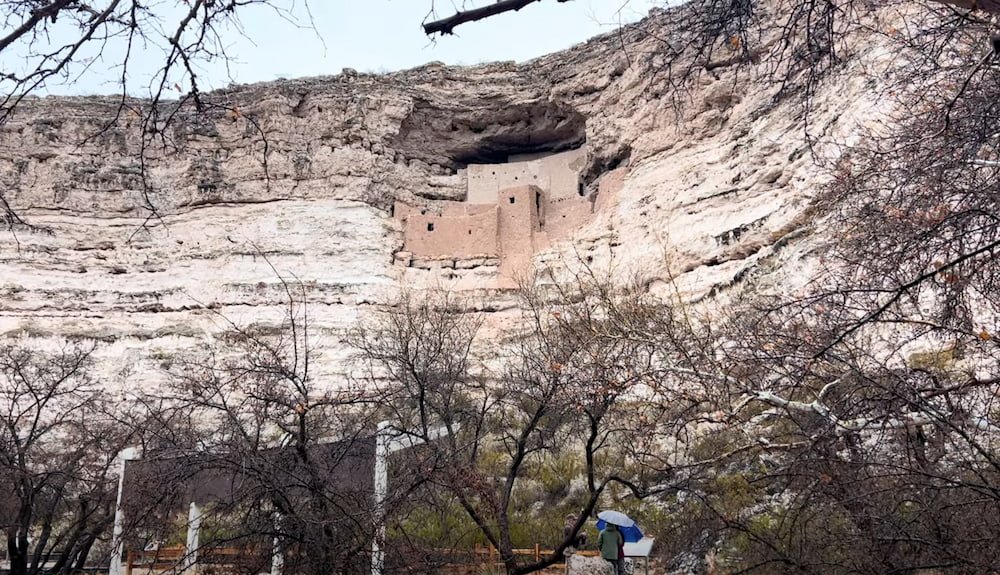
Nobody knows why the Southern Sinagua migrated away from their pueblos by the early 1400s, abandoning the castle that they spent so much effort in constructing. Theories range from overpopulation, resource depletion, disease, conflicts, or something else altogether. Whatever happened, many Southern Sinagua likely migrated northward to pueblo villages, while others may have stayed in the Verde Valley.
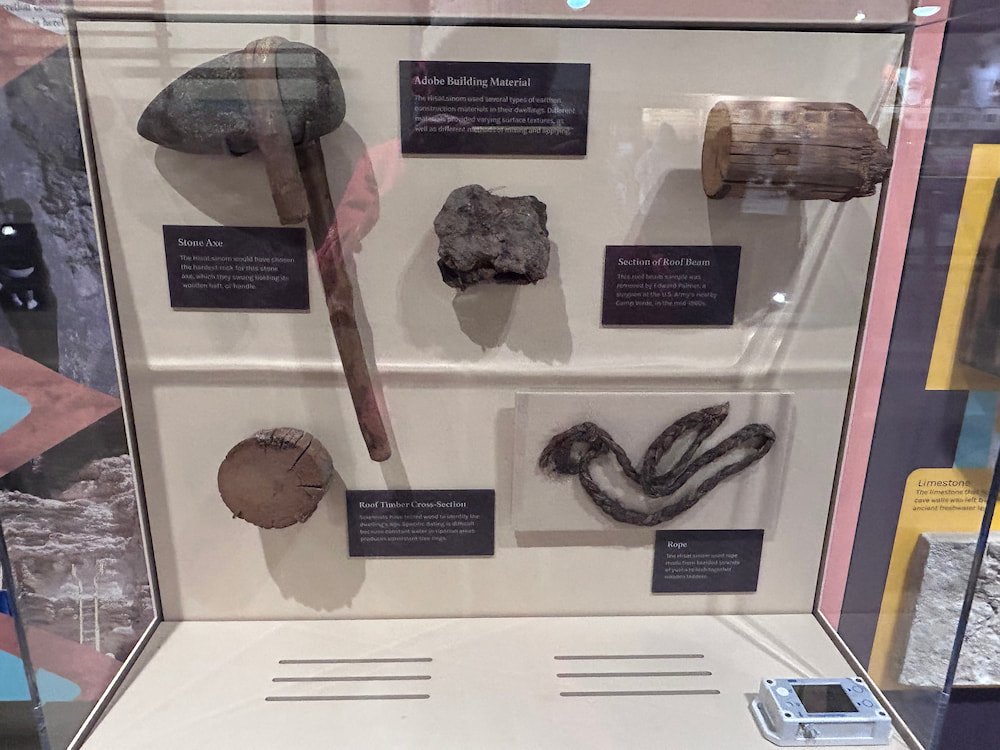
In the visitor center, there’s an interesting exhibit that provides more insights into how the Southern Sinagua people lived. At the time, they had an abundance of resources: including water from the river and streams, and sufficient game–including deer, antelope, rabbit, bear, muskrat and duck. They also mined a salt deposit a few miles away. They also were artisans, crafting stone tools like axes, knives and hammers, as well as manos and metates for grinding corn. Other crafts included bone awls and needles, woven cotton garments, ornaments, as well as specialized, reddish-brown pottery that was likely used for cooking and storage.
Because it had been raining, when we got back to our RV we realized that the window by the kitchen was leaking, bringing trickles of water onto the countertop. Sigh… it’s fixable with some sealant, but we’d prefer not to have too many consecutive issues!
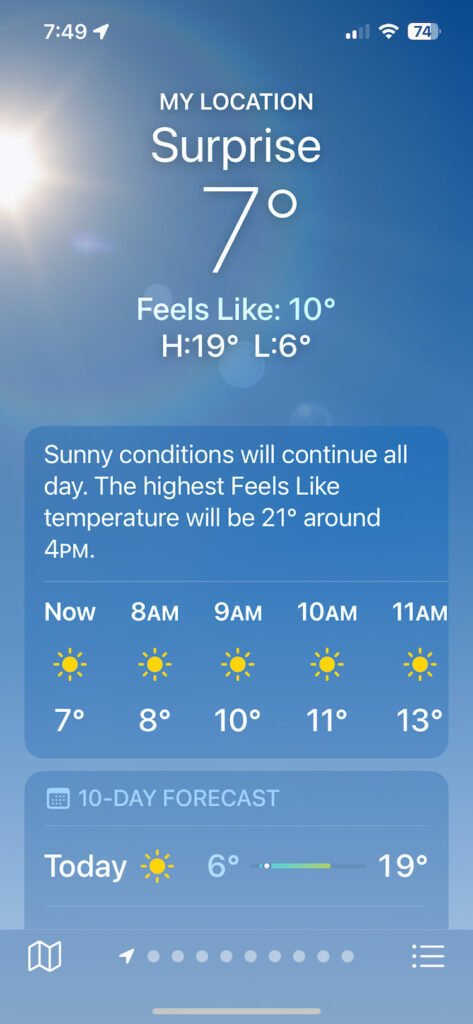
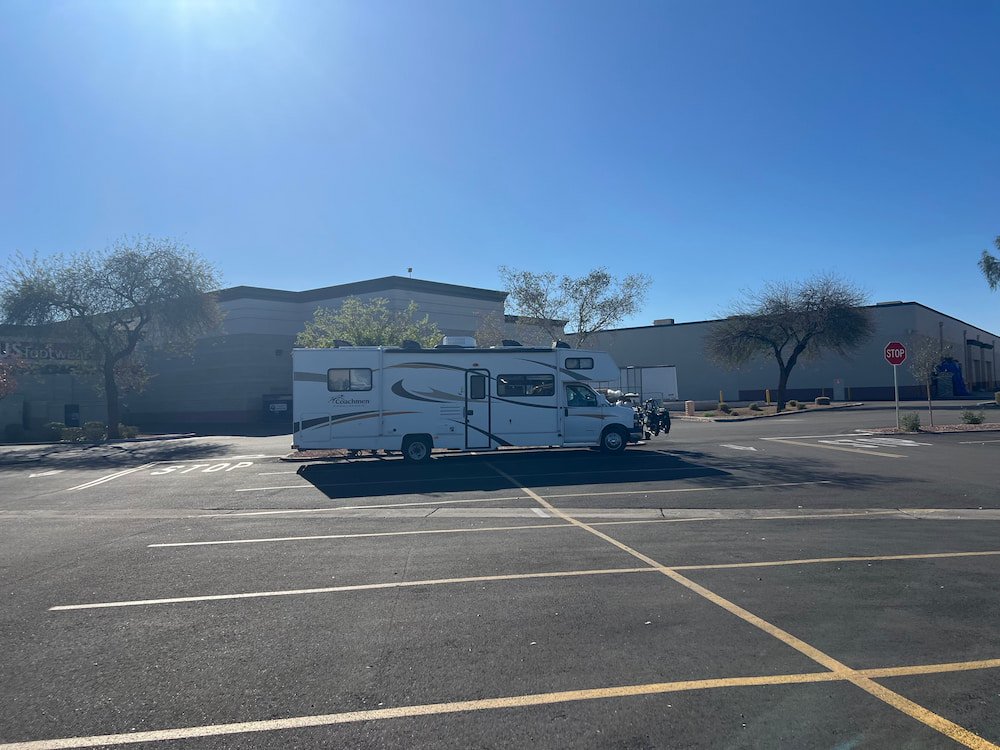
Fortunately the rain subsided as we drove toward Phoenix, where the snow capped hills gradually gave way to commanding cacti lining the highways as we got closer. It was still cold and we stopped at a town called Surprise (Surprise!!), where we bought some groceries and slept in a nearby parking lot for the night–only to find that it was not far from a railway line, which kept us awake again. Who knew that besides getting quite a bit of snow, that Arizona has an abundance of railway traffic?
Route Map
